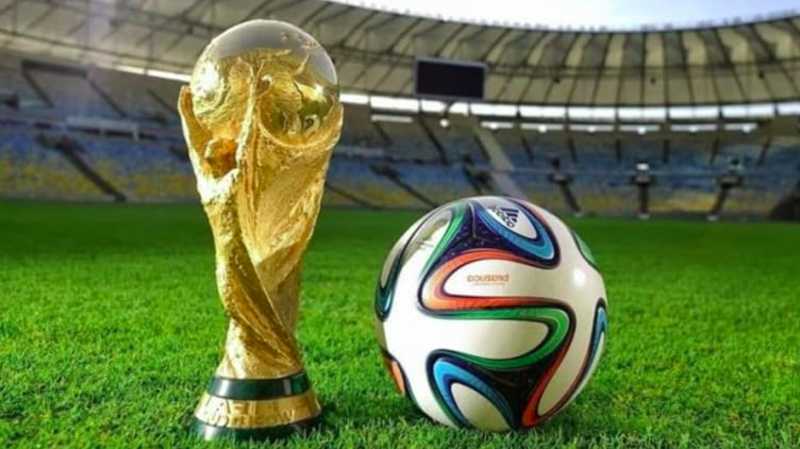

Australia could begin preparing a bid to host the FIFA Men’s World Cup by 2050 after Labor’s national conference passed a motion urging the federal government to pursue the tournament with neighbouring countries.
New Zealand, Indonesia and Singapore were suggested as possible co-hosts. However, Australia has not submitted a bid, the proposed partners have not formally joined, and the federal government has not committed funding.
The proposal matters to football supporters, taxpayers and potential host cities because staging a 48-team tournament would require long-term investment in stadiums, transport, accommodation, training facilities and community football.
What Labor’s World Cup motion proposes
The motion calls for Australia to pursue hosting rights by 2050 through regional partnerships. It says continued infrastructure upgrades and cross-border cooperation could build on the legacy of the Brisbane 2032 Olympic Games.
The wording refers to hosting a World Cup “by 2050,” rather than confirming that only the 2050 edition would be targeted.
Delegates also supported establishing a national football facility to strengthen pathways from grassroots participation to elite competition. No location, cost, design or completion date has been announced.
Is Australia’s 2050 bid official?
No. This is a Labor conference motion, not an approved government or FIFA bid.
There is no bid committee, funding package, stadium list or agreement with another country. FIFA has not opened the 2050 bidding process or published eligibility rules for that tournament.
A formal campaign would require support from the Australian government and Football Australia. Each co-host would also need approval from its government and national football association.
Which countries could co-host?
New Zealand is the most experienced potential partner after jointly staging the 2023 FIFA Women’s World Cup with Australia.
Indonesia could contribute a large football audience, while Singapore offers strong aviation, accommodation and event infrastructure. None is currently a confirmed participant.
Sharing the tournament could distribute matches and costs, but the distances between the countries would create travel, border and time-zone challenges. Organisers would likely need regional match clusters to reduce disruption for teams and supporters.
Possible Australian host cities and stadiums
No host cities or venues have been selected. Sydney, Melbourne, Brisbane, Perth and Adelaide would be obvious candidates for assessment because of their major-event experience, but inclusion would not be automatic.
FIFA would examine stadium capacity, pitch dimensions, training grounds, broadcasting facilities, security, airport access, accommodation and public transport. Regional cities could also seek matches or team bases if suitable upgrades were completed.
Some Australian venues are primarily designed for cricket or Australian rules football. Their sightlines, field configuration and compliance with future FIFA standards would need detailed evaluation.
How much could it cost?
No estimate has been released. Expenses could include preparing the bid, upgrading venues, improving transport and security, operating the tournament and providing government financial guarantees.
A joint bid could share some costs, but it would add international travel and coordination expenses. Governments would need to distinguish World Cup spending from projects already planned for population growth or Brisbane 2032.
Why the proposal has emerged now
Delegates cited Australia’s growing football audience and the Socceroos’ performance at the recent World Cup in North America.
The team, featuring Jordy Bos, Nestory Irankunda and Harry Souttar, reached the round of 32 before losing to Egypt on penalties. Australia’s campaign also generated interest in players such as Socceroos defender Cameron Burgess.
Interest continued through the tournament’s closing stages as supporters followed the 2026 World Cup Golden Boot race.
The 2023 Women’s World Cup offers Australia’s strongest hosting precedent. Australia and New Zealand welcomed almost two million spectators, while the Matildas reached the semi-finals during a record-breaking campaign.
Read More:
- Spain World Cup celebration tragedy: Fountain collapse kills teenager and injures two others
- FIFA World Cup 2026 awards winners: Golden Ball, Golden Boot, Golden Glove and full list
- Visit the Swikblog homepage for more latest news
Australia’s previous World Cup attempts
Australia has never hosted the Men’s World Cup. Its bid for the 2022 tournament received one vote in the opening ballot, with Qatar securing the hosting rights.
Australia later considered but declined to pursue the 2034 competition. Football Australia confirmed its decision not to bid, choosing to focus on other international tournaments. Saudi Arabia was subsequently appointed the 2034 host.
Could FIFA’s rotation rules affect the plan?
Australia, Indonesia and Singapore belong to the Asian Football Confederation, while New Zealand is part of Oceania.
Eligibility for 2050 could depend on FIFA’s confederation-rotation decisions and which regions host the 2038, 2042 and 2046 tournaments. Qualification arrangements for prospective co-hosts have not been determined either.
The federal government must first decide whether to support further work. Football Australia would then need to assess the proposal, begin discussions with potential partners and commission detailed cost and infrastructure studies.
Until those steps occur, there are no confirmed co-hosts, venues, tickets or match dates. The plan remains an early political proposal—not an official bid or a FIFA hosting decision.

Make Swikblog your go-to source on Google for reliable updates, smart insights, and daily trends.