
For many parents, it felt long overdue. Barbie has launched its first autistic doll — and families of autistic children say it’s more than a toy. It’s a rare moment of recognition in a world where autism is still widely misunderstood.
The doll, created with input from autistic advocates, includes sensory-friendly features that many children rely on every day. Parents say seeing these supports reflected in a mainstream toy helps their children feel seen — and helps other kids understand that difference is normal.
The announcement has been widely reported, including by The Guardian’s coverage of the launch, and it’s supported by a detailed product brief from Mattel’s official newsroom.
What makes this autistic Barbie different?
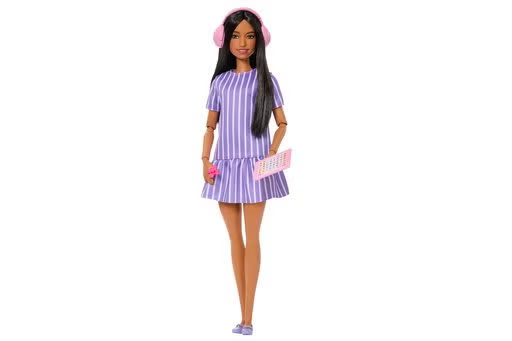
This isn’t just a new outfit or a new hair color. The autistic Barbie is built around design choices intended to be recognizable and respectful to autistic children and families. According to reports and Mattel’s own release, the doll includes features that nod to sensory processing differences and common communication supports:
- Eyes designed with a slightly averted gaze, reflecting that some autistic people may find direct eye contact uncomfortable.
- Articulated joints (including elbows and wrists) so the doll can be posed in ways that resemble self-regulating movements (often called “stimming”).
- Noise-canceling style headphones / ear defenders, a common support for managing overwhelming sound in busy environments.
- A communication tablet featuring symbol-style buttons, reflecting AAC (augmentative and alternative communication) tools used by some autistic people.
- A fidget accessory, included as a calming, sensory tool many children use to focus or self-soothe.
- Sensory-considerate clothing, designed to be comfortable and easy for play (think smoother materials and simpler closures).
One of the most important points: the doll was developed with input from the Autistic Self Advocacy Network (ASAN), aiming for representation that’s guided by autistic voices rather than assumptions from the outside.
Why parents are calling it a “game-changer”
For many families, toys are where children first “try on” the world — friendships, school, emotions, routines, and how society responds to difference. Parents who support autistic kids often describe a constant push-and-pull: helping their child feel proud of who they are, while also navigating a world that can be loud, fast, and not always understanding.
That’s why a mainstream, iconic brand like Barbie acknowledging autism matters. The message isn’t “fixing” autism — it’s normalizing it. A doll with ear defenders or a communication device can quietly tell a child: this support is okay. And it can tell other kids: this is part of how some people communicate and cope.
A bigger spotlight on autistic girls
Another reason this story is trending: it taps into growing awareness that autism can look different in girls. Many clinicians and advocates note that girls may be underdiagnosed or diagnosed later, sometimes because they mask traits or because stereotypes still skew male. By centering an autistic doll in a line often marketed heavily to girls, Mattel is also nudging public understanding in a direction many families say is overdue.
How it fits into Barbie’s wider “representation” era
Barbie has been expanding its definition of “normal” for years through the Fashionistas range, adding dolls with visible disabilities, medical conditions, and diverse body types. Recent additions have included dolls representing conditions like type 1 diabetes, plus other disability representations. The autistic Barbie is part of that same momentum — but it stands out because autism is often a non-visible disability, and representation here depends on thoughtful, support-centered design rather than a single physical cue.
Is there any criticism?
As with many “firsts,” not everyone will agree on what perfect representation looks like. Some autistic adults and advocates caution that autism is a spectrum: one doll can’t represent all autistic experiences, and certain accessories may feel stereotypical to some people. Still, many supporters argue that the point isn’t to claim “this is what autism is,” but to say, “autistic people exist — and supports are normal.”
What autism is (in simple terms)
Autism is a lifelong neurodevelopmental difference that can affect communication, social interaction, sensory processing, routines, and interests — and it varies widely from person to person. If you want a clear, trusted overview, the NHS guide to autism and the National Autistic Society’s explanation are solid starting points.
The bottom line
The first autistic Barbie is trending because it’s simple, visible, and emotionally resonant: a famous doll line is telling autistic children they belong. Whether you’re a parent, teacher, or someone who grew up wishing toys reflected your reality, this launch lands as more than a product drop — it lands as cultural recognition.
For more culture-and-explainers like this, visit Swikblog.
Sources: The Guardian, Mattel Newsroom, ASAN, NHS, National Autistic Society.

Make Swikblog your go-to source on Google for reliable updates, smart insights, and daily trends.