
A reported small aircraft crash into Beijing’s tallest building has placed China Zun, also known as CITIC Tower, at the center of a major aviation and public-safety investigation.
The aircraft struck the upper section of the skyscraper on Friday evening local time, according to witness accounts and early media reports. Emergency crews rushed to the scene, roads around the tower were closed, and people nearby were moved away as police secured the area.
Small aircraft hits China Zun in Beijing
China Zun, officially known as CITIC Tower, stands in Beijing’s central business district and is widely recognized as the tallest building in the Chinese capital. The tower rises about 528 meters, or 1,732 feet, and has more than 100 storeys.
Early reports said the aircraft hit a high section of the building at around 6 p.m. local time. Witnesses described the aircraft as small, with some accounts saying it appeared no bigger than a car.
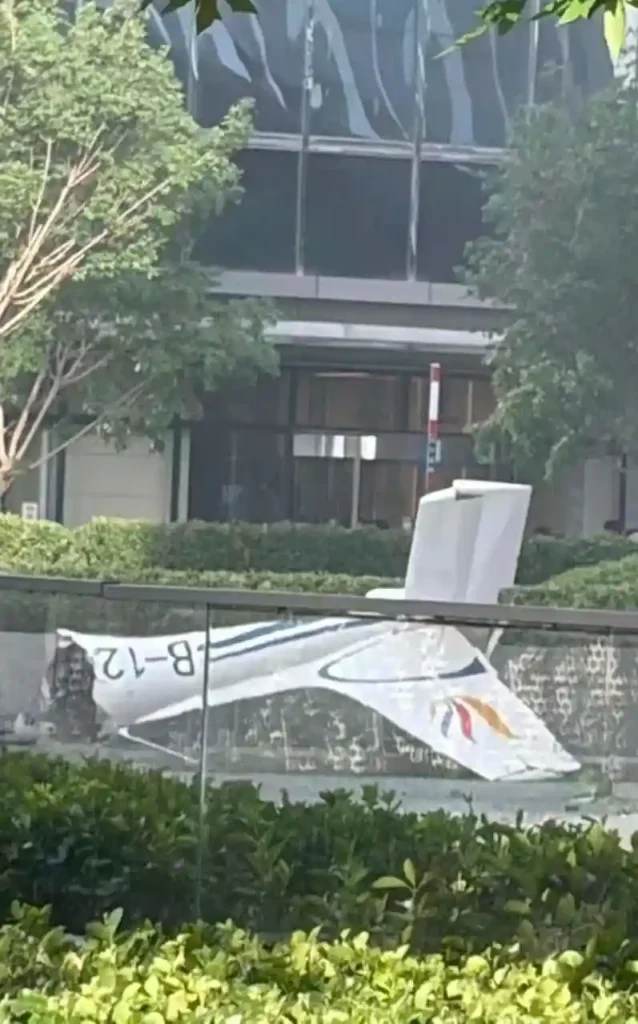
Images and videos circulated online appeared to show damage to the skyscraper’s glass façade and debris near the building. Authorities had not immediately issued a full official explanation for the crash.
Witnesses report loud impact and debris
People near CITIC Tower described hearing a sudden loud crash before emergency vehicles arrived. One witness account compared the sound to something louder than fireworks.
Several reports said parts of the aircraft fell toward the street after the impact. Other accounts described smoke near damaged aircraft debris below the tower.
Because official investigators had not yet released a detailed timeline, those descriptions should be treated as early witness accounts rather than final findings.
Aircraft details are still not fully confirmed
Some reports identified the aircraft as a Sunward SA60L Aurora, a small light plane. Other early details suggested it may have been linked to a route near Shifosi Airport.
However, the aircraft model, registration, operator, route and flight authorization had not been officially confirmed at the time of early reporting.
That distinction is important. In aviation incidents, early information can change once authorities review radar data, flight communications, aircraft records and surveillance footage.
Emergency crews seal off the area
Police vehicles, fire trucks and ambulances were reported around CITIC Tower after the crash. Roads near the building were blocked while emergency teams responded.
People inside and around the building were moved away from the scene. Some workers reportedly left quickly during the evacuation, with one account saying a woman ran out without her ID card or bag.
There were also witness reports of at least one injured person being taken away by ambulance, but officials had not confirmed the number of injuries or casualties.
Police restrict photos and videos
Several witnesses said police stopped people from taking pictures and asked others to delete images or videos already captured at the scene. Some journalists were also reportedly told to leave the area.
Posts about the incident were said to have disappeared quickly from Chinese social media platforms, making independent verification harder in the first hours after the crash.
The Associated Press reported that images and videos appeared to show debris near the skyscraper, while noting that authorities had not immediately provided a full explanation.
Why the Beijing plane crash is unusual
The incident has drawn global attention because of where it happened. Beijing has strict controls over aircraft and drone activity, especially in central areas of the capital.
A small aircraft reaching the area around the city’s tallest skyscraper raises questions about airspace monitoring, route control, flight permission and emergency alerts.
The case also comes amid tighter restrictions on drone activity in Beijing. While the aircraft was reported as a light plane, the wider issue of controlled airspace is likely to be central to the investigation.
What investigators may examine
Investigators are expected to review radar records, flight communications, aircraft maintenance history, pilot actions and footage from nearby buildings or traffic cameras.
They may also examine weather, visibility, navigation systems and whether the aircraft suffered a technical problem. No official evidence has confirmed mechanical failure, pilot error, weather disruption or any other cause.
If reports about a route near Shifosi Airport are accurate, investigators will likely focus on why the aircraft moved close enough to strike China Zun and whether controllers had any warning before impact.
What is confirmed and what remains unclear
The clearest known facts are limited: a small aircraft reportedly hit China Zun, emergency crews responded, nearby roads were closed, and the area was secured by police.
What remains unclear includes the aircraft’s confirmed model, the pilot’s identity, the number of people on board, the exact flight path, the cause of the crash and the number of injuries or deaths, if any.
That is why careful wording matters. Early eyewitness accounts are important, but official findings may change the understanding of what happened.
Read More
Why readers are following the story
The Beijing plane crash has become a major international story because it combines aviation risk, urban safety, restricted airspace and a high-profile landmark in one of the world’s most closely monitored capitals.
For readers interested in transport disruption and emergency planning, our report on London train disruptions caused by the UK heatwave explains how extreme conditions can affect critical infrastructure and public safety.
The next major update is expected from Chinese aviation officials, police or local emergency authorities. Their findings should clarify the aircraft’s identity, route, cause of impact and whether anyone was seriously hurt.
Until then, the strongest confirmed summary is this: a small aircraft reportedly struck China Zun, Beijing’s tallest building, triggering evacuations and a major emergency response while the cause and full impact remain under investigation.

Make Swikblog your go-to source on Google for reliable updates, smart insights, and daily trends.