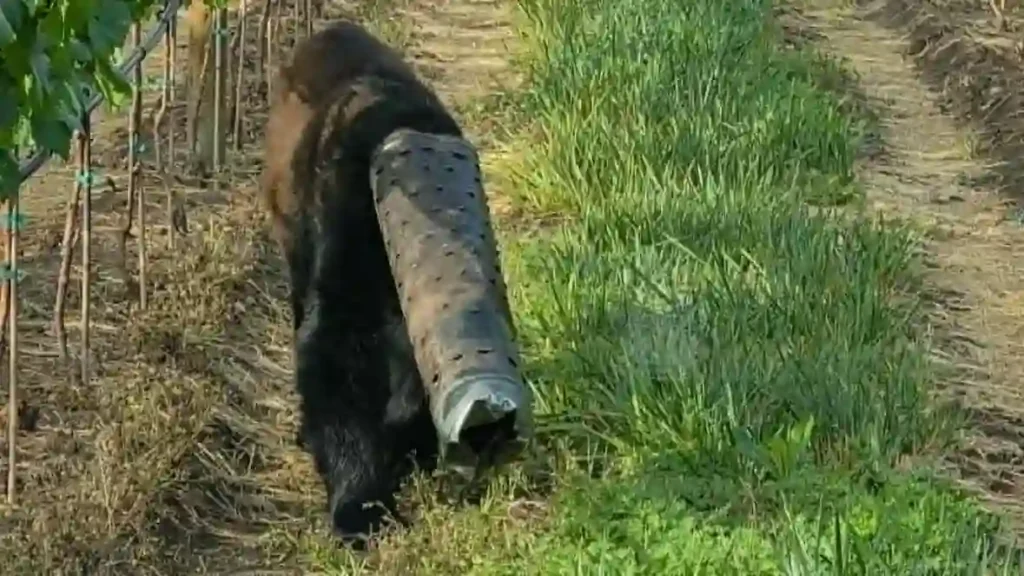

A young black bear that wandered through Oliver, British Columbia, with a stove pipe stuck over its head has been rescued and released back into the wild, ending a nearly two-week ordeal that left residents concerned for the animal’s survival.
The yearling bear was repeatedly spotted around orchards, vineyards and the Fairview Road area near Fairview Mountain Golf Club. With a long metal pipe covering much of its head, the bear became one of the most talked-about wildlife sightings in the community as conservation officers worked to locate and safely help the animal.
Although the rescue ended successfully, wildlife officials say the incident serves as an important reminder about how discarded objects and attractants can create unexpected dangers for animals living near human communities.
Bear Evaded Rescue Attempts for Days
The B.C. Conservation Officer Service began receiving reports about the bear roughly 10 days before it was finally rescued. Officers attempted to reach the animal on multiple occasions, but the young bear managed to escape before they could intervene.
As days passed, residents continued reporting sightings around Oliver. The bear was eventually seen near the Fairview Road and golf course area, where multiple callers alerted conservation officers after noticing the animal struggling to navigate with the pipe covering its head.
Officials later said the bear had reportedly been bumping into structures and vehicles, likely because its vision was impaired.
The unusual sight quickly gained attention across the community as photos of the bear circulated online.
Residents Helped Track the Bear
Local resident Curtis Pirie encountered the bear while cycling through the area. Earlier that day, his wife had shown him photographs of the animal that had been shared by residents.
When Pirie noticed an unusual figure moving through an orchard, he quickly realized it was the same bear.
The animal was pacing inside a fenced orchard while the pipe remained lodged over its head. Pirie and a neighbour briefly considered whether they could help remove it, but quickly recognized the risks involved.
The frightened bear climbed a tree, prompting Pirie’s wife to call conservation officers. Pirie and his neighbour then remained nearby for more than two hours to help monitor the bear’s location until officers arrived from Kelowna.
Rescue Operation Required Careful Planning
Once conservation officers reached the scene, they tranquilized the bear. The medication took effect within minutes, but rescuers faced another challenge when the sedated animal remained positioned in the tree.
Working together, officers and residents carefully encouraged the bear to descend safely. After reaching the ground, the pipe was removed and the bear underwent a health assessment.
Officials noted that the animal appeared thin, raising concerns about how much food it had been able to consume during the 10-day period. However, the bear had been observed near an irrigation ditch and was believed to have been able to drink water despite the obstruction.
After evaluation, conservation officers determined the bear remained healthy enough to be relocated and released back into suitable habitat near Oliver.
How Everyday Objects Become Wildlife Hazards
Officials have not determined exactly how the stove pipe became stuck on the bear’s head. Wildlife experts say young bears are naturally curious and frequently investigate containers, pipes and other objects that may carry food-related scents.
When an animal becomes trapped inside a container or pipe, the consequences can be severe. Restricted vision, difficulty feeding and an increased risk of collisions with vehicles or structures can quickly threaten its survival.
The Oliver incident is one example of a broader challenge faced by wildlife agencies throughout North America. Earlier this year, a black bear discovered sleeping high in a New Jersey tree attracted attention after authorities monitored the animal in a residential area. While the circumstances differed, both incidents highlight how bears often find themselves in unusual situations when human and wildlife environments overlap.
What Residents Can Learn From This Rescue
Conservation officials say residents should never attempt to handle trapped or distressed wildlife on their own. Even young bears can react unpredictably when frightened, creating risks for both people and the animal.
Instead, residents are encouraged to maintain a safe distance, report sightings to authorities and allow trained professionals to respond.
Officials also recommend securing garbage, compost, pet food, fallen fruit and other attractants that can draw bears closer to homes and farms. Loose pipes, buckets, containers and similar materials should be stored properly to prevent wildlife from becoming trapped.
Read More
For the Oliver bear, a dangerous encounter with a stove pipe ended with a second chance in the wild. The successful rescue demonstrates how community reporting and professional wildlife response can work together to protect animals facing unexpected hazards.
Source: Castanet

Make Swikblog your go-to source on Google for reliable updates, smart insights, and daily trends.