
BP has put its entire UK North Sea oil and gas business up for sale, potentially ending the company’s 60-year production presence in the basin. The proposed disposal covers five major production hubs, approximately 1,100 employees and assets that produced 117,000 barrels of oil equivalent per day in 2025.
No sale has been completed. BP has not identified a buyer, disclosed an asking price or announced a completion date. Production will continue while potential buyers assess the business.
Why is BP selling its North Sea business?
The decision forms part of a portfolio review led by Meg O’Neill, who became BP’s chief executive in April 2026. She is seeking to reduce costs, strengthen the balance sheet and create what BP calls a “simpler, stronger” company.
BP wants to direct capital towards projects offering higher returns. The company is targeting around $20 billion in asset disposals by the end of 2027 as it works to reduce debt and streamline its global operations.
O’Neill said the North Sea remained integral to Britain’s energy system but argued that BP’s business would be better positioned under another owner. She said its experienced workforce and resilient assets could attract a company prepared to invest in their future.
Which North Sea assets are included?
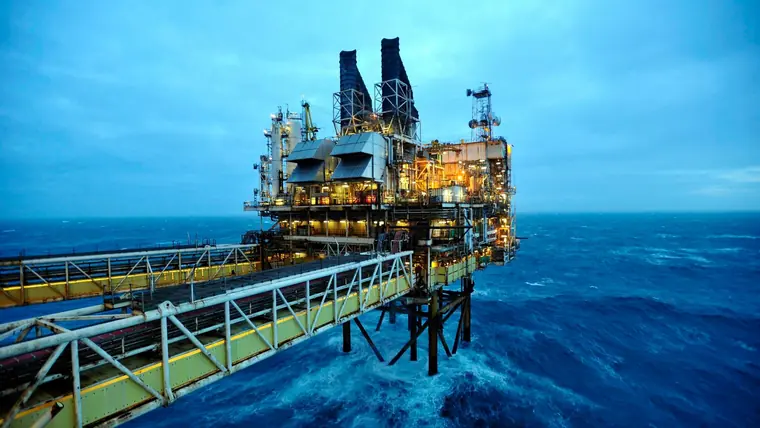
The sale covers Andrew and the Eastern Trough Area Project, known as ETAP, in the central North Sea. It also includes Glen Lyon, Clair and Clair Ridge west of Shetland.
The five hubs produced approximately 117,000 barrels of oil equivalent per day in 2025. Some reports place more recent output just below 100,000 barrels per day, which may reflect a different measurement period.
Clair is one of the largest hydrocarbon resources on the UK Continental Shelf. BP provides further details through its official North Sea operations overview.
How much could the business be worth?
BP has not published a valuation. It reportedly held advanced talks with Ithaca Energy earlier in 2026 over a transaction worth close to £2 billion, but the negotiations ended without an agreement. Ithaca has not been confirmed as a bidder in the new process.
Potential buyers will examine production forecasts, remaining reserves, operating costs, taxation and the investment required to maintain offshore infrastructure. Future decommissioning liabilities will also influence the price because wells must eventually be plugged and platforms removed or made safe.
A specialist operator could potentially combine BP’s fields with nearby assets and share infrastructure or support services, making the business more valuable within a focused North Sea portfolio.
What happens to BP’s 1,100 workers?
Approximately 1,100 people work in the North Sea division, part of BP’s wider UK workforce of about 13,960. Their roles face uncertainty, but BP has not announced 1,100 redundancies.
Some or all employees could transfer to a new owner. The outcome will depend on the buyer, transaction structure, employment protections and consultations with workers and unions.
Specialist engineers, platform crews and safety personnel would remain essential to continued production. BP said it would operate the assets safely and reliably throughout the sale process.
Why the sale matters for UK energy security
The announcement intensifies debate over domestic energy production. Prime Minister Andy Burnham has indicated that his government could take a pragmatic approach to North Sea resources as households and businesses face higher costs.
Burnham said he told US President Donald Trump that Britain could not ignore resources available on its doorstep. That position suggests a possible shift from Labour’s 2024 commitment not to issue new North Sea exploration licences.
Existing production is separate from new exploration. BP’s current fields can continue operating without new licences, subject to environmental, safety and regulatory requirements.
The basin has become more challenging because of ageing fields, maintenance expenses and the UK windfall tax on oil and gas profits. Any buyer will want confidence in future tax and licensing policies before committing more capital.
Read More:
Will the sale affect UK oil and gas supplies?
There is no immediate threat to production. BP’s assets remain operational and would normally continue producing under a new owner if a deal is completed.
The announcement comes as Middle East conflict places pressure on global energy markets. Brent crude futures were approximately 22% higher than a year earlier, while natural gas futures were almost 70% higher.
Those pressures are already affecting consumers, with the UK energy price cap rising amid higher wholesale costs.
Domestic production cannot fully shield Britain from global prices, but it can reduce import dependence and support supply-chain jobs. The country also faces wider infrastructure pressures highlighted by the Ofgem data centre grid crackdown.
Is BP leaving the UK completely?
No. A sale would end BP’s direct North Sea production role but would not represent a complete UK withdrawal. The company’s global headquarters and other British operations will remain.
BP shares opened approximately 0.7% lower after the announcement. Until a transaction is approved and completed, BP remains responsible for the five production hubs, its employees and their safe operation.

Make Swikblog your go-to source on Google for reliable updates, smart insights, and daily trends.