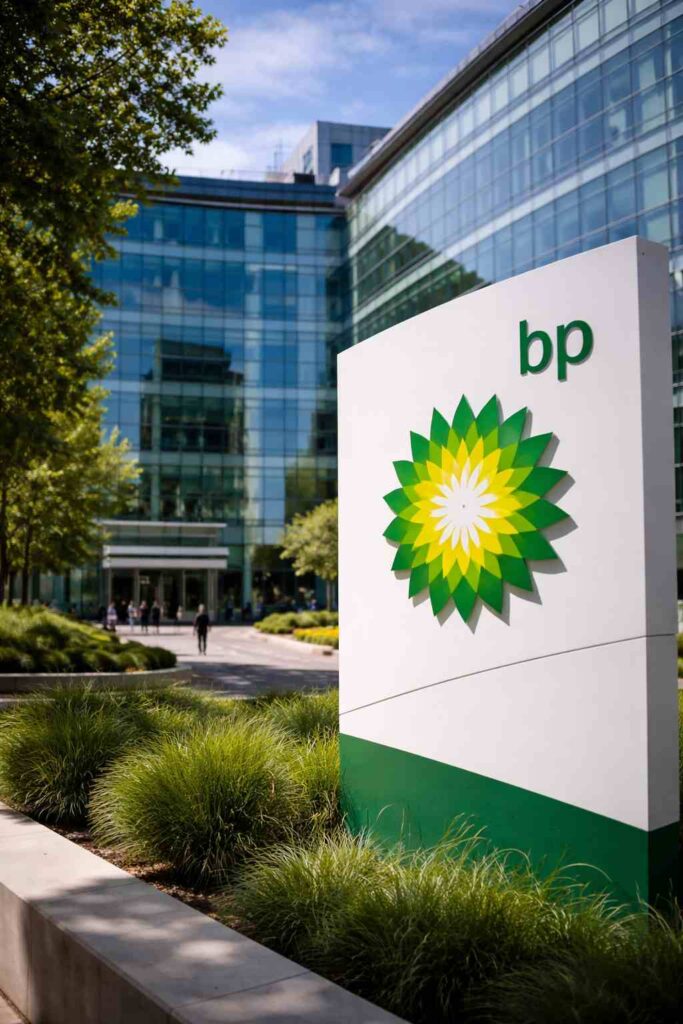

BP (BP.L) share price today rises to 559.60p, holding gains after a strong 30% rally in 2026. The recent move highlights renewed investor interest in oil and gas stocks, but a closer look at the fundamentals shows a more complex picture beneath the surface.
While the stock has delivered impressive gains this year, it has also slipped around 7% from its recent peak, raising questions about whether this is a healthy pullback or the beginning of a deeper correction. For investors, the key issue now is whether BP still offers value at current levels or if the rally has already priced in most of the upside.
Strong rally driven by oil sentiment
The 30% rise in BP shares since the start of the year has largely been supported by improving sentiment in the energy sector. Oil prices have remained relatively firm, and investors have rotated back into traditional energy stocks after a period of uncertainty.
This shift has benefited BP significantly, as the company remains heavily exposed to oil and gas markets. When energy prices are stable or rising, BP’s earnings potential improves, which in turn supports the share price.
However, the recent 7% decline from its high suggests that investors are beginning to reassess valuations after the sharp rally.
Egypt expansion signals long-term growth
One of the major growth drivers for BP is its involvement in Egypt’s new five-year oil and gas exploration plan. The country is targeting around 480 exploratory wells, with total investment estimated at $5.7bn. Notably, 101 wells are scheduled for 2026 alone.
This development is important because it reinforces BP’s commitment to traditional hydrocarbons. If successful, these projects could boost production levels and generate strong cash flows over time.
However, exploration projects carry execution risk. Commercial success is not guaranteed, and delays or lower-than-expected output could limit the financial benefits.
Earnings collapse raises concerns
Despite the strong share price performance, BP’s latest financial results have been weak. Earnings have fallen sharply, down more than 100% year on year, effectively moving the company from profit into a loss position.
This decline has been driven by weaker refining margins and one-off charges, highlighting the volatility of BP’s earnings profile. For investors, this is a critical concern, as it shows that the recent rally is not fully supported by improving profitability.
More details on BP’s financials and performance trends can be found on the Yahoo Finance BP page.
Valuation no longer cheap
At current levels, BP trades on a forward price-to-earnings (P/E) ratio of around 13. While this is not excessively high, it is no longer at bargain levels, particularly given the pressure on earnings.
Another concern is return on equity (ROE), which stands at just 0.12%. This suggests that BP is currently generating minimal returns from shareholder capital, a sign of weak efficiency in the short term.
On the positive side, the dividend yield remains attractive at approximately 4.4%, making BP appealing for income-focused investors.
Balance sheet and debt risks
BP’s balance sheet is another area investors need to watch closely. The company has a debt-to-equity ratio of around 1.37, indicating a relatively high level of leverage.
Rising interest rates add further pressure, as borrowing costs increase and reduce financial flexibility. If oil prices weaken or major projects exceed budget expectations, the debt burden could become more challenging to manage.
Oil prices and energy transition risks
BP’s performance remains closely tied to global oil and gas prices. These are influenced by several external factors, including global economic growth, OPEC production decisions, and geopolitical developments.
At the same time, the long-term shift towards cleaner energy continues to create uncertainty. While this transition will take years, it could gradually reduce demand for fossil fuels, particularly at a time when BP is investing heavily in new oil and gas projects.
Investors can explore BP’s long-term strategy and energy transition plans on the official BP website.
Investor outlook after 30% rally
BP remains an attractive stock for certain types of investors. Its strong dividend yield and exposure to energy markets make it a viable option for income-focused portfolios. Additionally, new projects such as those in Egypt could support future growth.
However, the risks cannot be ignored. Weak earnings, high debt levels, and reliance on volatile commodity prices all create uncertainty. The recent 30% rally has also reduced the margin of safety for new investors.
At 559.60p, BP appears fairly valued rather than undervalued. This suggests that while the stock may continue to perform if oil prices remain strong, the upside is likely to be more gradual compared to earlier in the year.
Final view
BP (BP.L) share price today reflects both optimism and caution. The stock has delivered strong gains, but underlying fundamentals remain mixed. For existing shareholders, holding the stock for income and potential long-term growth may still make sense.
For new investors, a more cautious approach could be appropriate. Waiting for improved earnings visibility or a better entry point may offer a more balanced risk-reward opportunity.
As always, diversification remains key. Energy stocks can perform well during certain cycles, but relying too heavily on one sector can increase overall portfolio risk.
You may like: FTSE 100 Surges Past 10,000 Today as Oil Prices Plunge

Make Swikblog your go-to source on Google for reliable updates, smart insights, and daily trends.