
A heartbreaking search operation on Queensland’s Sunshine Coast has ended in tragedy after an 18-year-old surf lifesaver who disappeared during a training session at Buddina Beach was found dead following a massive multi-day rescue effort. The young lifesaver vanished on Wednesday afternoon, triggering an urgent response from emergency crews, surf rescue teams and aviation units who spent days searching the challenging coastline before the devastating confirmation arrived on Friday evening.
The teenager had entered the water shortly before a scheduled surf lifesaving training session at Buddina Beach at about 4:15pm on Wednesday. According to Surf Life Saving Queensland, he came off his board in the surf and failed to return to shore, immediately raising alarm among fellow lifesavers preparing for training.
The incident quickly escalated into a large-scale search operation involving multiple agencies as crews raced to locate the missing lifesaver before nightfall. When initial rescue attempts failed, the operation expanded over the following days, turning into an extensive ocean search stretching along one of the Sunshine Coast’s most exposed coastal sections.
Police confirmed on Friday night that the teenager had been found dead at about 6pm, bringing a devastating end to the operation that had gripped local communities and surf lifesaving clubs across Queensland.
Timeline of the Buddina Beach incident
• Wednesday 4:15pm – 18-year-old surf lifesaver disappears after coming off his board during training preparation.
• Wednesday evening – Emergency search begins involving surf lifesavers and rescue teams.
• Thursday – Search expands across coastline with helicopters, divers and marine units.
• Friday around 6pm – Police confirm the young man has been found dead.
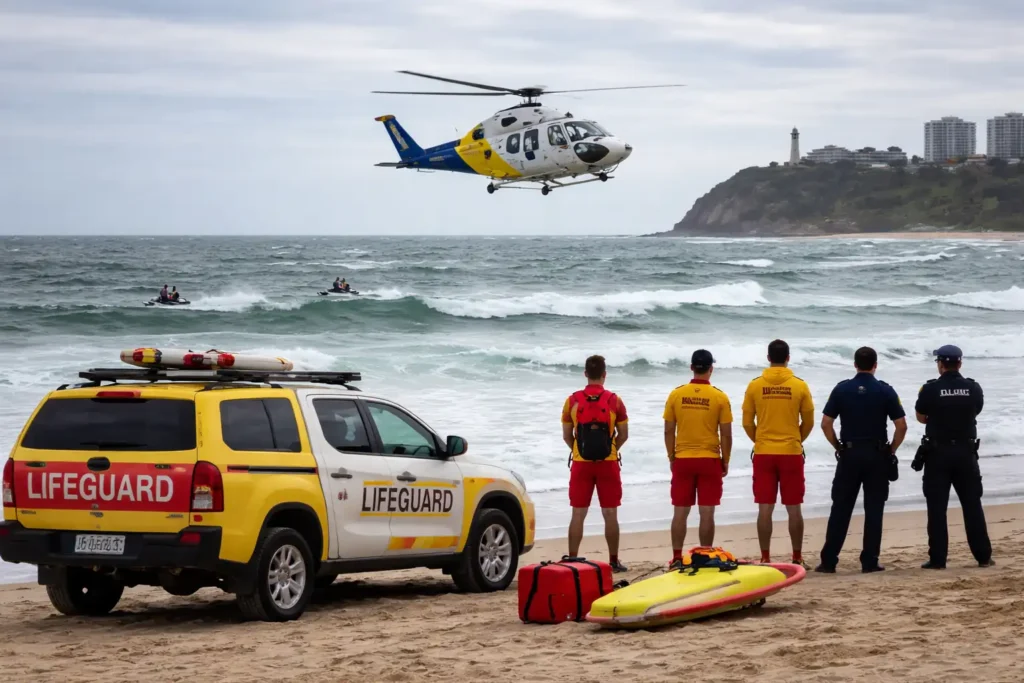
The search effort involved an extensive deployment of rescue resources from both emergency services and volunteer surf lifesaving teams. Crews used jetskis, rescue dinghies, police divers, the LifeFlight rescue helicopter, Polair police aircraft and coastguard vessels to comb the ocean and surrounding coastline.
Search teams worked across a wide section of shoreline extending from Buddina Beach to Point Cartwright, an area known for strong surf and shifting ocean conditions. The challenging environment made rescue efforts particularly difficult, with authorities saying rough surf and reduced underwater visibility complicated the search.
Helicopters circled above the coastline while rescue teams scanned the water from jetskis and patrol boats. Police divers also entered the water during parts of the operation as crews attempted to locate the missing teenager in increasingly difficult conditions.
The tragedy has deeply affected Queensland’s surf lifesaving community, where members often train together and build strong bonds through years of volunteer service and beach patrols.
Surf Life Saving Queensland chief operating officer Greg Cahill said the loss had sent shockwaves through clubs across the region.
He described the death as a devastating moment for the organisation and for surf lifesavers across the state.
“This is a heartbreaking loss for our clubs on the Sunshine Coast and for surf lifesavers right across Queensland,” Cahill said.
“On behalf of Surf Life Saving Queensland, I extend our sincere and heartfelt condolences to this young man’s family and friends during this devastating time.”
The organisation also confirmed it is providing welfare and peer support services for volunteers, staff and members affected by the tragedy.
Surf lifesavers play a crucial role along Australia’s coastline, with thousands of volunteers training each year to patrol beaches, assist swimmers and perform rescues in dangerous surf conditions. Many begin their lifesaving journey as teenagers and regularly participate in surf training sessions involving boards, swimming drills and rescue simulations.
Because of their experience and training, incidents involving active surf lifesavers are extremely rare, which has made the Buddina Beach tragedy particularly difficult for the wider community.
The Sunshine Coast is home to some of Australia’s most popular beaches, but ocean conditions along the region can change rapidly. Strong currents, heavy surf and low underwater visibility can make search and rescue operations especially complex when incidents occur offshore.
Authorities have not released further details about the circumstances surrounding the teenager’s death, and standard procedures are expected to follow, including preparation of a report for the coroner.
For now, the focus remains on supporting the young lifesaver’s family, friends and fellow club members as the Sunshine Coast community mourns the loss of someone who dedicated his time to protecting others in the ocean.
Further information about surf lifesaving operations and beach safety programs across Australia can be found through Surf Life Saving Australia, the national organisation coordinating volunteer beach patrols and training.

Make Swikblog your go-to source on Google for reliable updates, smart insights, and daily trends.