
A nationwide food safety alert has been issued in Canada after more than 30 cheese products were recalled due to potential contamination with Listeria monocytogenes, raising urgent concerns for consumers across multiple provinces. The recall, confirmed by federal food safety authorities, affects a wide mix of cheese types sold under different brands, formats, and packaging styles — including products that may have been repackaged at deli counters or included inside meal kits, making them harder to identify.
The scale and complexity of the recall have made it one of the more serious food safety alerts in recent weeks. While no illnesses have been officially reported, health officials warn that listeria contamination can lead to severe infections, especially in vulnerable groups. Consumers are being urged to act immediately, as contaminated food may not show any visible signs of spoilage but can still pose a significant health risk.
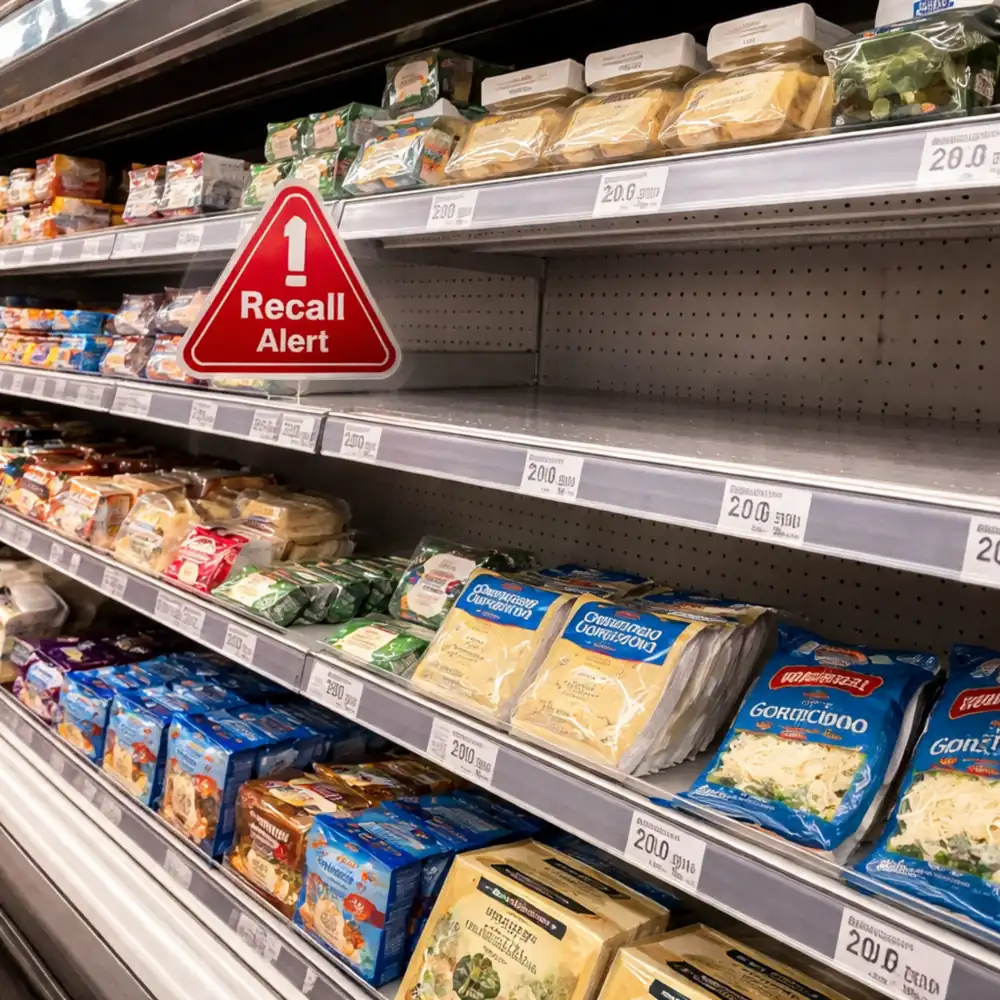
According to details published through official recall notices, the affected products span a wide range of commonly consumed cheeses, including Parmesan, mozzarella, feta, goat cheese, cheese curds, and specialty cheeses like Gorgonzola. The recall includes both branded retail items and cheeses distributed through meal services and deli counters, increasing the likelihood that consumers may unknowingly have affected products at home.
One of the specific products highlighted in the recall involves Auricchio Gorgonzola D.O.P. Dolce cheese, sold in 200-gram plastic packages in Ontario and Quebec. Consumers are advised to check for the UPC code “8 004603 100770”, a best-before date of August 5, 2026, and the product code “L 2595282E2”. This product has been directly linked to the contamination concern and forms part of the broader recall action.
In addition to standalone retail products, the recall also impacts cheeses supplied through meal-kit services, including items distributed nationally. These include smaller portion sizes such as 28 g, 56 g, 85 g, 113 g, and 170 g packs, often used as ingredients rather than main packaged products. Because these cheeses may have been separated from their original packaging, identification becomes significantly more difficult, increasing the importance of caution.
The issue was identified after testing detected possible contamination with Listeria monocytogenes. According to food safety guidance from the Canadian Food Inspection Agency, listeria bacteria can survive and even grow in refrigerated environments, which makes contamination particularly concerning for ready-to-eat foods like cheese.
Listeria infection, known as listeriosis, can present with symptoms such as fever, muscle aches, nausea, vomiting, and headaches. In more serious cases, it can lead to severe complications, especially for pregnant individuals, older adults, newborns, and people with weakened immune systems. One of the most challenging aspects of listeriosis is that symptoms may not appear immediately and can take days or even weeks to develop after exposure.
Health officials emphasize that even if a product looks and smells normal, it should not be consumed if it is part of the recall. Consumers who believe they may have purchased affected cheese products are advised to stop using them immediately. The safest course of action is to discard the product or return it to the place of purchase for a refund.
In addition, any surfaces, containers, or utensils that may have come into contact with the recalled cheese should be thoroughly cleaned and sanitized. Because listeria can spread easily and survive in cold conditions, proper hygiene steps are essential to prevent cross-contamination within the kitchen.
The recall also highlights a broader issue in food safety — that contamination risks are not always visible to consumers. Unlike spoilage, which may produce odors or discoloration, listeria contamination often leaves no obvious signs. This makes official recall notices one of the most important tools for protecting public health.
The investigation into the affected products is ongoing, and officials continue to monitor the situation closely to ensure that all contaminated items are removed from circulation. As more information becomes available, the list of affected products may be updated, making it important for consumers to stay informed.
For now, the key message remains clear. With over 30 cheese products affected across Canada and distribution spanning multiple regions including Ontario and Quebec, the recall represents a widespread precaution aimed at preventing potential illness before it occurs. For households across the country, taking a few minutes to check refrigerated items could make a meaningful difference.
In a situation where contamination cannot be seen and symptoms may be delayed, caution is the safest response. For many Canadians, that means revisiting recent purchases, checking packaging details where available, and avoiding any product that could be part of the recall.

Make Swikblog your go-to source on Google for reliable updates, smart insights, and daily trends.