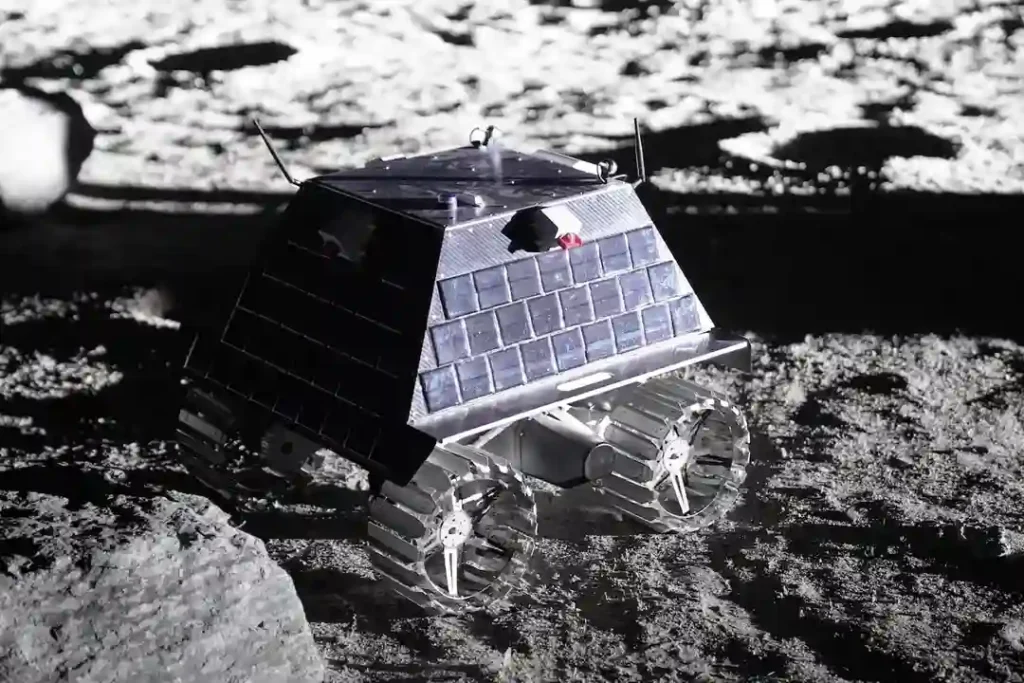

The Canadian Space Agency cancels lunar rover mission, delivering a major setback to the country’s long-standing ambitions of landing its first rover on the Moon. The decision, confirmed as part of the CSA’s 2026–2027 departmental plan, has disappointed scientists and raised concerns about Canada’s role in the rapidly evolving global lunar race.
This mission was not just another space project. It was set to become a historic milestone — Canada’s first rover mission to another planetary body — something researchers and engineers had been working toward for decades. Now, with the project officially cancelled, that dream has been put on hold indefinitely.
A Historic Mission That Will No Longer Launch
First announced in 2022, the lunar rover was designed to be built by Canadian company Canadensys and delivered to the Moon aboard a commercial lander developed by U.S.-based Firefly Aerospace. After landing, the rover would have operated independently — a rare achievement for Canada, which has traditionally contributed components rather than leading entire missions.
“We were going to send Canada’s first-ever rover mission to the surface of another planetary body,” said Gordon Osinski, a planetary geologist from Western University and the mission’s principal investigator. “It was going to be one of the most exciting missions in Canadian space history.”
Osinski revealed that he learned about the cancellation roughly a month before it became public, describing the news as “devastating.” His reaction reflects the broader sentiment within the scientific community, where years of planning, collaboration, and innovation were tied to the mission.
Why the Lunar South Pole Was Critical
The rover was planned to land in the Moon’s south polar region, one of the most scientifically and strategically important locations for future exploration. This region is believed to contain water ice in permanently shadowed craters — a resource that could support future human missions by providing drinking water, oxygen, and even fuel.
The south pole is also central to NASA’s Artemis program, particularly the upcoming Artemis IV mission, which aims to return humans to the lunar surface. By targeting this region, Canada’s rover would have contributed directly to one of the most important phases of modern space exploration.
This makes the cancellation even more significant. Canada was not just participating — it was positioning itself at the heart of the next chapter in lunar exploration.
Part of Canada’s Lunar Exploration Accelerator Program
The mission was developed under the Canadian Space Agency’s Lunar Exploration Accelerator Program (LEAP), which supports businesses and researchers working on lunar technologies and missions. The rover project had already built strong collaboration between academia and industry, bringing together a team of more than 50 scientists from Canada and around the world.
Despite the cancellation, the CSA stated that the science team will continue their research under existing funding. This ensures that at least part of the mission’s legacy — including training, data analysis, and technological development — will still contribute to future space efforts.
According to an official statement, the agency remains committed to deep-space exploration and will work to maximize the value of investments already made in the rover project.
CSA Response and Future Possibilities
The Canadian Space Agency emphasized that while the rover mission has been cancelled, the knowledge and capabilities developed are not lost. In particular, advancements in robotics mobility — an area where Canada has global expertise — could be applied to future missions, including potential lunar utility rovers or commercial applications.
The agency also highlighted that partnerships formed during the mission will continue to benefit Canada’s space ecosystem. However, this reassurance does little to replace what would have been a defining national achievement.
For more official updates, the CSA’s position can be followed through its website at Canadian Space Agency.
Timing Raises Bigger Questions
The cancellation comes at a time when global attention is once again focused on the Moon. NASA’s Artemis II mission, expected to launch in early April, will send four astronauts around the Moon — including Canadian astronaut Jeremy Hansen. This marks a historic moment, as Hansen will become the first Canadian to participate in a lunar mission.
While Canada remains involved in Artemis, the cancellation of its own rover mission creates a contrast. On one hand, the country is part of a major international effort. On the other, it has stepped back from leading its own independent lunar surface mission.
This raises broader questions about Canada’s long-term strategy in space exploration. Is the focus shifting toward partnerships rather than leadership? And what does that mean for future innovation and investment?
Impact on Industry and Innovation
The decision also affects Canada’s growing commercial space sector. Companies like Canadensys were expected to gain global visibility through participation in a real lunar mission. Such projects often act as catalysts for innovation, investment, and international collaboration.
With the mission cancelled, there is concern about how this might impact confidence in large-scale Canadian space initiatives. Long-term projects require stable funding and consistent policy support, and any disruption can create uncertainty across the industry.
At the same time, the technologies developed for the rover — particularly in mobility and autonomous operations — may still find applications in future missions or commercial ventures. This means that while the mission itself is gone, its technical contributions could still shape the next generation of space exploration tools.
A Major Setback in a Growing Moon Race
The global race to the Moon is intensifying, with countries and private companies competing to establish a presence on the lunar surface. Missions targeting the south pole are especially valuable, making Canada’s withdrawal from this effort more noticeable.
As highlighted in reports from CBC News, the cancellation represents not just a program change but a shift in momentum. For a country known for its contributions to space robotics, stepping away from a flagship lunar mission is a significant development.
The headline Canadian Space Agency Cancels Lunar Rover Mission, Major Blow to Canada’s Moon Ambitions reflects more than just a single decision. It signals a pause in Canada’s journey toward becoming a more prominent player in deep-space exploration.
While future opportunities may emerge, this moment will likely be remembered as a missed chance to make history on the lunar surface.
You may like
Ottawa Weather Turns Wintry Again With 5–10cm Snowfall on First Day of Spring

Make Swikblog your go-to source on Google for reliable updates, smart insights, and daily trends.