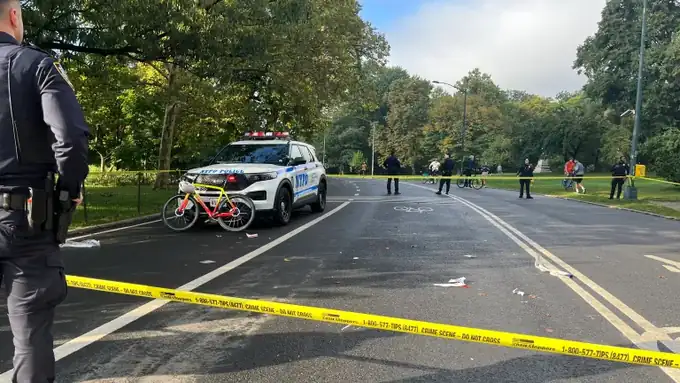

A 71-year-old cyclist died Monday morning after colliding with an off-leash dog on Central Park’s East Drive near East 84th Street, according to police, adding another fatal bicycle-related incident to a section of the park already under scrutiny after a recent deadly collision.
The cyclist was traveling north at about 8:20 a.m. on Oct. 5 when the dog entered the roadway. The impact threw the man from his bicycle, leaving him with serious head and body injuries.
Emergency responders rushed him to NewYork-Presbyterian/Weill Cornell Medical Center, where he was pronounced dead. His name had not been publicly released as of the latest update, pending notification of his family.
Cyclist thrown from bike after dog entered East Drive
Police said the dog moved into the cyclist’s path while he was riding north on East Drive. The New York Post, citing police sources, reported that the cyclist went over his handlebars and struck the pavement.
The outlet also reported that the 71-year-old was not wearing a helmet. That detail has not appeared in every police-based account, so it should be treated as a reported detail rather than a finding formally announced by the NYPD.
No vehicle or second cyclist has been reported as being involved in the collision.
Dog was off leash during permitted morning period
The dog was unleashed at the time, but that does not automatically mean its owner violated Central Park rules.
According to the Central Park Conservancy’s dog guidelines, designated off-leash hours generally run from 6 a.m. to 9 a.m. and again from 9 p.m. to 1 a.m.
Because the crash occurred at about 8:20 a.m., it happened during the morning off-leash window. Reports citing law-enforcement sources said the dog was legally off leash in that part of the park.
The dog was not injured, and its owner remained at the scene. Police have not announced an arrest, citation or criminal charge against the owner.
Winter Haven School Bus Crash: Student Killed, Multiple Vehicles Involved
Prestatyn Murder Investigation: Body Found in Burning Van on Gas Works Lane
Key questions remain under investigation
Investigators have not publicly said what caused the dog to enter the roadway, how far it was from its owner or how much time the cyclist had to react.
Police also have not released the cyclist’s speed or said whether surveillance or witness video captured the collision.
Those unanswered questions are important because the early facts do not establish fault. The confirmed sequence is that the cyclist struck the dog, fell from his bicycle and suffered fatal injuries.
Second recent fatal bicycle-related incident near East 84th Street
Monday’s death occurred close to the location of another fatal bicycle collision reported only weeks earlier.
In September, a 41-year-old pedestrian was struck by a cyclist near East Drive and East 84th Street and later died from his injuries. The circumstances were different, but the proximity of the incidents is likely to renew attention on how cyclists, pedestrians, runners and dog owners share Central Park’s busy road network.
New York has also seen other serious cycling incidents recently, including a fatal Citi Bike crash in Manhattan’s East Village, highlighting that severe bicycle crashes can occur even when conventional motor vehicles are not central to the incident.
Central Park’s shared road network faces renewed attention
East Drive forms part of Central Park’s car-free internal road system and is heavily used by cyclists, runners and walkers, particularly during morning hours.
The combination of cyclists traveling at higher speeds and dogs exercising during permitted off-leash hours can create situations where reaction time becomes critical if an animal suddenly moves into the roadway.
The NYPD investigation remains ongoing. Authorities have not announced charges or publicly identified the cyclist, and no official determination has been made about responsibility for the fatal collision.
Another recent New York City fatality investigation has likewise underscored the importance of waiting for confirmed police findings before drawing conclusions from early reports.

Make Swikblog your go-to source on Google for reliable updates, smart insights, and daily trends.