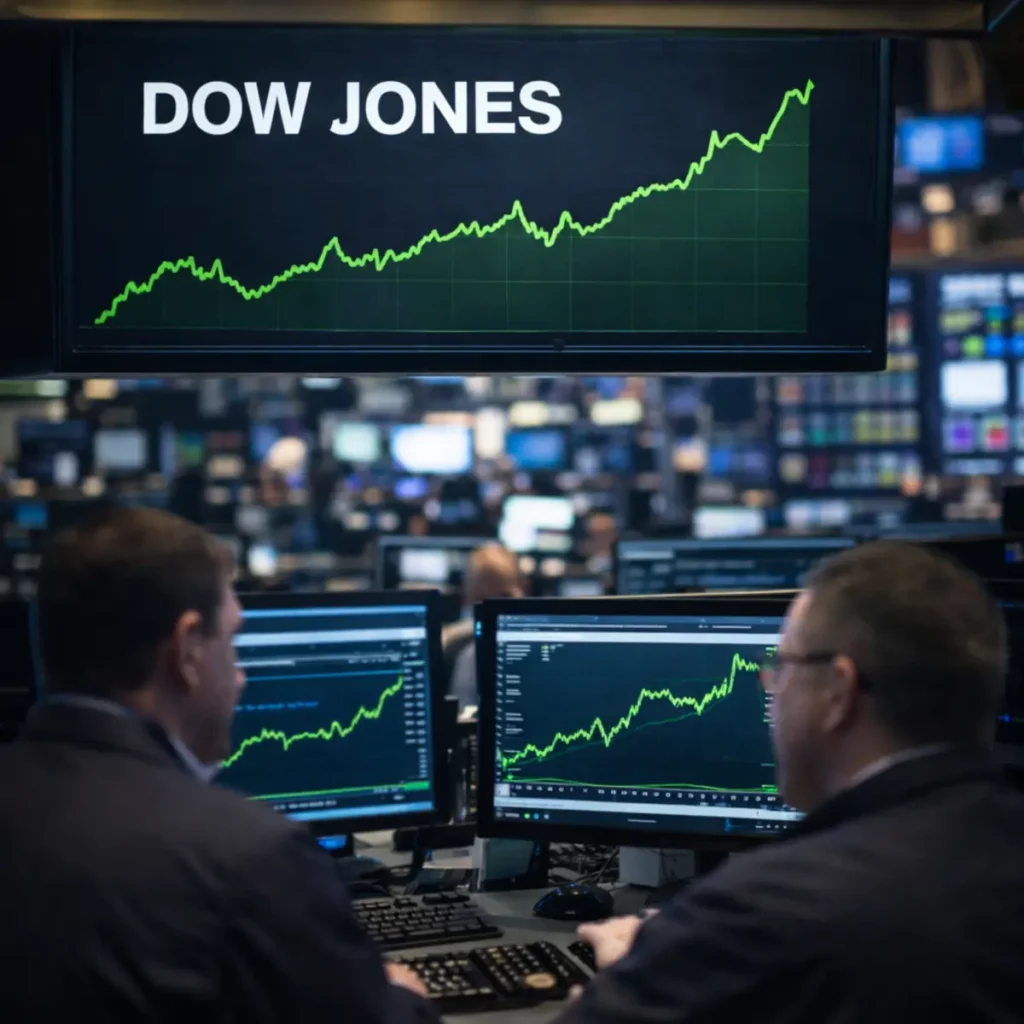

Wall Street got the kind of session investors had been waiting for. The Dow Jones Industrial Average surged 1,022 points to 46,238, a powerful rebound that reflected a broad return to risk appetite after a tense stretch dominated by energy fears and geopolitical uncertainty. What made this move stand out was not just the size of the rally, but the shift underneath it. Traders were no longer reacting only to fear around oil supply and Middle East conflict. They were starting to price in the possibility that the worst-case scenario may not play out, and that change in tone helped drive one of the strongest market advances of the day.
The rally was not limited to the Dow. The S&P 500 climbed 2.69% to 6,514.51, while the tech-heavy Nasdaq Composite jumped 3.67%, showing that investors were willing to move back into growth and technology names as pressure eased across the broader market. For readers searching stock market today, Dow Jones today, or why the market is up, the answer came down to one key shift: easing concern that the latest geopolitical shock would keep pushing oil higher and inflation with it.
Oil prices cooled and that changed the mood fast
A major reason behind the market’s comeback was the reversal in crude prices. Earlier fears had centered on supply disruption and the risk of a prolonged spike in energy costs, especially with shipping and the Strait of Hormuz in focus. But by the afternoon, crude had pulled back sharply on hopes that diplomacy could still gain traction. Brent crude fell to around $104 a barrel, while West Texas Intermediate traded near $100 to $102. That retreat mattered because oil has been one of the biggest pressure points for both investors and households.
When crude rises too quickly, markets begin to worry about everything at once. Higher fuel costs can squeeze consumers, hit transport-heavy businesses, raise inflation expectations, and reduce the chances of any easy policy relief from the Federal Reserve. So when oil started falling instead of climbing, traders saw room for relief. It was not simply a commodity story. It was a market-wide reset in expectations.
That connection is easy for everyday readers to understand. If oil cools, investors immediately begin thinking about lower pressure on travel costs, delivery expenses, corporate margins, and household budgets. That is why the drop in oil helped power such a strong rebound in stocks. It was a relief trade, but it also had real economic logic behind it.
Key market numbers from the session:
Dow Jones: 46,238, up 1,022 points or 2.26%
S&P 500: 6,514.51, up 170.79 points or 2.69%
Nasdaq Composite: up 3.67%
Brent crude: around $104 per barrel after a sharp drop
WTI crude: around $100 to $102 per barrel
US gas prices: above $4 per gallon nationally
The market’s reaction was also tied to headlines suggesting a more flexible tone from both Iran and the White House. Reports indicated that Iranian President Masoud Pezeshkian had signaled a willingness to move toward an end to the conflict under the right conditions, while President Donald Trump was described as being open to winding down the war without insisting on a full reopening of the Strait of Hormuz first. Investors did not need a final resolution to buy stocks. They only needed a believable sign that escalation might not spiral further from here.
That change in expectations hit sectors differently, but the rebound was broad enough to carry the Dow decisively higher. Cyclical shares, growth stocks, and large-cap leaders all participated. The Nasdaq’s stronger gain showed that beaten-down tech names benefited most from the shift back toward risk. At the same time, the Dow’s move carried symbolic weight because it reflected confidence returning across industrial, consumer, financial, and diversified blue-chip names.
There were still signs of pressure beneath the surface. National average gas prices moved above $4 per gallon, and that remains a serious concern for consumers. According to AAA’s latest fuel data, higher pump prices continue to ripple across the economy, especially when they rise quickly. That matters because even on a day when stocks rally, investors are still watching whether higher fuel and transport costs could hurt spending in the weeks ahead.
Economic data released during the session painted a mixed but still important backdrop. Consumer confidence came in stronger than expected, suggesting households are not pulling back all at once, even with inflation pressure still part of the story. At the same time, labor market data showed hiring has been cooling. That combination leaves investors trying to judge whether the economy is slowing just enough to stay stable, or whether cost pressures from energy could create a tougher setup later in the year.
Why this Dow rally matters for investors and everyday readers
For market watchers, a 1,022-point Dow gain always grabs attention, but the reason behind it matters more than the number itself. This was not just a technical bounce. It was a relief move driven by a real-time shift in the biggest market narrative of the week: oil shock risk. Once that pressure started easing, stocks had room to breathe again.
For readers searching whether now is a good time to watch the Dow, what moved the market today, or why Wall Street suddenly bounced back, the answer is that investors saw an opening for a less damaging outcome on energy and geopolitics. That does not mean the danger has disappeared. Oil remains elevated, gas prices are still painful, and the geopolitical picture can change quickly. But for one session at least, Wall Street acted like it believed the panic had gone too far.
The Dow closing near 46,238 after adding more than a thousand points gives the rally real headline strength, but the bigger takeaway is the message behind the move. Investors still want to buy when fears start to cool. They still respond quickly to any sign that inflation pressure may ease. And they are still willing to rotate back into stocks when the path ahead looks even slightly less dangerous than it did a few hours earlier.
That is why this rally resonated beyond trading desks. It spoke to something ordinary investors understand well: markets can swing hard when fear dominates, but they can also recover just as fast when the story changes. On this day, the Dow did not just rise. It reflected a market trying to regain its footing, with oil prices, consumer pressure, and global tension all shaping the next move.
You may like: Microsoft’s $1B Thailand AI investment draws attention as $120B spending concerns grow
Author Bio
Ankit is a versatile content writer with more than 9 years of writing experience covering finance, business, sports, current affairs, and general editorial content. He is known for producing clean, structured, and factual articles that help readers make sense of rapidly changing stories. Chetan continues to write with a focus on quality, trust, and strong digital publishing standards.

Make Swikblog your go-to source on Google for reliable updates, smart insights, and daily trends.