
By Chetan | March 28, 2026
Earth Day is not just a feel-good moment anymore. It has quietly become a reality check.
The air is getting worse in many cities. Plastic is no longer just in oceans—it’s in food chains. And while awareness has increased, action still lags behind. Most people post something green on April 22, then move on.
But the planet doesn’t reset the next day.
The official Earth Day 2026 theme is “Our Power, Our Planet.” It’s not just a slogan. It’s a reminder that environmental progress has always come from ordinary people deciding to act—and that same power still exists today.
When is Earth Day 2026?
Earth Day 2026 will be observed on Wednesday, April 22. The date stays the same every year, chosen intentionally to fall between Spring Break and final exams to maximize participation when it first began.
Events don’t stop at one day. Earth Week activities typically run from April 18 to April 25, giving people more flexibility to take part.
What does the 2026 theme really mean?
“Our Power, Our Planet” is a response to a worrying shift. In recent years, hundreds of environmental protections—from clean air to water safety—have been rolled back globally.
The message is simple: the same collective action that created environmental laws in the past is still the only force strong enough to protect them.
It puts responsibility back where it belongs—not just on governments, but on people.
How Earth Day began
Earth Day started with anger—and action.
In 1969, a massive oil spill off the coast of California released millions of gallons of crude oil into the ocean, killing marine life across miles of coastline. U.S. Senator Gaylord Nelson saw the damage and decided something had to change.
On April 22, 1970, around 20 million people—about 10% of the U.S. population at the time—took to the streets in what became the largest civic demonstration in American history.
The impact was immediate. Within a few years, major environmental laws were introduced, including the Clean Air Act and Clean Water Act.
Since then, Earth Day has grown into a global movement involving over a billion people across more than 190 countries.
Why Earth Day still matters today
Because environmental problems are no longer distant.
They show up in daily life—extreme heat, polluted air, water shortages, and rising waste. Earth Day exists to reconnect people with that reality and push them from awareness to action.
And action works. History has already proven that.
12 simple ways to take action
You don’t need to change everything overnight. Real impact comes from small, consistent changes.
1. Reduce paper use
Paper production is resource-heavy. A single A4 sheet can use up to 10 liters of water. Switching to digital options—like QR-based forms instead of printed ones—can cut emissions significantly.
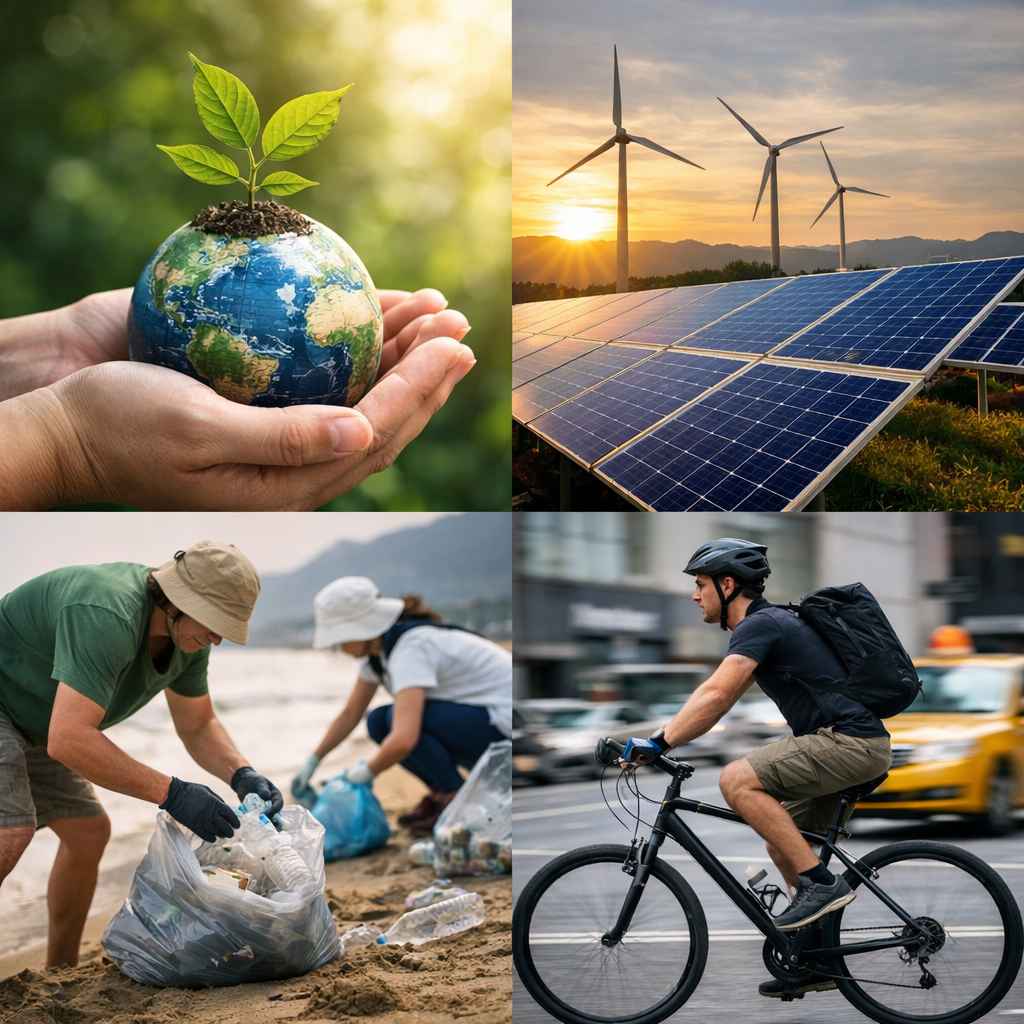
2. Join a cleanup drive
Spend a few hours cleaning your local area. It’s simple, visible, and immediately helpful.
3. Follow the 48-hour rule
Wait before making non-essential purchases. It reduces waste and impulse consumption.
4. Eat less meat
Even one or two plant-based days a week can reduce water use and methane emissions.
5. Adjust your thermostat
Small temperature changes reduce energy demand and lower emissions.
6. Use reusables
Switch to reusable bottles, bags, and cups to cut daily waste.
7. Wash clothes in cold water
Most washing machine energy goes into heating water. Cold washes save energy.
8. Reduce food waste
Plan meals better and compost if possible. Food waste often turns into harmful methane.
9. Walk or cycle short distances
For quick trips, skip the vehicle. It cuts emissions and saves fuel.
10. Buy better, not more
Choose durable products instead of fast replacements.
11. Plant something
Even small plants help absorb carbon and support biodiversity.
12. Turn actions into habits
One day won’t change anything. Consistency will.
The bigger picture
The average person’s carbon footprint can reach around 16 tons per year. Multiply that across billions of people, and the scale of the problem becomes clear.
But that also means the solution scales the same way.
Small actions, repeated by millions, create real impact.
Make it more than just a date
Earth Day is easy to celebrate. It’s harder to continue.
That’s where most people stop.
But the original Earth Day proved something powerful: ordinary people—students, workers, families—can drive massive change when they act together.
That power hasn’t disappeared.
The 2026 theme says it clearly: Our Power. Our Planet.
The real question is not whether change is possible.
It’s whether you’re willing to be part of it—starting today.

Make Swikblog your go-to source on Google for reliable updates, smart insights, and daily trends.