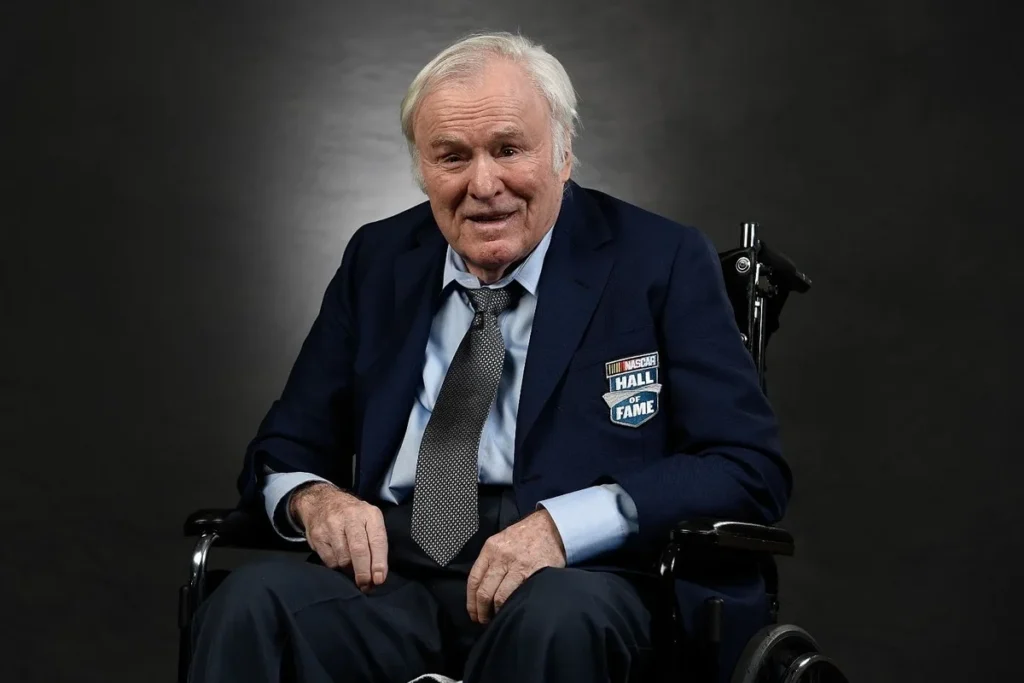

NASCAR Hall of Famer Fred Lorenzen has become the first former NASCAR driver confirmed to have chronic traumatic encephalopathy (CTE), after researchers discovered Stage 3 of the degenerative brain disease during a posthumous examination. The findings, disclosed on October 20, 2026, have renewed concerns about the long-term neurological risks faced by racing drivers.
Lorenzen, the 1965 Daytona 500 winner, died in December 2024 at age 89. His children, Chris Lorenzen and Amanda Lorenzen Gardstrom, are donating $1 million to advance CTE research and support families affected by neurological conditions.
Fred Lorenzen Diagnosed With Stage 3 CTE After Brain Donation
Researchers at Boston University’s CTE Center confirmed Stage 3 CTE after examining Lorenzen’s donated brain. He agreed to the donation in 2016, hoping it could help others.
Neuropathologist Dr. Thor Stein identified cortical-sparing CTE, a less common subtype involving deeper brain structures. Researchers report that it appears in approximately 11% of examined CTE cases.
The examination was conducted without researchers initially knowing Lorenzen’s identity or racing history. His findings were later compared with symptoms described by his family.
According to the Boston University CTE Center, CTE is associated with repeated head impacts and currently can only be definitively diagnosed after death.
Family Describes Decades of Memory Loss and Declining Health
Lorenzen’s children described years of confusion, anxiety, personality changes and worsening memory. By 2006, his difficulties were affecting important family occasions, including his daughter’s wedding.
Following a serious fall in 2010, Lorenzen experienced major mobility problems and spent approximately 14 years using a wheelchair. He eventually required round-the-clock care, which his son estimated cost around $200,000 annually.
His declining health also affected his NASCAR Hall of Fame induction in 2015. Unable to deliver his speech, Lorenzen was represented at the podium by his son.
Amanda described the family’s experience as approximately 35 years of heartbreak, including missed opportunities for her father to enjoy time with his grandchildren.
Family Donates $1 Million to Support CTE Research
Chris and Amanda are contributing $1 million to the Concussion & CTE Foundation and establishing the Fred Lorenzen Memorial HelpLine.
The initiative aims to connect current and retired drivers with medical resources and support. It also highlights long-term healthcare challenges in NASCAR, where drivers generally compete as independent contractors rather than members of a players’ union.
Fred Lorenzen’s NASCAR Career and Daytona 500 Victory
Nicknamed “Fast Freddie,” “The Golden Boy” and the “Elmhurst Express,” Lorenzen became one of NASCAR’s biggest stars during the 1960s.
He won 26 Cup Series races in 158 starts between 1956 and 1972, including the 1965 Daytona 500 and the World 600 in 1963 and 1965.
In 1963, he became NASCAR’s first driver to earn more than $100,000 in a season. He also captured consecutive USAC stock car championships in 1958 and 1959.
Lorenzen entered the NASCAR Hall of Fame in 2015 and was selected among NASCAR’s 75 Greatest Drivers in 2023.
His career remains part of NASCAR’s history as the sport continues to confront high-speed racing risks. A more recent example was the Bristol NASCAR crash involving Ryan Blaney and Carson Hocevar, which brought attention to on-track collisions and driver safety.
Dale Earnhardt Jr. and Darrell Waltrip Highlight Brain Health Concerns
Lorenzen’s diagnosis follows growing discussion about neurological health in motorsports. Dale Earnhardt Jr., whose career was affected by repeated concussions, has previously pledged to donate his brain for research.
Three-time NASCAR champion Darrell Waltrip has stepped away from public life following a diagnosis of frontotemporal degeneration (FTD). Although his family raised concerns about possible CTE-related complications, FTD and CTE are distinct conditions, and Waltrip has not been confirmed to have CTE.
Former BMX and rallycross athlete Dave Mirra was diagnosed with CTE after his death in 2016, making Lorenzen the first confirmed NASCAR case rather than the first across motorsports.
NASCAR Safety Measures and Future CTE Research
NASCAR has introduced major safety improvements since Lorenzen’s racing era, including mandatory head-and-neck restraints, SAFER barriers, stronger cockpit protection and concussion assessments.
Driver protection remains a concern across motorsports. In Formula 1, Ollie Bearman’s Spanish Grand Prix practice crash illustrated the forces involved in high-speed accidents, although he escaped injury.
Researchers are studying crash-related head movement and potential blood biomarkers that could eventually help identify CTE in living patients.
According to USA TODAY, Lorenzen’s family discussed funding additional research with NASCAR in 2026, but no partnership resulted. NASCAR had not responded to the publication’s request for comment before publication.
One confirmed case cannot establish how common CTE is among retired NASCAR drivers. Lorenzen’s family hopes his brain donation will advance research and help other drivers access support before their health deteriorates.

Make Swikblog your go-to source on Google for reliable updates, smart insights, and daily trends.