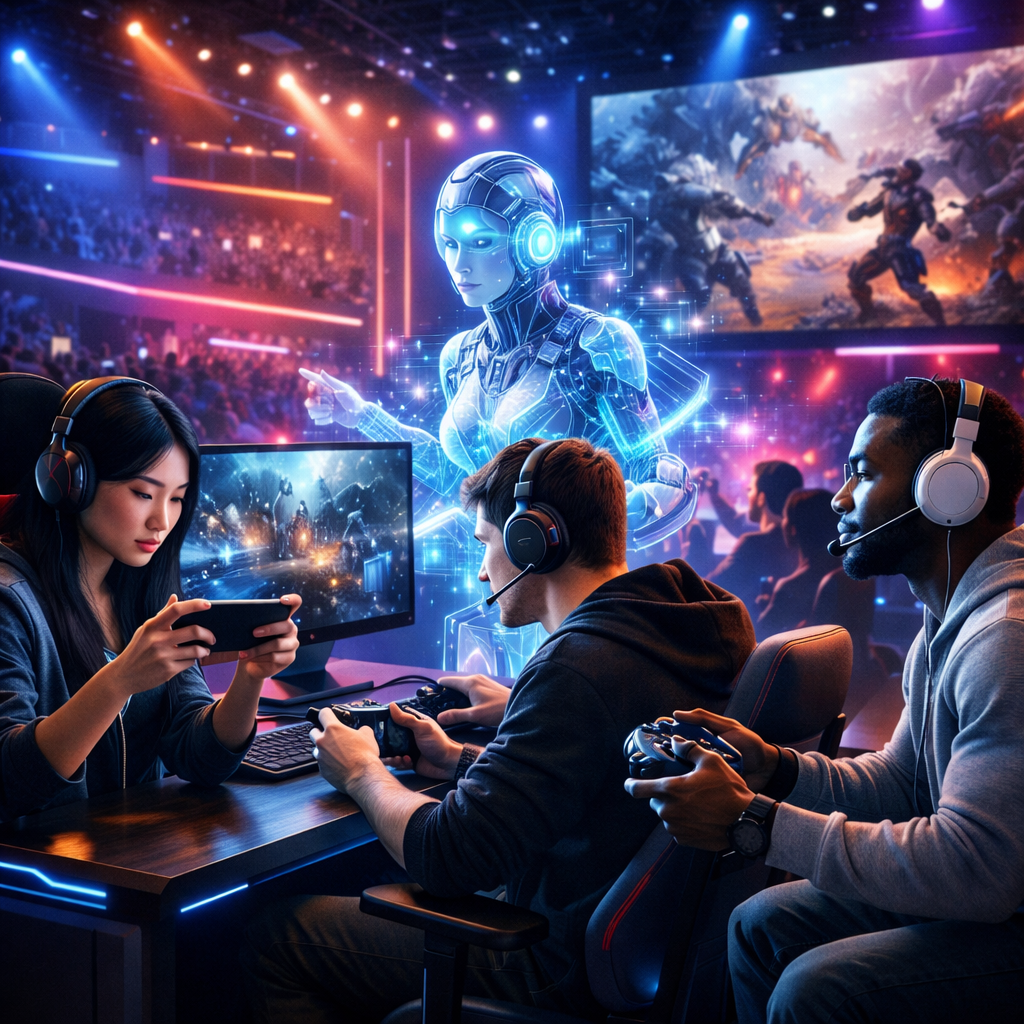

The gaming industry in 2026 is evolving faster than ever, driven by a mix of technology, changing player behavior, and new business models. What once felt like separate ecosystems—mobile, console, and PC—are now merging into a single, highly connected experience. At the same time, artificial intelligence and community-driven content are reshaping how players interact with games.
From the rise of mobile esports to over 1,200 cross-platform titles and smarter monetization strategies, here are the five biggest gaming trends defining player engagement this year.
Mobile Esports Expands Beyond Expectations
Mobile esports has moved far beyond its niche beginnings. In 2026, it is one of the fastest-growing segments in gaming, attracting record-breaking viewership and major brand sponsorships. Much of this growth has been driven by Asia, where mobile-first gaming dominates.
A major milestone came with Mobile Legends: Bang Bang being featured in the Asian Games, signaling how seriously competitive mobile gaming is now being taken globally. At the same time, platforms like TikTok Live are transforming how esports content is consumed. Short, engaging clips are drawing in new audiences who may not have traditionally followed esports, creating a steady funnel of new viewers.
This combination of accessibility and discoverability is turning mobile esports into a mainstream entertainment category.
AI Brings Real-Time Personalization to Games
Artificial intelligence is no longer just a background tool—it’s becoming central to the gaming experience. Instead of static gameplay with fixed difficulty levels, modern games now adapt in real time based on player behavior.
This means enemies become smarter, storylines evolve dynamically, and challenges adjust to match individual skill levels. The result is a far more immersive and personalized experience that keeps players engaged for longer periods.
For developers, AI is also reducing the burden of manual scripting and repetitive programming. By automating certain aspects of game design, studios can focus more on innovation while cutting down production costs.
Cross-Platform Gaming Breaks Down Barriers
The walls between gaming platforms are rapidly disappearing. In 2026, more than 1,200 games support cross-platform play, allowing users on mobile, PC, and consoles to play together seamlessly.
Popular titles like Fortnite and Apex Legends have played a major role in normalizing this trend. Players no longer need the same device to connect with friends, making gaming more inclusive and social.
This shift has been made possible by advancements in cloud computing and infrastructure. Devices like the PlayStation Portal demonstrate how cloud-powered gaming can deliver high-quality experiences without relying on traditional hardware limitations.
According to industry data from Statista, cross-platform accessibility is now one of the strongest drivers of user engagement, as it allows larger, more connected communities to form around games.
Interactive Streaming Turns Players Into Creators
Another major shift in 2026 is the growing influence of community-driven content. Players are no longer just participants—they are becoming creators and decision-makers within games.
Streaming platforms like Twitch and YouTube Gaming are leading this change by enabling real-time interaction between streamers and audiences. Technologies such as Genvid SDK and Amazon GameLift allow viewers to directly influence gameplay through features like voting on in-game decisions.
This level of interactivity has a measurable impact. Studies show that engagement can increase by nearly 30%, even among viewers who are not actively participating. It’s turning streaming platforms into community hubs where gaming is as much about social interaction as it is about playing.
New Monetization Models Redefine Revenue
The business side of gaming is also undergoing a major transformation. Free-to-play remains the dominant model, but developers are refining how they generate revenue.
Subscription services such as Xbox Game Pass and PlayStation Plus are becoming central to the industry, providing a steady and predictable income stream compared to one-time purchases. At the same time, there is a noticeable shift away from controversial loot boxes.
Instead, many games are adopting battle passes, which offer a more transparent and structured way for players to unlock content. This approach has been better received by players and helps build trust.
Reward-based advertising is another growing trend. Players can choose to watch ads in exchange for in-game rewards, creating a win-win situation for both users and developers.
Interestingly, similar strategies are being used in the iGaming sector, where platforms offer bonuses to attract new users and build engagement. This highlights how incentives continue to play a key role in shaping player behavior across the broader gaming ecosystem.
The gaming landscape in 2026 is defined by connectivity, personalization, and evolving player expectations. Whether it’s AI-driven gameplay, mobile esports growth, or cross-platform expansion, the industry is moving toward a future where games are more accessible and engaging than ever before.
For players, it means richer experiences and stronger communities. For developers, it’s a race to innovate in an environment where technology and audience demands are constantly pushing boundaries.
You may like: YouTube Ads Drop for Live Streams in Latest Update

Make Swikblog your go-to source on Google for reliable updates, smart insights, and daily trends.