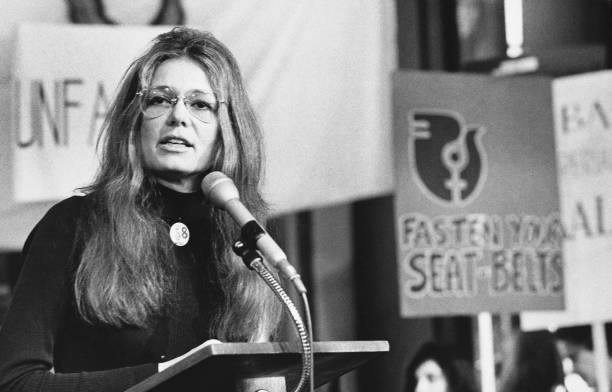

Gloria Steinem, the journalist and organizer whose work helped move women’s equality from the margins of American debate into its political mainstream, has died at the age of 92.
Steinem died peacefully at her New York City home on Wednesday, September 2, surrounded by people close to her, according to a statement released by Gloria’s Foundation. A specific cause of death was not disclosed.
Her death closes a public life that stretched across more than six decades, but one final chapter remains. Steinem’s new memoir, An Unexpected Life, is scheduled to be published later in September, meaning readers will receive her last major reflection only weeks after her death.
That detail makes Steinem’s passing more than a conventional farewell to a historic figure. At 92, she was still writing, hosting conversations and considering how movements survive after their most recognizable leaders are gone.
A final book and a home meant to outlive her
In announcing her death, Steinem’s foundation said she had continued working for equality until the end. Her later years were reportedly centered on two longstanding priorities: writing and bringing people together.
Her Manhattan brownstone was not treated simply as a private residence. It became a meeting place where activists, writers and organizers could gather for “talking circles” built around listening and shared participation.
The house is expected to remain part of that work through Gloria’s Foundation, extending Steinem’s belief that social change depends on communities rather than a single celebrated personality.
Instead of sending flowers, those wishing to remember her were asked to consider supporting the foundation. The request reflected an idea that ran throughout her career: public admiration mattered less if it did not produce action.
Her forthcoming memoir offers another link between her private life and public legacy. Publisher Penguin Random House describes An Unexpected Life as an account of the experiences, relationships and unexpected turns that shaped her work.
Steinem had already explored years of travel and organizing in her 2015 memoir, My Life on the Road. The new book is expected to provide a final personal perspective on a life usually described through protests, political campaigns and magazine covers.
How journalism turned Gloria Steinem into an organizer
Born in Toledo, Ohio, in 1934, Steinem studied government at Smith College before spending approximately two years in India. Her time there exposed her to community-based organizing and nonviolent activism, influences that later appeared throughout her work.
Her national profile began growing through journalism. In 1963, she went undercover as a Playboy Bunny in New York and documented the working conditions faced by women inside the club. The assignment attracted attention, although Steinem later spoke about the difficulty of being taken seriously as a writer after it appeared.
She helped establish New York magazine in 1968 and became one of its political writers. Four years later, she co-founded Ms. magazine, creating a prominent national platform for reporting and commentary on workplace discrimination, reproductive freedom, domestic violence and political representation.
Steinem did not remain only an observer of the movement she covered. She helped establish organizations including the National Women’s Political Caucus, the Ms. Foundation for Women and the Women’s Media Center.
Her visibility made her one of the best-known faces of second-wave feminism, but it also exposed her to political attacks and disagreements from within the movement. Over time, her advocacy increasingly emphasized connections among gender inequality, racism, economic power and violence.
Former US secretary of state Hillary Clinton described Steinem following her death as one of the architects of the modern structure of women’s equality. Clinton also encouraged younger women to continue supporting one another in the struggles Steinem championed.
Steinem received the Presidential Medal of Freedom from President Barack Obama in 2013. She was also inducted into the National Women’s Hall of Fame and received numerous honors for journalism and activism.
Her personal life included a marriage to businessman and environmentalist David Bale, the father of actor Christian Bale. They married in 2000, when Steinem was 66. Bale died in 2003.
Steinem was diagnosed with breast cancer in the 1980s and underwent treatment, but she continued writing, speaking and campaigning for decades afterward.
Her life was later portrayed in Julie Taymor’s 2020 film The Glorias, while the political disputes surrounding the women’s movement were dramatized in the television series Mrs. America.
Like other recent deaths involving influential cultural figures, including the reported daughter of Freddie Mercury, Steinem’s passing has prompted renewed attention to the personal history behind a widely recognized public name.
Yet Steinem’s own view of leadership resisted the idea that one person should permanently hold a movement’s torch. She frequently presented organizing as the work of helping other people discover and use their own voices.
That may be the most important context surrounding her death. Gloria Steinem leaves behind magazines, organizations, books and political changes, but also an unfinished conversation about equality that she expected others to continue.
This is a developing report and will be updated if her family or foundation releases additional information about memorial arrangements.

Make Swikblog your go-to source on Google for reliable updates, smart insights, and daily trends.