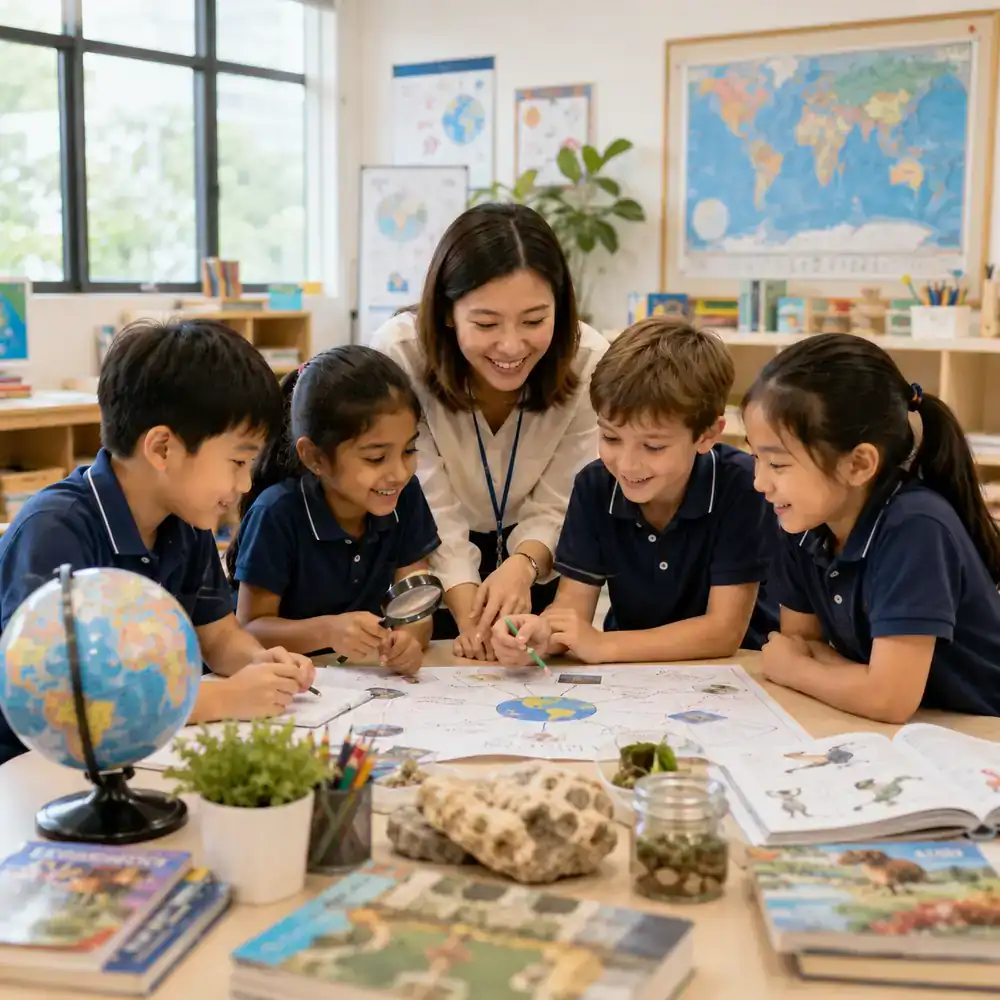

Parents look for an education that nurtures curiosity, confidence, and balanced growth from early childhood years. A strong foundation during primary education shapes how children think, learn, and respond to future challenges ahead. Modern education focuses on inquiry, creativity, and real-world relevance rather than strict memorisation or passive lessons.
In international primary schools in Singapore, the IB PYP plays a key role in shaping such experiences. It supports holistic growth as it combines academic learning with emotional, social, and personal development within classrooms. This article explains how the IB PYP sets these learning environments apart through unique educational practices.
What The IB PYP Is
The International Baccalaureate Primary Years Programme (IB PYP) is an educational framework designed to develop curious, knowledgeable, and well-rounded young learners. It focuses on inquiry-based learning, where children explore concepts through questions, discussions, and real-world connections across subjects. The programme also supports personal growth as it encourages responsibility, reflection, and respect for different perspectives within a global context.
1. Curiosity Sits At The Centre Of Every Lesson
Students in a school environment experience lessons that encourage questions, reflection, and thoughtful exploration, which nurture a genuine interest in knowledge. Teachers design experiences where curiosity leads progress, so learners feel confident when they share ideas or doubts. This approach removes pressure linked to memorisation and replaces it with enthusiasm for discovery.
Young learners in Singapore’s primary schools receive opportunities to explore concepts through inquiry. They engage with materials and discussions that support critical thinking, rather than surface-level recall. This style fosters confidence and motivates students to remain interested in learning across different stages of development.
2. Learning Connects Across Subjects, Not In Silos
The curriculum within trusted schools in Singapore integrates subjects into broad themes, so knowledge does not remain limited. Children explore ideas that link science, language, and mathematics, which improves comprehension through real-world connections. This method allows them to see how concepts relate, rather than viewing each discipline as separate or unrelated.
Teachers in primary schools guide learners through structured units that encourage exploration of global themes. These connections help them recognise patterns and relationships, which strengthens their ability to apply knowledge in varied contexts. Over time, this approach creates a deeper sense of purpose within their academic journey.
3. Independent Thinking Grows From An Early Stage
Learners within schools receive guidance that encourages them to think critically, question assumptions, and form their own informed perspectives. This approach builds confidence, as students feel their opinions matter within a respectful and supportive academic environment. They gradually develop the ability to evaluate information, rather than accepting ideas without thoughtful consideration.
Educators in Singapore’s schools create space for reflection, which helps learners understand their strengths. This awareness supports personal growth and encourages responsibility for their own progress within the classroom environment. Over time, this leads to self-directed learning habits that extend beyond academic expectations.
4. A Strong Focus On The Whole Child Shapes Balanced Growth
Education within academic settings extends beyond the syllabus, with equal emphasis placed on emotional well-being, social awareness, and personal development. Students learn how to manage emotions, build relationships, and respect diverse perspectives within a multicultural environment. This balance ensures they grow into individuals who value empathy, responsibility, and thoughtful decision-making in Singapore’s institutions.
Activities within reliable primary schools support physical development and creative expression. Students gain confidence through participation in arts, sports, and collaborative projects that encourage teamwork and communication. This holistic approach ensures growth across multiple dimensions, rather than limiting focus to academic performance alone.
5. Real World Application Makes Learning Meaningful
Lessons in schools connect directly with everyday situations, which helps learners understand how knowledge applies beyond classroom settings. This relevance increases engagement, as students see the value of what they learn in practical and meaningful ways. They develop problem-solving skills that prepare them for challenges within real-life contexts.
Multiple projects encourage learners to explore global issues, which broadens their perspective and deepens their understanding of societal challenges. They reflect on their role within communities, which nurtures responsibility and awareness from a young age. This approach helps them see education as a tool for positive impact rather than a routine requirement.
6. Collaboration And Communication Become Natural Habits
Group activities encourage students to share ideas, listen carefully, and respect different viewpoints within collaborative environments. These experiences help them build confidence in communication while developing skills required for teamwork. In a primary school for foreigners in Singapore, such collaborative practices also help children adapt smoothly to diverse cultural settings.
Teachers facilitate discussions that allow learners to practise articulation and active listening within structured yet flexible settings. This approach strengthens interpersonal skills and prepares them for future interactions within diverse environments. Over time, these habits become natural, which benefits both academic success and social development.
The IB PYP creates a thoughtful balance between academic strength and personal growth within early education. This is why international primary schools in Singapore stand out, as they offer a learning journey that feels purposeful and engaging. Consider the IB PYP framework carefully and select a learning environment that truly supports a child’s future potential.

Make Swikblog your go-to source on Google for reliable updates, smart insights, and daily trends.