
International Labour Day 2026 will be observed on Friday, May 1, as countries across the world recognise the contribution of workers and the long struggle behind modern workplace rights. Also known as May Day or International Workers’ Day, the occasion is not only about a holiday from work. It is a reminder that basic protections such as fixed working hours, safer workplaces, paid leave and the right to organise were achieved through decades of collective effort.
The International Labour Day 2026 theme is expected to focus on dignity of labour, fair employment, workplace safety and the future of workers in a changing economy. While the official theme may differ across organisations and countries, the larger message remains the same: every worker deserves respect, fair pay, social security and humane working conditions.
International Labour Day 2026 theme and meaning
The meaning of International Labour Day has become wider over time. Earlier, it was closely linked to the demand for an eight-hour workday. Today, it also includes issues such as job security, mental health at work, gender pay gaps, informal employment, migrant workers’ rights and protections for gig economy workers.
The theme for 2026 is especially important because the world of work is changing quickly. Remote work, artificial intelligence, automation, app-based jobs and freelance employment have created new opportunities, but they have also raised difficult questions. Many workers now face unstable income, longer digital working hours and limited access to benefits such as health insurance, paid leave and retirement security.
That is why International Labour Day is still relevant. It asks governments, companies and society to look beyond economic growth and focus on the people who make that growth possible.
Why May 1 is celebrated as Labour Day
The history of Labour Day goes back to the Industrial Revolution, when millions of people worked in factories, mines, workshops and mills under harsh conditions. Long shifts of 12 to 16 hours were common, and workplace safety was often ignored. Workers had little protection against low wages, injuries or sudden dismissal.
By the 19th century, labour unions and workers’ groups began demanding change. One of their strongest demands was simple but powerful: eight hours for work, eight hours for rest and eight hours for personal life. This idea later became known as the 8-8-8 principle.
The turning point came in the United States in 1886. Labour organisations called for May 1 to mark the beginning of an eight-hour workday. On that date, hundreds of thousands of workers joined strikes and demonstrations across the country. Chicago became one of the major centres of the movement.
On May 4, 1886, a labour rally at Haymarket Square in Chicago turned violent after a bomb was thrown during the gathering. Police officers and civilians were killed, and several labour activists were later prosecuted. The incident became known as the Haymarket Affair and turned into a global symbol of workers’ struggle for justice.
In 1889, an international gathering of socialist and labour organisations declared May 1 as International Workers’ Day to honour the movement for the eight-hour workday and the workers who had suffered during the Haymarket events. Since then, May 1 has been observed in many countries as a day of labour solidarity.
For wider global context on labour rights and decent work standards, readers can refer to the International Labour Organization, the United Nations agency focused on workers’ rights, employment and social protection.
May Day, Labour Day and the difference from mayday
The term May Day has two historical meanings. In Europe, May 1 was once linked to spring festivals and seasonal celebrations. Over time, the date became strongly associated with the labour movement and workers’ rights.
It is also important not to confuse May Day with “mayday,” the emergency distress call used in aviation and radio communication. May Day refers to the workers’ holiday, while mayday signals danger or emergency.
Today, May Day is marked through rallies, speeches, union events, awareness campaigns and public discussions. In many countries, it is also a paid public holiday. Workers use the day both to celebrate past achievements and to raise concerns about present-day employment challenges.
International Labour Day in India
India first observed Labour Day in 1923 in Chennai, then known as Madras. The event was led by labour leader Singaravelar, who called for May 1 to be recognised in support of workers’ rights. Since then, the day has been observed in different parts of India as Labour Day, Kamgar Din, Kamgar Divas or Antarrashtriya Shramik Divas.
In India, May 1 also coincides with Maharashtra Day, which marks the formation of the state of Maharashtra in 1960. Because of this, banks, government offices and markets may remain closed in several regions depending on state holiday rules.
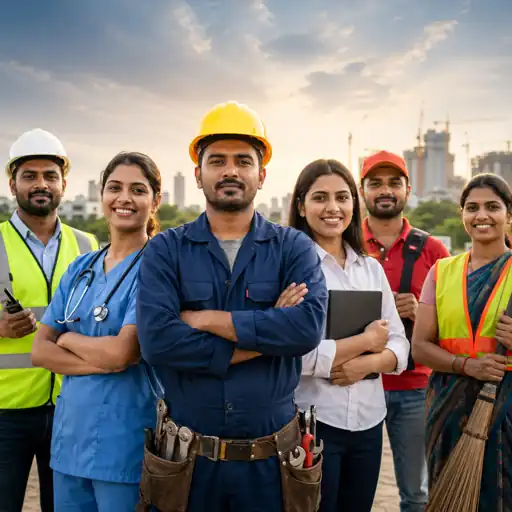
The day carries special importance in India because a large share of the workforce is still employed in informal sectors. Many workers in construction, domestic work, agriculture, small businesses, delivery services and contract jobs continue to face uncertainty over wages, benefits and workplace safety.
To understand related workplace protections, readers can also visit our guide on labour laws and worker rights in India.
Why International Labour Day still matters in 2026
International Labour Day 2026 is not only about remembering the past. It is about asking whether today’s workers are receiving the dignity and protection they deserve. The issues may have changed from factory floors to digital platforms, but the core question remains the same: is work fair, safe and sustainable?
From the eight-hour workday movement to today’s debate over gig workers and workplace well-being, May 1 continues to represent the voice of workers. It reminds us that economic progress should not come at the cost of human dignity.
As the world enters a more technology-driven future, International Labour Day 2026 offers a timely message: workers are not just part of the economy — they are the foundation of it. Protecting their rights is not only a labour issue, but a social and economic priority.
You may also like: Romania Coach Mircea Lucescu Hospitalised After Sudden Health Scare Before Training

Make Swikblog your go-to source on Google for reliable updates, smart insights, and daily trends.