
Kansas City Airport moved into the spotlight on Sunday after a wave of disruptions left travelers dealing with a messy mix of delayed departures, cancelled flights, missed connections and uncertain arrival times. What began as a difficult operating day at Kansas City International Airport quickly turned into a broader travel problem stretching well beyond Missouri, touching major domestic hubs and several leisure routes into Mexico and the Dominican Republic.
The scale of the disruption was large enough to create immediate pressure across airline schedules. With 90 delayed flights and 15 cancellations tied to Kansas City Airport, the impact was felt not just by passengers beginning their journeys there, but also by travelers connecting through other busy gateways. Routes linked to cities including Chicago, Atlanta, Dallas, Cancun and Punta Cana were among those caught in the knock-on effect, leaving passengers to deal with rolling gate changes, longer waits and rebooking headaches.
For many travelers, the biggest frustration was not only the delay itself but the uncertainty that comes with air traffic disruption. Flights that appear only slightly late in the morning can slip further through the day as aircraft rotations tighten, incoming crews arrive behind schedule and available gates become harder to manage. That kind of domino effect can turn one difficult airport into a problem spread across an entire network.
Why Kansas City Airport delays can spread so quickly
Kansas City International is not one of the very largest hubs in the country, but it is tightly connected to some of the busiest airports in North America. When flights to or from major transfer points start running behind, the disruption can accelerate fast. Travelers moving through Chicago O’Hare, Atlanta, Dallas-Fort Worth, Denver and Orlando can suddenly find that a short delay on one leg destroys the connection window on the next.
That matters even more on a heavy travel day, when airlines are trying to keep aircraft utilization high and turnaround times tight. Once one aircraft misses its assigned slot, the next route can also slip. Crews may need more time to reposition. Boarding can be slowed by late inbound passengers. Even baggage handling can become a bottleneck once multiple flights stack up inside the same operating window.
The result is that a disruption centered on Kansas City Airport can quickly affect both business travelers heading to major U.S. cities and leisure passengers bound for warm-weather destinations. Flights connected to Cancun and Punta Cana are especially sensitive because international leisure itineraries are often less flexible once delays begin to build.
Airlines under pressure as passengers scramble for options
Several carriers were pulled into Sunday’s travel chaos, including American Airlines, Southwest Airlines, PSA Airlines, Frontier Airlines, United Airlines and regional operators linked to larger network brands. That mix is important because it means the disruption was not confined to one airline’s system. Instead, it spread across both mainline and regional schedules, making it harder for passengers to find easy alternatives at short notice.
Southwest is always closely watched at Kansas City because of its strong presence on domestic routes, and any heavy delay pattern there can affect a large number of travelers in a short period. American and United passengers also faced pressure, particularly where Kansas City flights were feeding onward connections through larger hub airports. Regional carriers often feel the strain even more sharply because their schedules depend on quick aircraft turns and tightly timed crew assignments.
For travelers, this kind of multi-airline disruption usually creates the same familiar problems. Connection times shrink. Seats on replacement flights disappear quickly. Hotel plans at the destination may need to be adjusted. Ground transportation bookings can be missed. In some cases, the trip still happens, but not on the day or route originally planned.
What passengers are dealing with on the ground
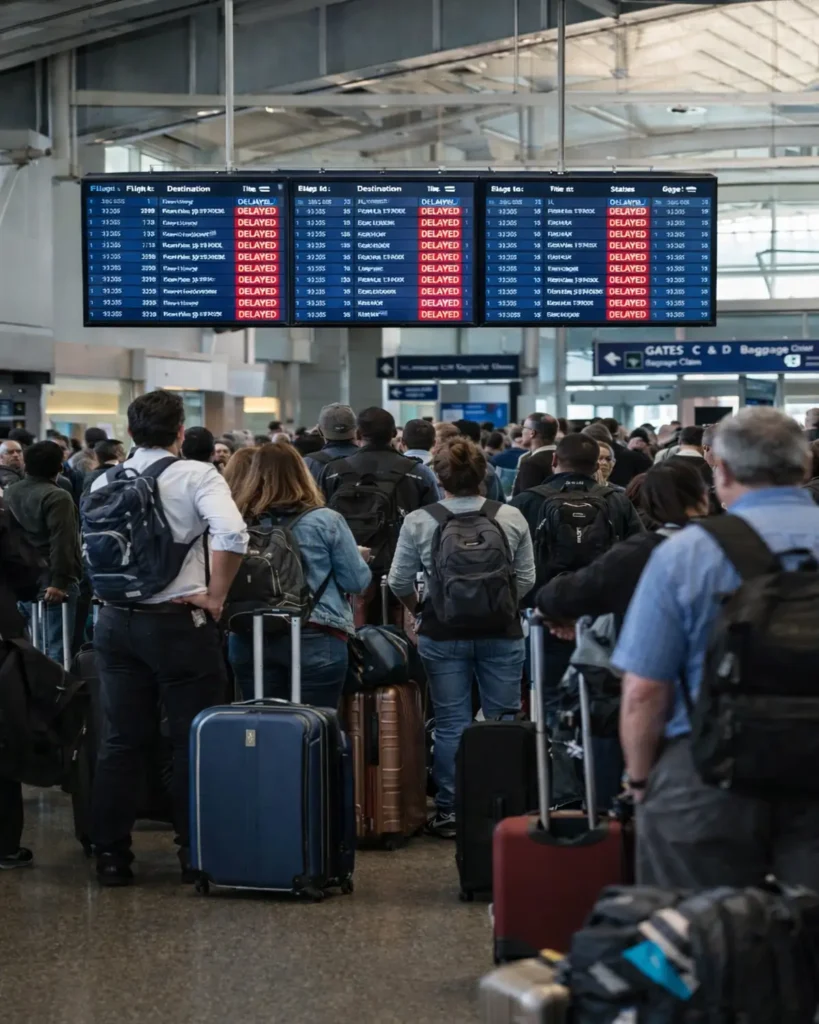
Inside airports, the visible signs of disruption tend to look the same wherever they happen: crowded gate areas, packed customer service lines, repeated checks of airline apps and a departure board that keeps shifting. At Kansas City Airport, the practical impact for many passengers is likely less about one cancellation number on paper and more about the hours lost trying to work out the next move.
Some travelers may choose to wait it out and hope their flight eventually departs. Others may look for alternate routings through nearby hubs or switch to later departures. Those flying to vacation destinations in Mexico or the Dominican Republic may be particularly anxious, since missed same-day arrivals can affect hotel check-ins, airport transfers and the first full day of a short trip.
The most useful move in a situation like this is staying close to real-time updates. Airline apps usually update faster than airport monitors, and live tracking tools such as FlightAware can also help passengers spot inbound aircraft delays before an airline sends a formal notification.
What happens next for Kansas City Airport travelers
Even when operations begin to stabilize, the effects of a day like this rarely disappear immediately. Delayed aircraft still need to be repositioned, crews must stay within legal duty-hour limits and airlines often spend the rest of the day rebuilding schedules one flight at a time. That means some passengers may see conditions improve by evening, while others continue to feel the impact into the next operating cycle.
For now, Kansas City Airport travelers are dealing with a reminder of how quickly a local disruption can become a regional travel story. With 90 delays and 15 cancellations already on the board, Sunday’s disruption has become more than a temporary inconvenience. It has turned into a broad network problem affecting routes across the United States and reaching into popular international destinations, exactly the kind of airport chaos that can derail plans long after the first delay is posted.

Make Swikblog your go-to source on Google for reliable updates, smart insights, and daily trends.