
Updated: July 5, 2026
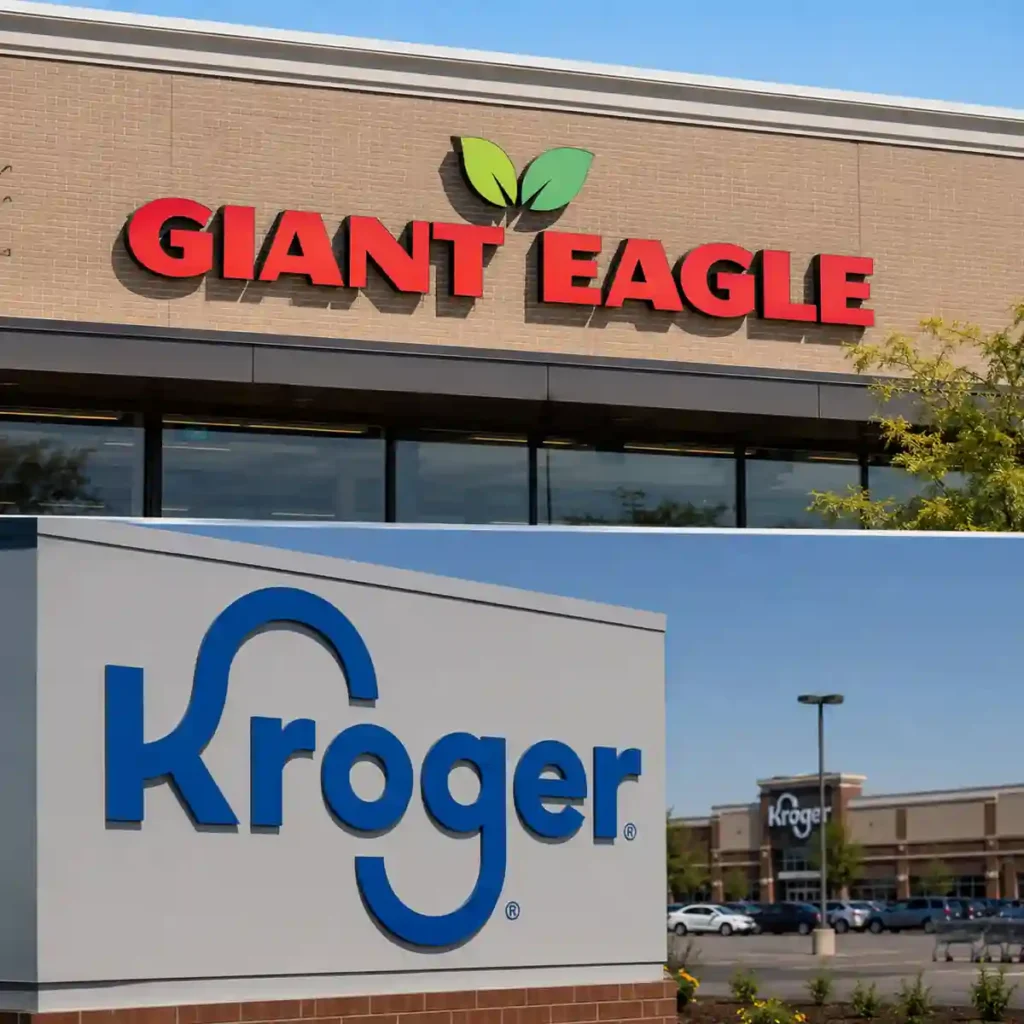
Kroger has agreed to acquire regional grocery and pharmacy retailer Giant Eagle in a $1.65 billion transaction, making it one of the largest U.S. grocery acquisitions announced in 2026. The agreement will expand Kroger’s footprint across western Pennsylvania, northern Ohio, West Virginia, Maryland and Indiana, where Giant Eagle has built a strong regional presence over decades.
The companies announced the deal on July 1, 2026. Kroger expects the acquisition to close in 2027, subject to regulatory approval and other customary closing conditions. Until then, Giant Eagle will continue operating as an independent business.
Key facts about the Kroger-Giant Eagle acquisition
The transaction is valued at $1.65 billion, consisting of approximately $1.25 billion in cash and about $400 million in assumed liabilities. Kroger’s Board of Directors has unanimously approved the agreement, but it still requires approval from regulators before it can be completed.
Giant Eagle operates nearly 200 supermarkets and standalone pharmacies across five states and generates roughly $9 billion in annual revenue. The retailer is one of the largest privately owned supermarket companies in the United States.
Official details of the acquisition are available through Kroger’s investor announcement.
Why Kroger is acquiring Giant Eagle
The acquisition gives Kroger immediate access to markets where Giant Eagle already has an established customer base rather than building new stores from the ground up. The regional chain brings experienced employees, pharmacy operations, fresh food departments and long-standing relationships with shoppers.
Kroger Chief Executive Officer Greg Foran said Giant Eagle expands the company’s presence into attractive neighboring markets while strengthening its grocery, pharmacy and digital retail operations. The transaction supports Kroger’s strategy of growing through established regional brands.
The agreement comes after Kroger shifted its growth strategy following the unsuccessful Albertsons merger, focusing instead on targeted acquisitions that expand its geographic reach.
What Giant Eagle adds to Kroger
Founded in 1931, Giant Eagle has become a familiar supermarket brand throughout western Pennsylvania and nearby states. Its stores serve millions of customers through traditional supermarkets, Market District locations and pharmacy services.
Beyond food retailing, the company has built strong customer loyalty through pharmacy services, prepared meals, private-label products and digital shopping options. These operations complement Kroger’s nationwide grocery business.
Before announcing this acquisition, Giant Eagle had already streamlined its business by selling its GetGo convenience store division to Alimentation Couche-Tard, allowing the company to focus more heavily on its supermarket operations.
Will Giant Eagle stores keep their name?
Based on information released with the transaction, Giant Eagle stores are expected to continue operating under their existing banners after the acquisition closes. Kroger has not announced plans to convert stores to the Kroger name.
Customers should not expect immediate changes to store operations, pharmacy services, loyalty rewards or product availability while regulatory reviews continue.
What regulators will review
The acquisition must undergo review by federal regulators, who will examine whether the transaction would reduce grocery competition in individual local markets. U.S. grocery mergers are generally evaluated community by community rather than across the entire country.
In areas where Kroger and Giant Eagle have overlapping operations, regulators could require the sale of certain stores before approving the acquisition. At this stage, no final decisions on potential divestitures have been announced.
What shoppers can expect
For now, Giant Eagle customers should continue seeing the same stores, pharmacy services, fuel rewards and grocery offerings they use today. The companies have not announced changes to pricing, loyalty programs or store operations.
Once the transaction closes, Kroger could gradually integrate its supply chain, digital grocery platform and private-label brands into Giant Eagle’s operations. Any future changes are expected to happen over time rather than immediately after closing.
Read More:
- Emma Vardy returns to BBC Breakfast after maternity leave
- Suspected space debris washes up on North Queensland beach
- Visit the Swikblog homepage for more latest news
Competition in the regional grocery market
The acquisition comes as competition among supermarket chains continues to increase across western Pennsylvania and neighboring states. Retailers are investing heavily in lower prices, online grocery services, pharmacy expansion and store renovations as consumers continue looking for value.
Industry analysts expect regulators to closely examine local grocery competition, particularly in markets where Giant Eagle has historically held a significant market share.
For additional background on how competition regulators evaluate supermarket mergers, the U.S. Federal Trade Commission provides information about merger review and antitrust enforcement.
The transaction is expected to move through regulatory review during the coming months, with Kroger targeting completion in 2027. Until the deal officially closes, Kroger and Giant Eagle will continue operating as separate companies.
The biggest questions for customers remain whether any stores will be sold, how loyalty programs could evolve and whether pricing or pharmacy services will change after the acquisition is finalized. Those decisions are expected to become clearer as regulators complete their review and Kroger releases additional information.

Make Swikblog your go-to source on Google for reliable updates, smart insights, and daily trends.