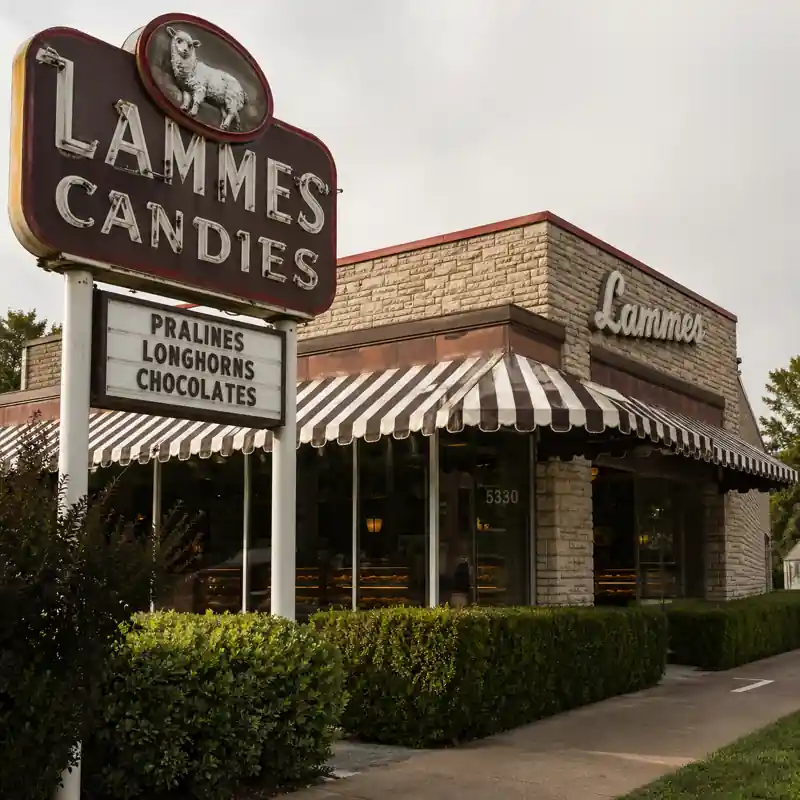

Austin is losing one of its sweetest pieces of history. Lammes Candies, the Texas confectionery brand that survived for more than 141 years, is preparing to close after generations of serving pralines, chocolates and holiday treats to families across Central Texas.
The company has blamed the decision on economic pressure and difficult market conditions, but the story is bigger than one store closing its doors. Lammes was not just a candy business. It was one of those rare local names that became part of a city’s memory — a place tied to childhood visits, Christmas boxes, Valentine’s Day strawberries and family traditions passed down for decades.
The Round Rock location has already closed, while the Airport Boulevard flagship in Austin remains open for a limited time as inventory is sold. For many longtime customers, that means the final chance to walk through the doors, buy a box of Texas Chewie Pecan Pralines and say goodbye to a brand that helped define old Austin.
A family business born from an unforgettable story
Lammes Candies traces its roots back to the late 1800s, when William Wirt Lamme came to Austin from St. Louis and started a candy business that would later become part of Texas retail history. The company’s origin story has always carried a dramatic twist: the original store was reportedly lost in a poker game.
Instead of disappearing, the business was rescued. David Turner Lamme, William’s son, came to Austin and repaid the debt, reportedly for $800, reclaiming the store in 1885. That moment became the real beginning of Lammes Candies as a family-run company.
What followed was more than a century of survival. The company lived through economic downturns, wars, recessions, changing shopping habits, mall culture, online retail and the rapid transformation of Austin from a smaller Texas capital into one of America’s fastest-growing cities.
While many historic local businesses faded, Lammes stayed visible through its recipes and reputation. Its Texas Chewie Pecan Praline became the company’s most famous product, built around Texas pecans and a chewy texture that made it different from ordinary pralines. The Longhorn, made with pecans, caramel and chocolate, also became one of its signature treats.
For customers, these were not just sweets. They were gifts mailed to relatives, desserts carried to family gatherings and holiday staples that connected people to Austin even after they moved away.
Why Lammes Candies mattered to Austin
Every city has businesses that become part of its emotional map. Lammes Candies was one of those places for Austin. Its flagship store on Airport Boulevard was familiar to generations of residents, and its lamb logo became a quiet symbol of continuity in a city that has changed dramatically.
The business remained in family hands for five generations, giving it a personal character that large national brands cannot easily copy. Staff members were also part of that legacy. Some employees spent decades with the company, creating a sense of loyalty that made the store feel less like a chain and more like a community institution.
One longtime employee, Mildred Hamilton Walston, was remembered for working at Lammes for more than 75 years. Stories like that explain why the closure feels personal for so many people. Customers are not only losing a place to buy candy; they are losing a business that carried human connections across generations.
Lammes also had a place in Austin’s commercial history beyond confectionery. The company has been associated with early retail milestones in the city, including its famous neon presence and old-fashioned soda fountain culture. These details helped make the brand feel rooted in a version of Austin that existed before rapid development changed the city’s landscape.
The closure comes at a time when independent retailers across the country are struggling with higher costs, thinner margins and new consumer habits. Ingredients, wages, rent, packaging and shipping have all become more expensive. For a candy maker that relied on quality ingredients and physical stores, those pressures can quickly become difficult to absorb.
Chocolate and cocoa-related costs have also been volatile in recent years, adding another challenge for confectionery businesses. According to the National Confectioners Association, the candy industry continues to grow overall, but smaller producers are finding it harder to compete with rising costs and large-scale operations.
At the same time, customers increasingly buy gifts and sweets online, often from national brands with aggressive pricing, fast delivery and large marketing budgets. Lammes did offer online sales, but its strongest appeal was always the in-person experience — the smell of chocolate, the display cases, the seasonal rush and the feeling of buying something local.
That experience is difficult to replace with a checkout button.
For more business and retail stories, readers can visit Swikblog, where we continue tracking how long-running companies, consumer brands and local institutions are responding to today’s changing economy.
The end of Lammes Candies also reflects a broader shift in Austin itself. The city’s growth has brought new investment, new residents and new businesses, but it has also made survival harder for older local brands. Rising commercial costs and changing neighborhoods often leave legacy businesses caught between nostalgia and financial reality.
That is why the Lammes closure has struck a nerve. It represents more than the loss of pralines or chocolate-covered strawberries. It is another reminder that history does not protect a business from modern pressure.
Still, Lammes leaves behind a remarkable legacy. Few family businesses last more than a century. Fewer still become so closely tied to the identity of one city. From an $800 rescue after a poker game to 141 years of candy-making, the company’s story belongs not only to Austin’s business history but to the families who made it part of their own traditions.
As the final inventory sells, customers will likely return for one last box, one last memory and one last taste of a Texas brand that endured far longer than most. Lammes Candies may be closing, but its place in Austin’s story is already secure.
You may like: Smokey Bones restaurant closures in the US: What led to the sudden shutdown across multiple states

Make Swikblog your go-to source on Google for reliable updates, smart insights, and daily trends.