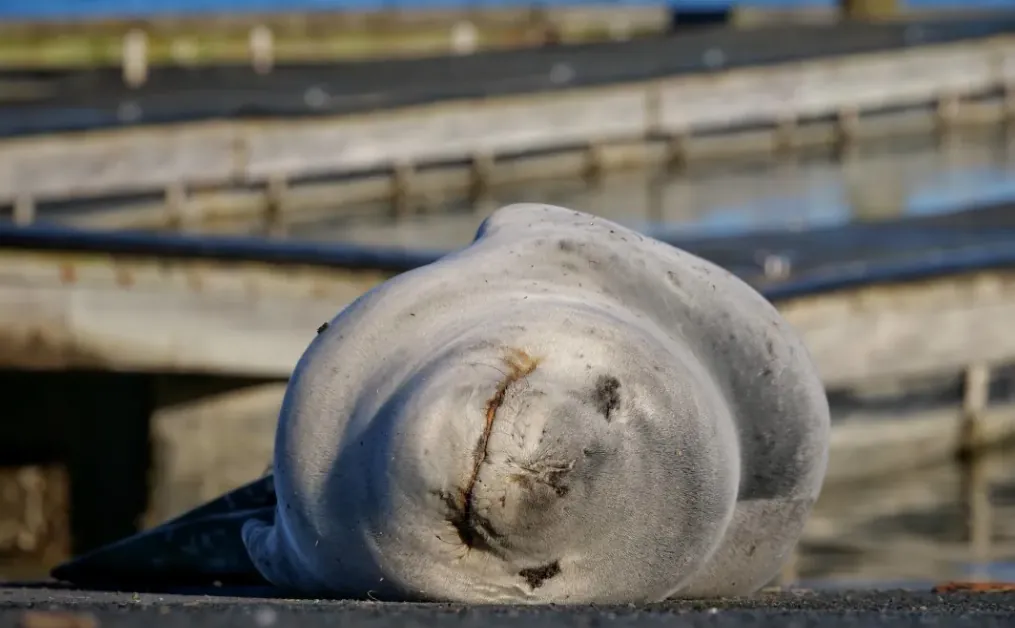

A young leopard seal temporarily disrupted activity at Tauranga’s busy Sulphur Point boat ramp after choosing one of its launch lanes for several days of rest.
The juvenile male’s presence prompted New Zealand’s Department of Conservation, or DOC, to cordon off the affected area. Vehicles, trailers and boat users regularly move through the waterfront facility, making a temporary restriction necessary for public and animal safety.
Conservation staff did not attempt to relocate the seal. Instead, workers and trained volunteers protected the area until the animal returned to the ocean on its own.
Why DOC Restricted Access at Sulphur Point
DOC Biodiversity Ranger Sarah-Lyn Wilson said officials were alerted after the seal settled in an operational section of the boat ramp.
Healthy seals resting on land are generally left alone because coming ashore is normal behaviour. This case required closer supervision because continued launching activity could have placed the animal, drivers and other visitors at risk.
DOC organised a rotating roster of staff and trained volunteers to monitor the cordon. Their presence prevented people from approaching while giving the seal enough room to sleep and yawn without being disturbed.
The visitor attracted considerable local interest. Passersby watched from beyond the barrier, while entire classes of schoolchildren came to see the animal and learn why marine mammals must be treated as wildlife rather than approached like pets.
A Young Visitor From Antarctic Waters
The leopard seal was identified as a juvenile male measuring approximately 1.7 metres in length. Adult males can reach around three metres, making the Sulphur Point visitor considerably smaller than a fully grown animal.
Leopard seals normally live around Antarctic pack ice, but some travel farther north. DOC says occasional visitors reach New Zealand during autumn and winter, including coastal areas around the Bay of Plenty.
The sighting reflects the wider importance of protecting marine habitats, a concern highlighted by efforts to strengthen ocean conservation and marine protected areas around the world.
Although the Tauranga seal appeared relaxed, sleeping behaviour should not be treated as an invitation to move closer. Leopard seals are powerful predators and may react defensively when frightened, surrounded or prevented from reaching the water.
The hands-off response at Sulphur Point is part of a broader conservation approach in New Zealand. Similar long-term protection is helping species such as the critically endangered kākāpō enter a potentially significant breeding season.
How People Should Respond to a Seal on Land
DOC advises people to remain at least 20 metres from seals. Children and dogs should be kept well back, while loud noises, sudden movements and attempts to touch or feed the animal must be avoided.
A seal resting ashore does not automatically need assistance. People should leave its route to the sea clear and allow it to depart when ready.
Anyone who finds a seal that is severely injured, being harassed or facing immediate danger should call 0800 DOC HOT (0800 362 468). Further information about safe viewing distances and leopard seal behaviour is available through the Department of Conservation’s official leopard seal guidance.
Great White Shark Follows Boat Off Bluff as 5.8m Big Gal Is Spotted
Glowing Blue Waves Light Up Pāpāmoa Beach in Rare Night Show
The Seal Returned to the Ocean
The cordon remained in place while the juvenile completed several days of uninterrupted rest. Local cooperation allowed DOC staff and volunteers to manage the situation without forcing the animal back into the water.
Once rested, the leopard seal left Sulphur Point and returned to the ocean without requiring rescue or relocation. The peaceful outcome showed why allowing a healthy wild animal time and space can be safer than unnecessary human intervention.

Make Swikblog your go-to source on Google for reliable updates, smart insights, and daily trends.