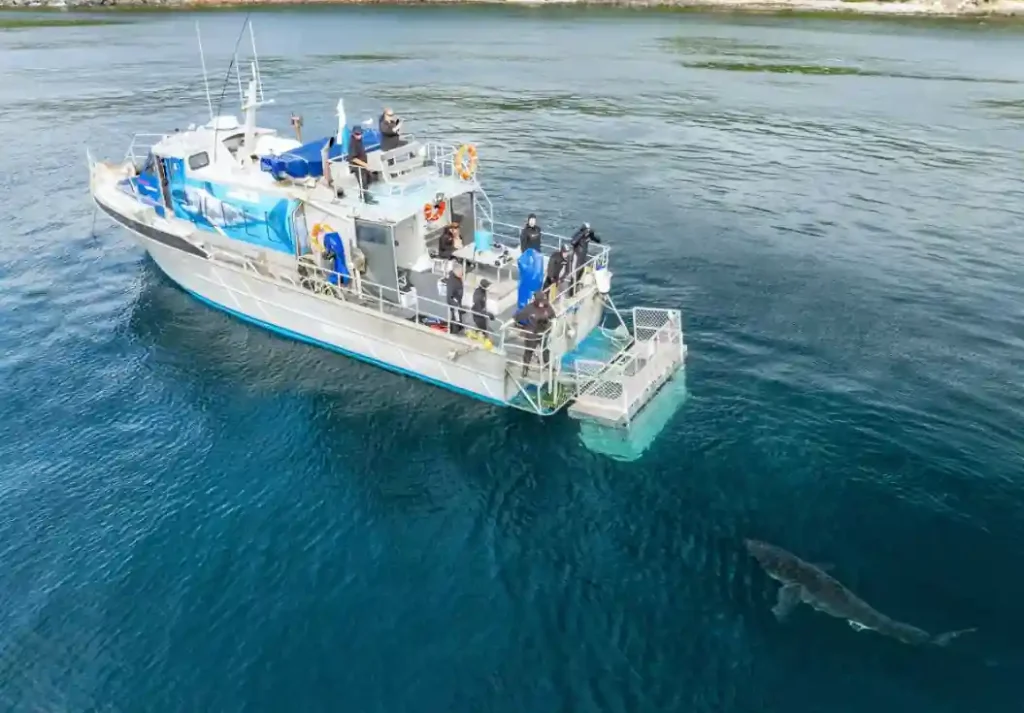

A great white shark photographed following a cage-diving boat near Bluff has highlighted the seasonal return of these protected predators to southern New Zealand waters.
The encounter occurred near the northern Tītī Islands in Foveaux Strait, between the South Island and Stewart Island/Rakiura. The shark followed a vessel operated by Shark Experience, a Bluff-based company that runs regulated great white shark cage-diving trips.
Although the animal created a striking photograph, it was not the largest shark reported by the operator during the latest season. That distinction went to a female known as “Big Gal”, whose length was estimated at approximately 5.8 metres.
Why Big Gal’s size stands out
Nikki Ladd of Shark Experience described Big Gal as an exceptional animal and said the company believes she may be more than 60 years old. Her age and length are operator estimates rather than measurements confirmed through a scientific examination.
For comparison, New Zealand’s Department of Conservation says the largest reliably measured female great white was 6.4 metres long. Females generally grow larger than males and are estimated to reach maturity at between 4.2 and 5.2 metres.
Big Gal’s estimated length places her among the unusually large mature females encountered in the region, even though she remains smaller than the largest scientifically verified example.
Why great whites return to Foveaux Strait
The waters around Stewart Island and the Tītī Islands are an important seasonal gathering area for great white sharks. New Zealand fur seal colonies provide a dependable source of prey, attracting mature sharks to the southern coast.
Shark Experience says more than 200 individual great whites have been identified across the wider area through their distinctive markings and physical features. Individual identification allows returning animals to be recognised over multiple seasons.
The company reported a sighting rate of approximately 96% during its latest operating season. This figure relates specifically to its cage-diving trips and does not represent the likelihood of encountering a shark elsewhere around Bluff.
Most sharks leave the southern aggregation sites by July. According to the company, its next cage-diving season is scheduled to begin on November 15.
Great white sharks are protected in New Zealand
Great whites have been legally protected in New Zealand waters since 2007. It is illegal to hunt, kill or harm them within the country’s territorial sea and Exclusive Economic Zone.
The Department of Conservation’s great white shark guidance identifies fishing activity, declining prey, habitat degradation and marine pollution among the threats facing the species.
DOC classifies the great white as nationally endangered in New Zealand, while the species is listed as vulnerable globally. Its population remains difficult to measure because these sharks travel long distances between New Zealand, Australia and the southwest Pacific.
The wider importance of these predators is examined in this overview of shark conservation, threats and ocean ecosystem protection.
What the sighting means for coastal safety
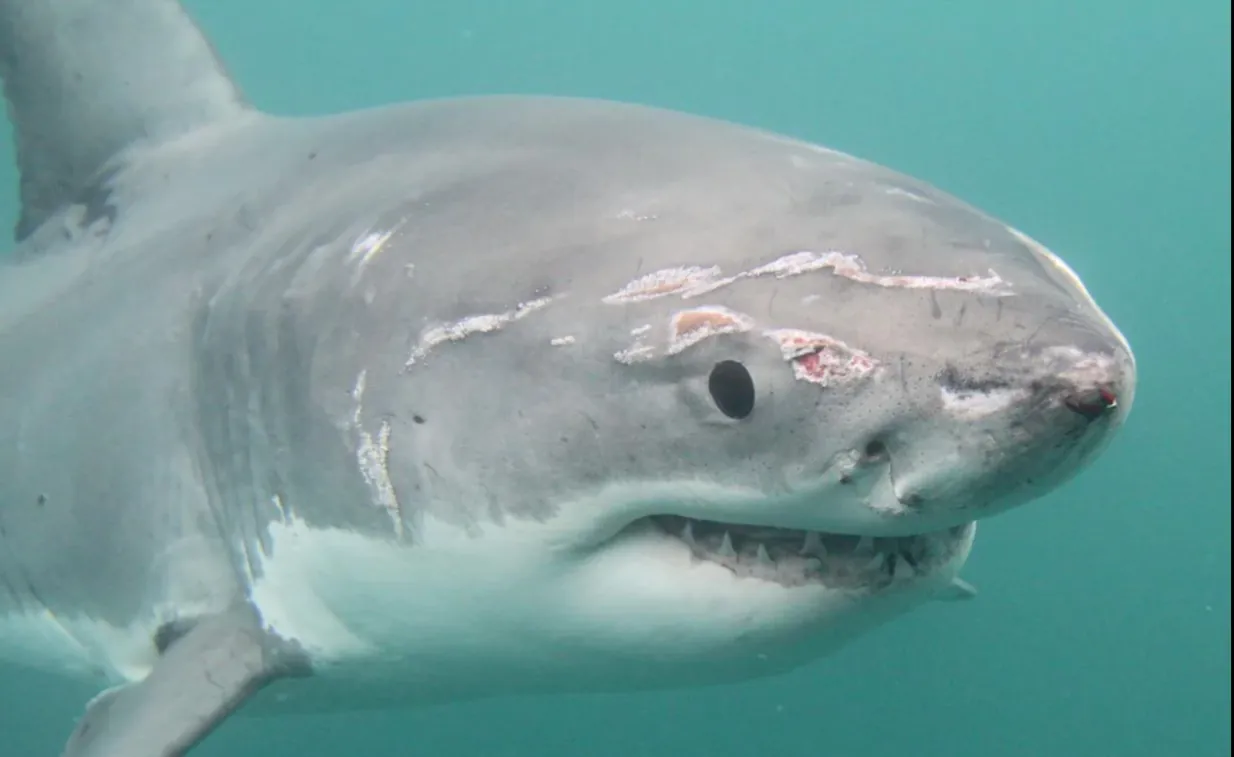
A shark approaching a tourism vessel does not necessarily indicate a wider rise in encounters near beaches. Great whites naturally investigate boats and objects at the surface, particularly around established feeding areas.
People using southern coastal waters should follow local warnings, avoid swimming close to seal colonies or active fishing areas and leave the water calmly if a shark is observed. Sightings can be reported to DOC without approaching or attempting to interact with the animal.
Ocean temperature, prey distribution and seasonal migration can influence where sharks are detected. Research from neighbouring waters provides additional context on how warmer seas are changing shark movements around Australia.
Read More
Bluff’s unusual wildlife attraction
Bluff remains New Zealand’s only location offering commercial cage-diving encounters with great white sharks. The activity gives visitors a controlled way to observe the animals while supporting individual identification and public awareness.
The latest encounter, together with Big Gal’s reported appearance during the season, demonstrates why Foveaux Strait remains an important seasonal habitat for some of New Zealand’s largest marine predators.

Make Swikblog your go-to source on Google for reliable updates, smart insights, and daily trends.