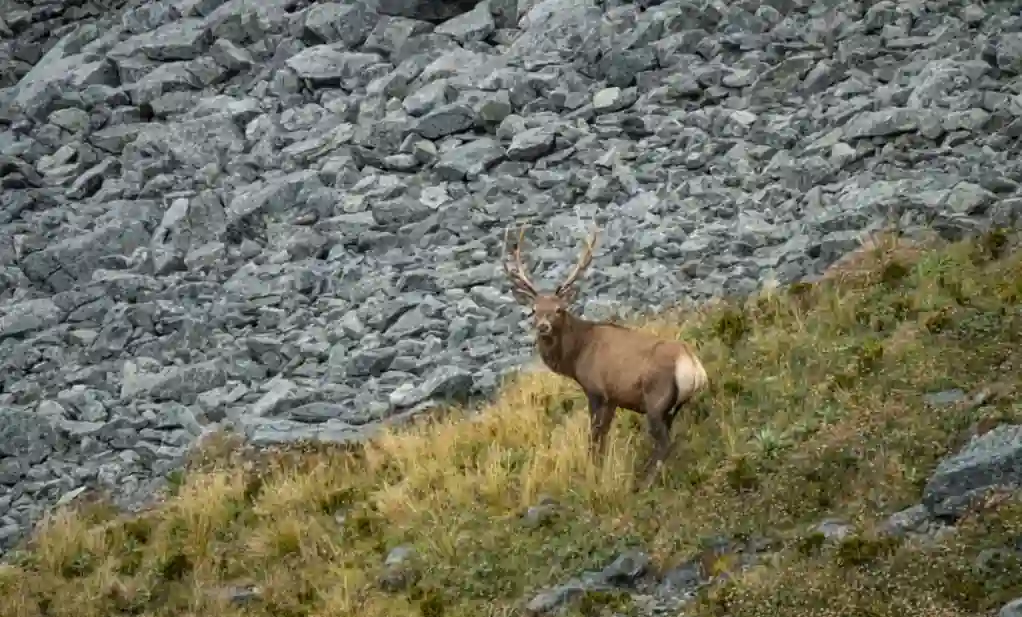

New Zealand has designated Fiordland wapiti as the country’s first Herd of Special Interest, creating a formal system to manage the introduced deer for hunting while requiring measurable protection for native vegetation in Fiordland National Park.
Hunting and Fishing Minister James Meager announced the decision in Te Anau on July 13, 2026. It covers approximately 190,700 hectares, or about 15% of the national park, between Lake Te Anau and the Tasman Sea.
Latest update: The designation notice was published in the New Zealand Gazette on July 14. It will take legal effect when the first hunting conditions are published, which the Department of Conservation expects in August 2026 alongside the 2026–27 wapiti ballot process.
What the designation means
A Herd of Special Interest is a management tool under the Game Animal Council Act 2013. It allows a specified population on public conservation land to be managed for hunting while remaining subject to conservation law and environmental targets.
The designation does not protect wapiti in the same way as native wildlife and does not seek to increase deer numbers. Wapiti and other deer will continue to be culled when necessary to reduce browsing damage and allow indigenous plants to recover.
It applies only within the mapped Wapiti Area. DOC retains responsibility for the surrounding public land, while New Zealand’s obligations to protect the Te Wāhipounamu–South West New Zealand World Heritage Area remain unchanged.
What changes for hunters?
Public access will continue, and most visitors should notice little immediate change. Hunting will remain subject to permits or authorisations, with a ballot and allocated blocks used during the popular bugle season from mid-March to late April.
Open recreational hunting can continue outside the bugle period, although conditions may be imposed for safety, excessive demand or herd-management purposes.
Hunters may be required to provide information about harvested animals, including age, sex, health and general location. The plan also allows fees to cover administration, education and animal-control work. Final 2026–27 fees and detailed conditions had not been published as of July 18.
How the herd will be managed
The Fiordland Wapiti Foundation will lead field operations through annual plans developed with DOC. Management may combine recreational hunting, helicopter culling and coordinated wild-animal recovery.
The modern herd largely consists of wapiti–red deer hybrids. Management will favour healthy mature bulls with stronger wapiti characteristics while selectively removing animals with fewer wapiti-like traits.
Environmental results will determine how many animals can remain. The plan requires browsing across three deer-sensitive alpine indicator plants to stay within or below 10% to 15%. It also requires an improving trend in seedlings of plant species preferred by deer.
Monitoring results will be published annually and used to adjust hunting and control operations. Similar evidence-led wildlife measures include temporary protections introduced for giant cuttlefish near Whyalla.
Why Fiordland wapiti are significant
Ten bulls and eight cows were released at Te Houhou/George Sound in 1905. Ten came from Yellowstone National Park as a gift from US President Theodore Roosevelt, while New Zealand’s Tourism Department purchased the others. The first hunting licence was issued in 1923.
The Gazette notice describes Fiordland as the Southern Hemisphere’s only wild hunting opportunity for wapiti-type deer. The foundation has worked with DOC on herd management since 2005 and supports predator trapping, hut maintenance and native wildlife projects.
Timeline and next steps
The foundation proposed the designation in 2025 with support from the Game Animal Council. Public consultation ran from November 10 to December 8, 2025, and attracted 352 submissions. The plan was revised before Meager approved it on July 13, 2026.
The next step is publication of the first hunting conditions, expected in August. These should clarify authorisations, ballot arrangements, fees and reporting duties. The management plan must be reviewed within five years, while the minister can amend or revoke the designation after consultation.
Official documents are available through the Department of Conservation’s Fiordland wapiti information page.
Read More:
- Dollarama garlic powder recalled in Canada following CFIA warning
- Toy Story 5 collector cups recalled by HOYTS over choking hazard
- Visit the Swikblog homepage for more latest news

Make Swikblog your go-to source on Google for reliable updates, smart insights, and daily trends.