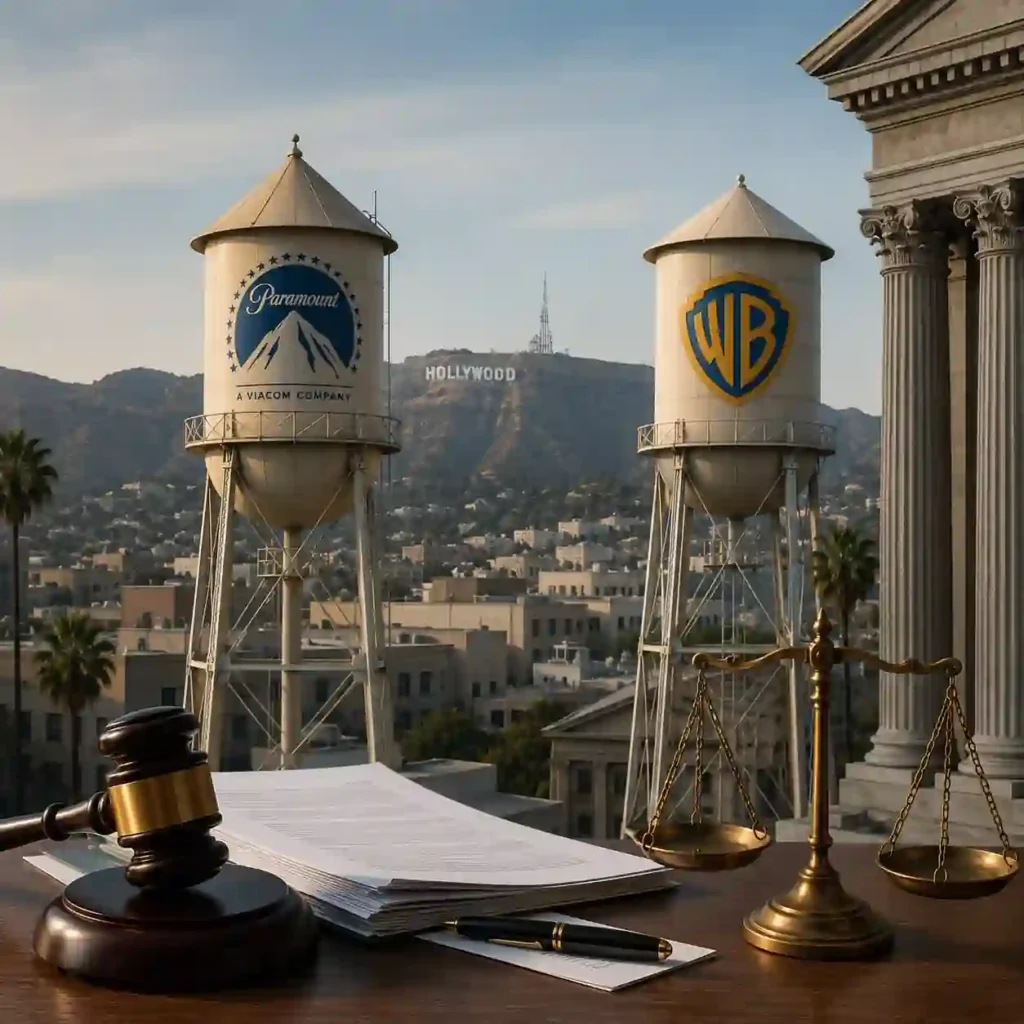

Paramount Skydance’s proposed $110 billion acquisition of Warner Bros. Discovery is facing two major antitrust lawsuits after 12 state attorneys general and the Writers Guild of America asked federal courts to stop the companies from completing the transaction.
California Attorney General Rob Bonta led the states’ lawsuit on July 13, 2026. The Writers Guild of America East and West filed a separate case on July 14. Both challenges argue that placing two major Hollywood studios under one owner would weaken competition, although they focus on different parts of the entertainment business.
The merger has not been blocked yet. Paramount and Warner Bros. Discovery remain separate companies while the courts consider requests to prevent the deal from closing.
What the states allege
The coalition claims that the acquisition would eliminate competition between Paramount Pictures and Warner Bros., two of the five major US film distributors.
According to the complaint, four companies would control more than 85% of wide-release theatrical film distribution after the merger. The states argue that this concentration could give the remaining studios greater influence over cinema terms, production decisions and release schedules.
The proposed company would own Paramount Pictures, Warner Bros., CBS, CNN, HBO, HBO Max, Paramount+, Discovery, TNT, Showtime, Nickelodeon, MTV, HGTV and Food Network.
CBS is already home to major entertainment franchises, including Big Brother. The network’s role in Paramount’s television business can be seen in coverage surrounding Levi Banks’ departure from Big Brother 28.
The lawsuit also focuses on basic cable television. The states say the combined company and Disney would together control 59% of the US basic cable market, potentially reducing the number of major suppliers available to cable and television distributors.
Which states filed the lawsuit?
California brought the case with Arizona, Connecticut, Hawaii, Illinois, Massachusetts, Michigan, Minnesota, New Jersey, New York, Washington and Wisconsin.
The coalition is seeking a temporary restraining order and preliminary injunction. If granted, the order would stop Paramount and Warner Bros. Discovery from completing the merger while the court examines the antitrust allegations.
The complaint relies on Section 7 of the Clayton Act, which prohibits acquisitions when their effect may substantially reduce competition or contribute to the creation of a monopoly.
Why the Writers Guild filed a separate case
The Writers Guild of America East and West argues that the transaction could reduce competition for screenwriters working in theatrical films, television programmes and streaming series.
Paramount and Warner Bros. currently compete for scripts and writing talent. The unions contend that removing one major employer could mean fewer job opportunities, weaker bargaining power and less competition over pay and working conditions.
The guild’s case is separate from the states’ complaint. The states are concentrating primarily on film distribution, cable programming and consumer effects, while the unions are challenging the deal’s potential impact on creative labour markets.
Opposition had been growing before either lawsuit was filed, with thousands of entertainment professionals raising concerns about consolidation. More background is available in this report on Hollywood opposition to the Paramount-Warner merger.
How Paramount has responded
Paramount disputes the antitrust claims and says the acquisition would create a stronger competitor to Netflix, Disney and Amazon.
The company has pledged to maintain distinct production operations and release at least 30 theatrical films annually through Paramount Pictures and Warner Bros. Paramount argues that the combined business would increase investment in films, television programmes and streaming content.
Those commitments do not automatically resolve the lawsuits. The courts may consider whether the promises are specific, enforceable and sufficient to address the competition concerns identified in the complaints.
Why federal approval did not end the legal risk
The US Department of Justice closed its investigation on June 12, 2026, without attempting to block the acquisition. The department said the available evidence did not establish that the transaction was likely to substantially harm competition.
That decision was not a court ruling or a blanket exemption from antitrust law. State governments, workers’ organisations and other eligible parties can bring their own cases when they believe a transaction may violate competition laws.
Warner Bros. Discovery shareholders approved the agreement on April 23. Paramount has agreed to pay $31 in cash for each outstanding WBD share, and the companies have been targeting completion during the third quarter of 2026.
What this means for HBO Max and Paramount+ accounts
Nothing changes immediately for HBO Max or Paramount+ customers. The services continue operating separately, and no action is required on existing subscriptions.
Paramount chief executive David Ellison has discussed eventually combining the streaming platforms. However, the company has not confirmed a launch date, subscription price, platform name or account-transfer process.
Any future integration would depend on the merger closing and the companies completing the technical and commercial work required to unite the services.
Read More:
- How Telstra customers can claim compensation after the nationwide outage
- NSW issues stay-away order to protect southern right whales
- Visit the Swikblog homepage for more latest news
What happens next?
A federal judge must first decide whether to grant emergency relief requested by the states. A temporary restraining order or preliminary injunction would delay the closing but would not settle the entire case.
If an injunction is issued, the companies could appeal, negotiate remedies or prepare for a full antitrust trial. If the request is denied, Paramount may continue working toward completion while the lawsuits remain active.
Regulatory reviews are continuing outside the United States. The European Commission is examining concessions submitted by Paramount and has set July 22 as its current decision deadline. The United Kingdom’s Competition and Markets Authority is conducting a separate review.
Until the courts and remaining regulators act, Paramount Pictures, Warner Bros., HBO Max, Paramount+, CBS and CNN will continue operating under their existing ownership structures.

Make Swikblog your go-to source on Google for reliable updates, smart insights, and daily trends.