
Melbourne train passengers are finally getting tap-and-go payments from Sunday, ending a long wait for a simpler way to travel after months of delays to Victoria’s myki upgrade.
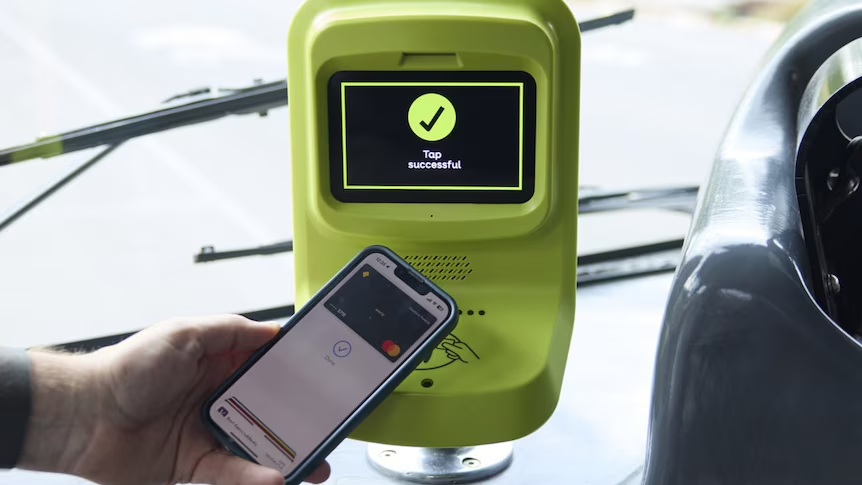
The change means full-fare passengers will be able to tap on and off using a credit or debit card, mobile phone or smartwatch instead of relying only on a physical myki card. It is one of the biggest ticketing changes on Melbourne’s rail network in years and brings the city closer to other major public transport systems where contactless travel is already common.
All myki-enabled train stations will receive the new capability, covering the full Metro Trains network and some regional V/Line stations. Regional stations that still rely on paper tickets will not be included in this stage.
For passengers, the key change is simple: full-fare train users will be able to use the same card, phone or smartwatch they already use for everyday contactless payments.
When Melbourne tap-and-go train payments start
The rollout begins this Sunday on the Sunbury, Pakenham, Cranbourne, Metro Tunnel, Werribee, Williamstown, Sandringham, Frankston, Stony Point, Bendigo, Gippsland and Geelong lines.
A second stage will follow one week later, when tap-and-go payments are added to the Mernda, Hurstbridge, Lilydale, Belgrave, Alamein and Glen Waverley lines.
The launch is limited to trains at first. Tram and bus passengers will need to wait, with the Victorian government expected to release a timeline for those networks in the coming weeks.
Who can use tap-and-go from Sunday
The first phase is for full-fare passengers only. That means commuters paying standard adult fares can tap on using a bank card, phone or smartwatch at enabled train stations.
Concession passengers will still need to use myki for now. That is a major limitation because concession users make up about one-third of commuters. Students, seniors and other eligible concession travellers are expected to be added in a later stage next year.
The same applies to wider regional travel. Some V/Line stations with myki capability will be included, but stations still using paper tickets will not support contactless payments in this launch.
Passengers can check the official Transport Victoria myki upgrade information for the latest public transport ticketing updates as the rollout expands.
Why the myki upgrade has taken so long
Victoria has been under pressure to modernise public transport payments after falling behind cities such as Sydney, where contactless ticketing has been available for years. The new system has also faced delays and cost scrutiny.
The Victorian Auditor-General’s Office put the total project cost at about $2.8 billion over 15 years and found the upgrade was 18 months behind schedule. In 2023, the state awarded a $1.7 billion contract to Conduent to overhaul myki.
Trials were initially expected to begin in 2024 but started later, including testing on four bus routes in Wangaratta and selected Melbourne train lines. During the train trial, about 88,500 ticketless trips were recorded, with four in five passengers using a phone or smartwatch.
The rollout builds on Melbourne’s earlier tap-and-go public transport trial, which gave commuters their first look at myki-less travel before the wider train network launch.
What passengers still need to know
The first phase does not remove myki from the network. Instead, it gives full-fare train passengers another way to pay. Anyone using concessions, travelling on trams or buses, or using regional paper-ticket stations will still need to follow the existing ticketing rules.
The launch also comes while Victorians continue to receive half-price fares for the rest of the year, after a short period of free public transport in April and May. Public and Active Transport Minister Gabrielle Williams said tap-and-go would make public transport easier by giving passengers “one less card” to carry.
For everyday commuters, the biggest benefit is convenience. A missed top-up or forgotten myki card may become less of a problem for full-fare train users once the system is active across their line.
The next test will be how smoothly the technology handles busy stations, peak-hour travel and passengers switching between different parts of the network. For now, the long-delayed shift to contactless train travel in Melbourne is finally beginning, with trams, buses, concession fares and more regional services still waiting for their turn.

Make Swikblog your go-to source on Google for reliable updates, smart insights, and daily trends.