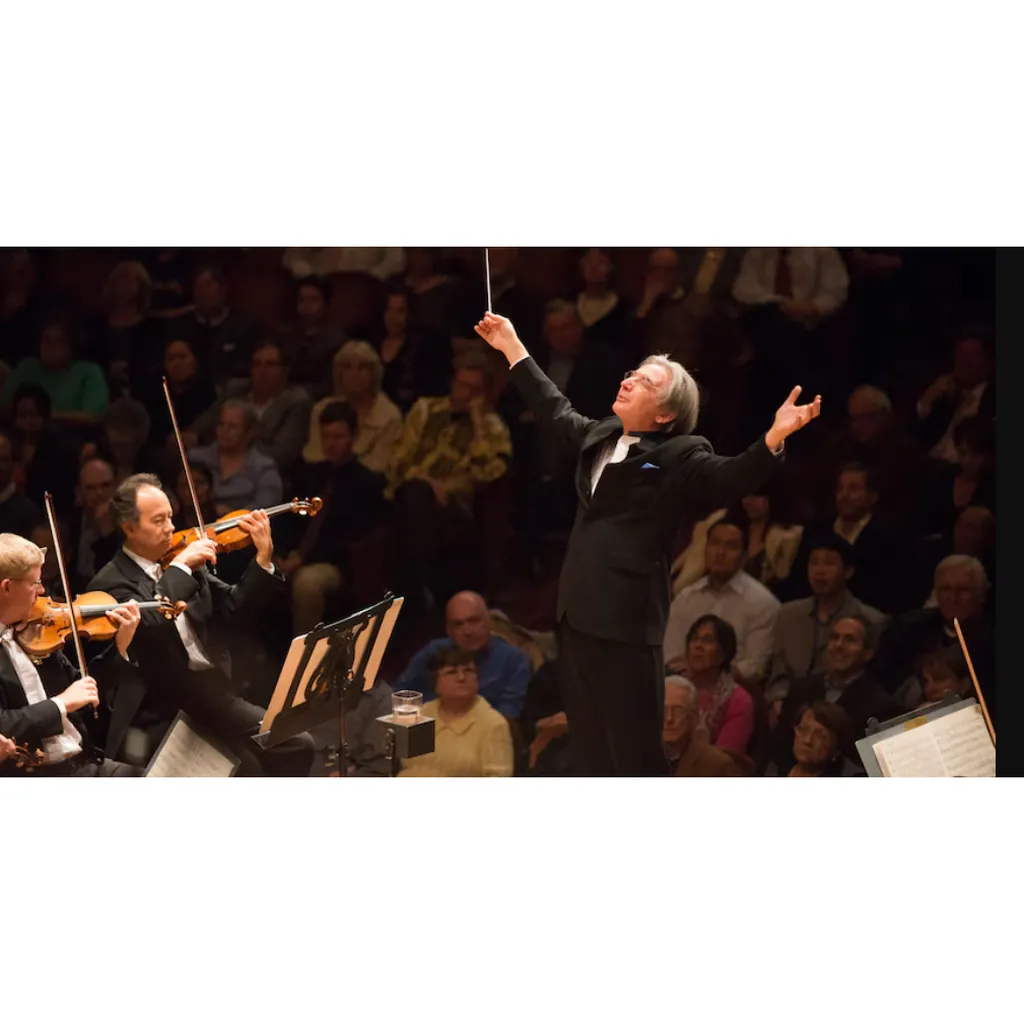

Michael Tilson Thomas, the American conductor, pianist and composer who became one of the most influential figures in modern classical music, has died at the age of 81.
Tilson Thomas died on April 22, 2026, at his home in San Francisco, surrounded by family and friends, according to the San Francisco Symphony. The orchestra said he had been living with glioblastoma multiforme, an aggressive form of brain cancer, after undergoing surgery for a brain tumour in 2021.
Known around the world by his initials, MTT, he was a 12-time Grammy Award winner, a Kennedy Center honoree and a rare classical musician whose influence extended across performance, education, recordings and cultural outreach. For more than five decades, he helped make orchestral music feel urgent, personal and open to new audiences.
A conductor who changed the sound and spirit of San Francisco
Tilson Thomas’s name is most closely tied to the San Francisco Symphony, where he served as music director for 25 years, from 1995 until 2020. During that period, he helped lift the orchestra’s global reputation through ambitious programming, acclaimed recordings and a strong public identity built around musical curiosity.
His concerts rarely felt predictable. He could lead Beethoven, Debussy, Stravinsky and Copland with deep respect for tradition, then place those works beside music by John Cage, Steve Reich or Mason Bates. Mahler was a special focus throughout his career, and his San Francisco recordings helped introduce many newer listeners to the emotional scale and complexity of the composer’s symphonies.
What made Tilson Thomas stand apart was not only technical skill but imagination. He treated the orchestra as a living institution rather than a museum. He believed classical music could speak to modern life if conductors were willing to explain it, reframe it and sometimes take risks with it.
One of the clearest examples came in his first San Francisco Symphony season, when he collaborated with members of the Grateful Dead on music connected to John Cage. For some traditional listeners, it was unexpected. For Tilson Thomas, it was part of a larger idea: orchestral music could have conversations with the wider culture.
That spirit made him a “creative risk-taker,” as the New World Symphony described him in tribute. The phrase fits a career built on fearless choices, but also on discipline. Tilson Thomas was never simply chasing novelty. He used modern programming to give audiences a fuller sense of where music had been and where it might still go.
From Los Angeles roots to a global musical legacy
Born in Los Angeles in 1944, Tilson Thomas grew up close to performance and storytelling. His father worked as a Broadway stage manager, while his mother was a high school history teacher. He studied piano from a young age and later graduated from the University of Southern California in 1967.
After USC, he earned a conducting fellowship at the Tanglewood Music Festival, one of the most important training grounds for American classical musicians. Around that period, he formed a connection with Leonard Bernstein, who became a mentor, friend and lasting model for how a conductor could communicate with the public.
Like Bernstein, Tilson Thomas had a gift for making music understandable without reducing its seriousness. He could speak about a score with warmth, humour and detail. That ability became central to his work as an educator and broadcaster, helping listeners feel that classical music was not distant or closed off.
His career took him through many of the world’s leading orchestras. He conducted the Boston Symphony Orchestra, Los Angeles Philharmonic and London Symphony Orchestra, among others. He also became known for his commitment to American composers and for giving serious attention to new and experimental music.
In 1987, Tilson Thomas co-founded the New World Symphony in Miami Beach, Florida, an orchestral academy created to help young musicians move from formal study into professional careers. The academy became one of his most important achievements, shaping generations of performers who went on to work in major orchestras around the world.
As artistic director and later artistic director laureate, he used the New World Symphony as a place for training, experimentation and mentorship. It reflected his belief that musical institutions should not only preserve great works but prepare young artists to rethink how those works are performed and shared.
Tilson Thomas received 12 Grammy Awards during his career and was named a Kennedy Center honoree in 2019, one of the highest recognitions for achievement in the arts in the United States. Yet his stature was not built only on trophies. It came from the long trust he built with musicians, students and audiences.
His final years were marked by illness but also by resilience. After his 2021 surgery and diagnosis, he continued to conduct selected concerts. His final public appearance came in April 2025, when he led the San Francisco Symphony in a belated celebration of his 80th birthday. For many in attendance, it was both a performance and a farewell from an artist who had given much of his life to that orchestra.
Tilson Thomas stepped down as San Francisco Symphony music director in 2020, at the start of the COVID-19 pandemic, but remained connected to the ensemble as music director laureate until his death. His official social media statement said he was preceded in death by his husband, Joshua Robison. He is survived by sisters, nieces and nephews.
For more coverage of major cultural figures and global entertainment news, visit our entertainment and culture section.
Michael Tilson Thomas leaves behind a legacy that cannot be measured only by concerts conducted or awards won. He changed the way many people heard orchestral music. He brought contemporary work into conversation with the classics, gave young musicians a path forward, and showed that classical music could remain serious while still being adventurous, human and alive.
You may like: Pedicure infection risk: How a toe infection can turn into sepsis explained

Make Swikblog your go-to source on Google for reliable updates, smart insights, and daily trends.