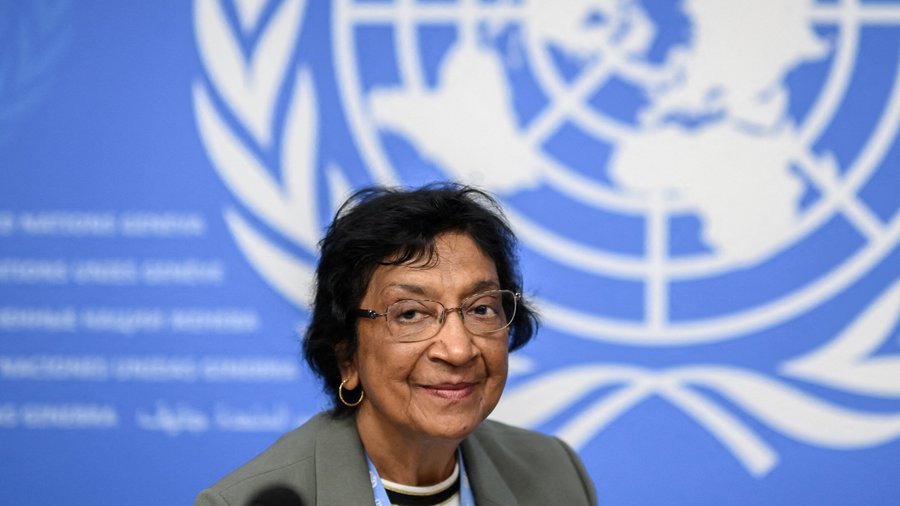

OSLO, October 9, 2026: South African human rights lawyer Navanethem “Navi” Pillay has won the 2026 Nobel Peace Prize for her decades of work fighting apartheid, defending human rights and advancing international law.
The Norwegian Nobel Committee announced the award on Friday, recognizing the 85-year-old former United Nations human rights chief for her efforts to promote peace and international justice. Pillay, who has Indian Tamil roots, also led a U.N. investigation into the Gaza conflict.
Her selection comes amid growing international debate over war crimes, global courts and accountability for alleged atrocities.
Navi Pillay Awarded 2026 Nobel Peace Prize
Norwegian Nobel Committee chairman Jørgen Watne Frydnes announced Pillay’s selection in Oslo, highlighting her contributions to international law and accountability for serious crimes.
Her career spans more than five decades, from challenging racial discrimination in South Africa to serving in international courts handling genocide and crimes against humanity.
Indian Roots and Early Life in South Africa
Born on September 23, 1941, in Durban, South Africa, Pillay grew up in a family of Indian Tamil heritage under apartheid.
Despite racial and gender barriers, she became a lawyer defending people affected by discriminatory laws, including anti-apartheid activists such as Nelson Mandela.
Her Indian ancestry gives the announcement particular significance for audiences in India, although Pillay is South African.
From Apartheid Lawyer to U.N. Human Rights Chief
Pillay became the first non-white woman appointed to South Africa’s High Court before joining the International Criminal Tribunal for Rwanda, where she served as a judge and president.
Her judicial work helped establish important legal principles recognizing sexual violence as a crime that can constitute genocide.
She later served at the International Criminal Court and as U.N. High Commissioner for Human Rights from 2008 to 2014.
She also serves as an ad hoc judge at the International Court of Justice in proceedings concerning genocide allegations against Myanmar.
Anne Carson and the 2026 Nobel Prize in Literature: Key Details
Evelyn Araluen Wins $100,000 Victorian Prize for Literature for The Rot in 2026
Gaza Genocide Inquiry and Israel’s Response
Pillay chaired a United Nations commission investigating alleged violations of international law in Israel and the occupied Palestinian territories.
In 2025, the commission concluded that Israel had committed genocide against Palestinians in Gaza. The Israeli government rejected its findings.
The commission’s conclusion is separate from a final judicial ruling by the International Court of Justice. Pillay’s Nobel recognition reflects her wider legal career, not solely the Gaza investigation.
The conflict has also influenced international cultural debates, including the Eurovision 2026 boycott controversy involving Israel.
Nobel Peace Prize 2026: Money and Ceremony
The award carries 12 million Swedish kronor, approximately $1.2 million, along with a Nobel medal and diploma.
The committee received 287 nominations, including 208 individuals and 79 organizations. Nominee identities remain confidential for 50 years.
The Norwegian Nobel Committee announced the winner on October 9. The award ceremony is scheduled for December 10 at Oslo City Hall.
Previous Winner and Nobel Committee Ethics Controversy
The 2025 Nobel Peace Prize went to Venezuelan opposition leader María Corina Machado for her efforts to advance democracy.
Debates surrounding international peace awards have also included the FIFA Peace Prize presented to Donald Trump, a separate honor that attracted political attention.
This year’s Nobel announcement follows scrutiny of former committee chairman Thorbjorn Jagland over reported connections to convicted sex offender Jeffrey Epstein.
The controversy prompted new ethics rules requiring disclosure of professional affiliations and restricting potentially compromising gifts and travel. It is unrelated to allegations of wrongdoing by Pillay.
Navi Pillay’s Nobel Prize Matters
Pillay’s recognition highlights the achievements of South Africa’s Indian diaspora and the role of international law in addressing serious human rights violations.
Her journey from apartheid-era Durban to international courts illustrates how legal advocacy can influence global justice and accountability.

Make Swikblog your go-to source on Google for reliable updates, smart insights, and daily trends.