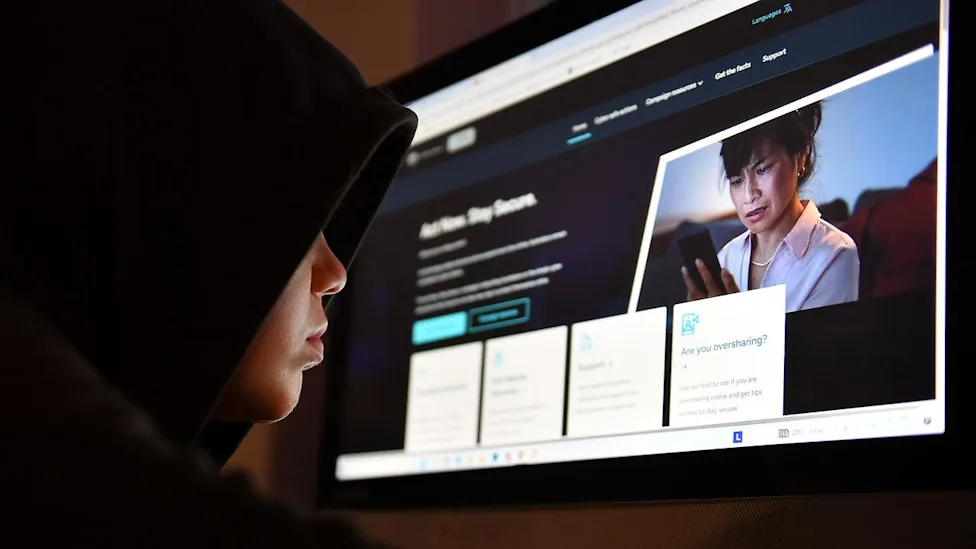

Australian bank customers are facing a more sophisticated scam tactic, with fraudsters increasingly coaching victims on exactly what to tell bank employees when questioned about unusual withdrawals or transfers.
The tactic goes beyond persuading someone to send money. Victims can be given rehearsed cover stories, told how to answer security questions and, in some cases, reportedly receive real-time instructions while inside a bank branch.
One case at an ANZ branch in South Australia shows how it works. An elderly woman arrived wanting to withdraw enough cash to supposedly buy a car. Teller Vicki became suspicious when the woman could not identify the make or model and repeatedly insisted she needed the money that day.
After staff continued talking with her, they discovered there was no car purchase. A scammer had allegedly convinced the woman that the bank was going to take her money and withdrawing it was the only way to protect it. The car story had been provided as an explanation if bank employees questioned her.
The intervention prevented the woman from emptying her account.
Scammers are coaching victims to beat bank checks
ANZ staff say customers are increasingly being supplied with scripts and explanations designed to get suspicious transactions through bank security checks.
Some customers have reportedly entered branches wearing headphones or with a phone tucked into a pocket while receiving real-time instructions about what to tell employees.
This creates a difficult problem for banks because the person requesting the withdrawal is the genuine account holder. They may sincerely believe they are protecting their savings or making a legitimate investment while unknowingly following a criminal’s instructions.
ANZ scams portfolio lead Ben Verhoef said manipulators can coach victims to push back against bank questioning. Scammers may claim, for example, that a bank is challenging a cryptocurrency transaction because it does not want the customer making money from the investment.
That manipulation can make ordinary fraud-prevention questions appear suspicious to the victim. Rehearsed explanations may even continue after a bank’s fraud-detection system has flagged the transaction.
Financial crime is becoming increasingly organised in other areas too. A recent NAB mortgage fraud investigation into alleged organised loan scam networks highlighted how criminals can attempt to work around established financial safeguards rather than relying on easily detected deception.
Australians reported $2.18 billion in scam losses
The changing tactics come as Australians continue to lose billions to scams. National Anti-Scam Centre figures show combined reported scam losses reached approximately $2.18 billion in 2025, around 8% higher than the previous year, although still below the roughly $3.1 billion peak in 2022.
Investment scams accounted for the largest share of losses, followed by payment-redirection and romance scams.
Australian Financial Complaints Authority figures cited in the reporting showed scam complaints increased 12% in the latest financial year but remained 38% below their peak two years earlier. AFCA figures do not represent every scam because the authority generally handles disputes consumers have been unable to resolve directly with their financial provider.
Consumers can check current warnings and report suspicious activity through the Australian Government’s Scamwatch service rather than trusting contact details supplied in unexpected calls or messages.
Older Australians face greater financial exposure
People aged over 65 represent roughly 17% of Australia’s population but accounted for about 26.5% of reported scam losses in the figures highlighted with the report.
Australians aged 35 to 44 were statistically the most likely to experience a scam involving financial loss, while people over 65 recorded the highest median loss.
Australia has also introduced measures aimed at making impersonation scams easier to identify. From July 2026, rules around branded SMS Sender IDs mean unregistered sender names can appear as “Unverified”. The measure is among the July 1 changes affecting Australians in 2026.
Vicki, who has spent 15 years in banking, said scams have evolved from suspicious emails and letters promising windfalls to convincing communications designed to resemble legitimate correspondence from banks, governments and telecommunications companies.
Read More
Warning signs customers should recognise
One of the clearest warning signs is being instructed to hide the truth from a bank. Customers should be suspicious if someone tells them to invent a reason for withdrawing money, conceal who will receive it, keep a phone call active inside a branch or repeat prepared answers to bank employees.
Other red flags include demands for secrecy, pressure to act immediately, claims that the customer’s bank cannot be trusted and instructions to move savings into a supposedly “safe” account.
If someone unexpectedly claims to represent a bank, government agency or telecommunications provider, customers can end the conversation and independently contact the organisation through its official website, app or verified phone number.
Cybersecurity ratings proposed for Australian businesses
Fortinet Asia-Pacific operational technology director Michael Murphy has also called for a cybersecurity ratings system for Australian products and organisations, particularly businesses operating in trusted sectors including banking, healthcare, telecommunications, energy and critical infrastructure.
Potential measures could include the use of two-factor authentication, outsourcing of high-risk operations and reliance on overseas data centres or call centres.
The proposal would complement existing regulation by giving consumers greater visibility into an organisation’s cybersecurity practices before an incident occurs. Legislative, voluntary and industry-led approaches could potentially be considered, although a national ratings system is not currently established.
For consumers, the immediate warning is clear: scammers may now try to control not only where money goes, but also what victims tell the people trying to protect them. Instructions to deceive bank staff or use a rehearsed cover story should be treated as a serious sign of fraud.

Make Swikblog your go-to source on Google for reliable updates, smart insights, and daily trends.