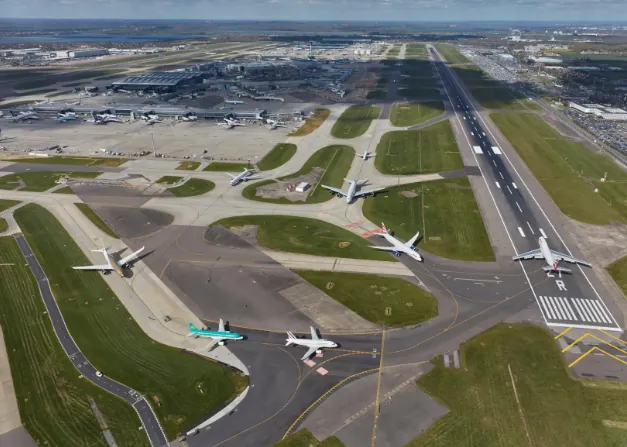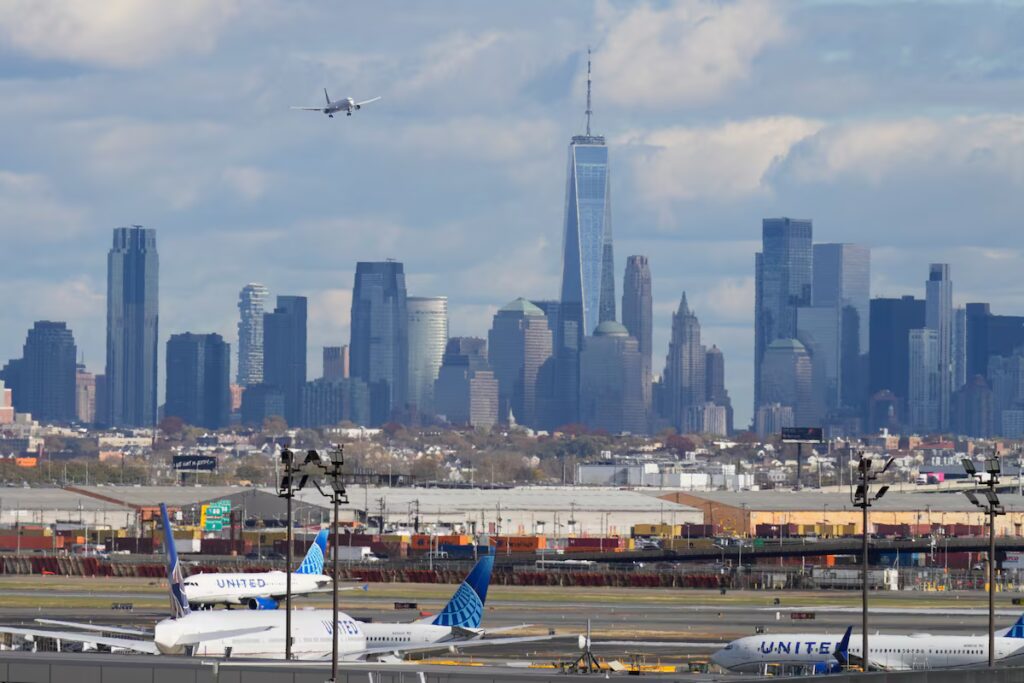

Newark Airport flights were suddenly halted Monday morning after a burning smell triggered an emergency evacuation of the control tower, briefly disrupting operations at one of the busiest aviation hubs in the United States. The incident, which unfolded during peak morning hours, added fresh chaos to an already strained New York-area air travel system.
According to the Federal Aviation Administration (FAA), air traffic controllers evacuated the tower at Newark Liberty International Airport at approximately 7:30 a.m. after detecting a burning odor coming from an elevator. As a safety precaution, all arrivals and departures were immediately paused, effectively bringing airport operations to a standstill.
The ground stop lasted for about an hour before being lifted, allowing flights to gradually resume. Officials later confirmed that no fire had occurred, though the exact cause of the smell was not immediately clear. Despite the short duration, the disruption had an outsized impact due to Newark Airport’s critical role in handling both domestic and international traffic.
Emergency Evacuation Forces Temporary Shutdown
The evacuation of the control tower is a rare and serious event, as the tower is the nerve center of airport operations. With controllers unable to operate from the primary tower, flights could not safely land or take off. During the incident, FAA personnel relocated to a backup tower facility at Newark Airport to maintain limited operational capability.
The Port Authority of New York and New Jersey, which manages Newark Airport, confirmed that staff were temporarily shifted to the backup tower before returning to the main facility once the situation was deemed safe. The quick transition helped limit the duration of the shutdown, but even a short pause during peak hours can create widespread disruption.
Authorities emphasized that the decision to evacuate was taken out of an abundance of caution. In aviation, any sign of smoke or unusual odor is treated as a potential safety risk until proven otherwise. Officials later determined that there was no active fire, allowing operations to resume without further incident.
Ripple Effects Across Flights and Passengers
Although the halt lasted less than an hour, the ripple effects were immediate. Early morning departures were delayed, arriving aircraft were held in the air or diverted, and passengers inside the terminal faced uncertainty as schedules shifted rapidly. Newark Airport operates at near capacity during peak travel windows, meaning even minor disruptions can cascade into hours of delays.
The situation was further complicated by broader travel disruptions already affecting the New York region. Just hours before the Newark incident, operations at LaGuardia Airport were suspended following a tragic runway accident involving an Air Canada Express regional jet.
LaGuardia Crash Adds to Regional Chaos
Late Sunday night, an Air Canada Express plane collided with a fire truck while landing at LaGuardia Airport. The crash resulted in the deaths of two pilots and left several dozen passengers injured. The incident forced a suspension of services at LaGuardia, pushing additional traffic toward other major airports in the region, including Newark Airport and John F. Kennedy International Airport.
As a result, Newark was already dealing with elevated traffic levels when Monday morning’s tower evacuation occurred. The combination of increased demand and sudden operational halt intensified delays and created a more complex recovery process for airlines and air traffic controllers.
The dual disruptions effectively impacted two of New York’s three major airports within hours, highlighting how interconnected and fragile the regional aviation system can be during times of crisis.
Ongoing Strain on the Aviation System
The Newark Airport incident also comes at a time when travelers have already been experiencing longer lines and delays due to broader systemic issues. Reports indicate that a partial government shutdown has contributed to staffing pressures and operational slowdowns at several transportation hubs across the country.
Recent incidents involving unusual smells have also affected air traffic operations elsewhere. Earlier this month, airports serving Washington, D.C., Baltimore, and Richmond halted flights for over an hour due to a strong chemical odor. That issue was later traced to an overheated circuit board, underscoring how technical faults can disrupt critical infrastructure.
While Monday’s event at Newark was unrelated to the LaGuardia crash or previous incidents, it adds to growing concerns about operational resilience in the aviation sector.
Flights Resume, But Impact Lingers
By mid-morning, Newark Airport operations had returned to normal, with the FAA confirming that the ground stop had been lifted. However, for many passengers, the effects of the disruption were far from over. Delayed departures, missed connections, and rescheduled flights continued to affect travel plans throughout the day.
Airlines were forced to adjust schedules, reposition aircraft, and manage passenger backlogs caused by the temporary halt. In a tightly scheduled system, even a brief interruption can lead to prolonged disruptions as carriers work to restore normal operations.
Travelers planning to fly through Newark Airport were advised to check their flight status and allow extra time, as residual delays were expected to continue.
For the latest updates, passengers can visit the official Newark Liberty International Airport website or check advisories from the Federal Aviation Administration.
While the situation at Newark Airport was resolved quickly and without injuries, it serves as a reminder of how even a minor technical scare can disrupt one of the busiest travel corridors in the world.

Make Swikblog your go-to source on Google for reliable updates, smart insights, and daily trends.