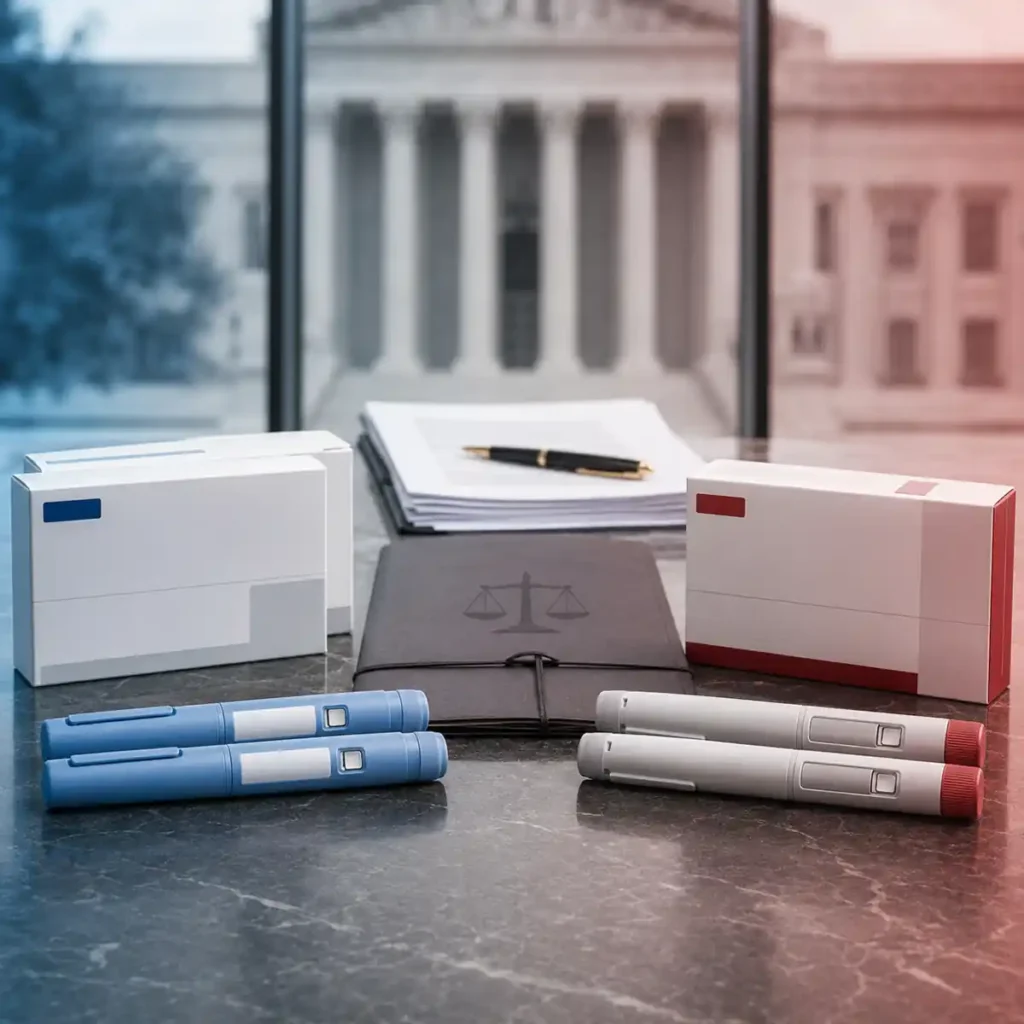

The Novo Nordisk–Eli Lilly lawsuit challenges nationwide US advertisements comparing Zepbound and Mounjaro with Wegovy and Ozempic. Novo alleges that Lilly used outdated studies and unequal dose comparisons to make its medicines appear substantially more effective.
Novo filed the complaint against Eli Lilly and Lilly USA on July 21, 2026, in the US District Court for the District of New Jersey. The case, numbered 3:26-cv-09027, includes federal and state false-advertising and unfair-competition claims under laws including the Lanham Act.
Eli Lilly rejects the allegations. The company says its advertisements are truthful, transparent and based on direct scientific evidence, adding that it intends to defend the case vigorously.
The allegations have not been decided by the court. The dispute concerns advertising and does not change the approval or availability of any medicine involved.
Why did Novo Nordisk sue Eli Lilly?
Novo claims Lilly’s television and social-media campaigns compare the highest injectable doses of Zepbound and Mounjaro with lower doses of Wegovy and Ozempic.
The company says it sent Lilly a cease-and-desist request in April 2026 but the advertisements were not withdrawn or meaningfully corrected.
Zepbound and Mounjaro contain tirzepatide, which acts on GIP and GLP-1 receptors. Wegovy and Ozempic contain semaglutide, a GLP-1 receptor agonist. Zepbound and Wegovy are approved for weight management in eligible patients, while Mounjaro and Ozempic are used for type 2 diabetes.
What is disputed about the Zepbound advertisement?
A Zepbound commercial cites a head-to-head trial in which participants lost approximately 50 pounds on average with Zepbound, compared with about 33 pounds among those receiving Wegovy.
The trial compared Zepbound doses of 10 mg or 15 mg with Wegovy doses of 1.7 mg or 2.4 mg. Novo argues that presenting those results as evidence of broad superiority became incomplete after the FDA approved Wegovy HD 7.2 mg in March 2026.
The latest FDA prescribing information for Wegovy lists 7.2 mg as the maximum weekly injectable dose for certain adults who have tolerated 2.4 mg and need additional weight reduction.
Read More
- Brisbane expands health and wellness programs with $5.6 million investment
- Health and Social Care department seeks Volunteer Service Assessors
How does Wegovy HD compare with Zepbound?
Novo’s 72-week STEP UP trial involved 1,407 adults with obesity but without diabetes. Participants receiving Wegovy 7.2 mg lost an average of 18.8% of their body weight, or roughly 47 pounds.
Novo says that result is closer to the approximately 50-pound average highlighted for Zepbound. However, the figures come from separate studies with different participants and designs, so they do not establish that the medicines are equally effective.
No completed head-to-head trial has compared the highest approved doses of Wegovy and Zepbound. Individual results can also vary according to starting weight, adherence, medical history and treatment tolerance.
Why is Lilly’s disclaimer part of the case?
Lilly added a disclosure stating that Wegovy 7.2 mg was not included in the cited head-to-head study. Novo alleges that the footnote is too small and confusing to correct the advertisement’s overall message.
Novo says the Zepbound campaign has generated more than 700 million impressions since it began airing around the end of April. That reach is cited in the complaint as evidence of potential competitive harm.
What are the Mounjaro and Ozempic allegations?
Novo separately challenges advertisements comparing the maximum 15-mg dose of Mounjaro with the 1-mg dose of Ozempic.
The complaint says this presentation omits Ozempic’s 2-mg maintenance dose, which received FDA approval more than four years before the lawsuit was filed. Whether these comparisons are legally misleading will be determined through the court process.
What does Novo want the court to order?
Novo is seeking a permanent injunction stopping the disputed advertisements, corrective advertising, financial damages, Lilly profits allegedly connected to the campaigns and legal costs.
The company has also said it may seek a preliminary injunction if Lilly does not voluntarily withdraw the ads. If granted, that temporary order could restrict the campaigns while the lawsuit proceeds. No damages figure or final court timetable has been announced.
Why does the lawsuit matter now?
The case comes as both companies compete through new doses, prices and formulations. Novo has introduced the first oral GLP-1 obesity treatment in the United States, offering eligible adults a daily alternative to weekly injections.
Affordability is another part of the competition. Novo has announced planned US list-price reductions for Ozempic and Wegovy beginning in 2027 as treatment costs and insurance access remain under scrutiny.
Does the lawsuit affect patients?
No recall, suspension or withdrawal has been announced for Zepbound, Mounjaro, Wegovy or Ozempic. The lawsuit does not mean any of these medicines has been declared unsafe or ineffective.
Patients should not stop treatment, switch medicines or change a dose because of an advertisement or the lawsuit. Treatment decisions should be made with a qualified healthcare professional using current prescribing information, potential side effects and individual medical needs.

Make Swikblog your go-to source on Google for reliable updates, smart insights, and daily trends.