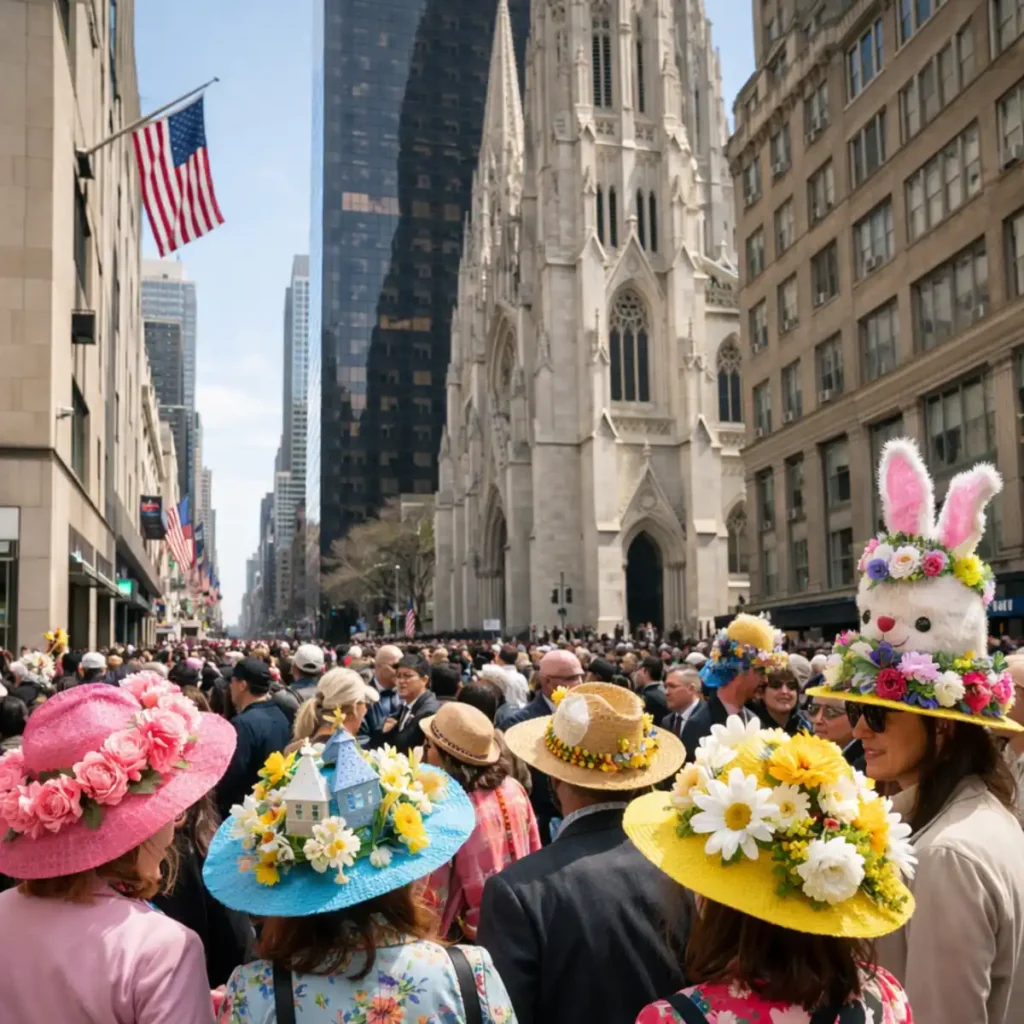

New York’s Easter Parade and Bonnet Festival is back in the spotlight this weekend as Fifth Avenue prepares to fill with oversized floral hats, tailored spring looks and the kind of playful street theater that turns a Midtown stroll into one of the city’s most photogenic annual traditions. The event is drawing attention again because it remains one of the few major Easter celebrations in the US where the crowd itself becomes the main attraction, with locals, tourists, families and costume-makers all stepping into the scene rather than watching it from the sidelines.
Set for Easter Sunday, April 5, the parade unfolds from about 10 a.m. to 4 p.m. along Fifth Avenue between 49th Street and 57th Street. The center of gravity is usually around St. Patrick’s Cathedral, where the biggest clusters of spectators, cameras and elaborately dressed participants tend to gather. Unlike a formal city parade, there are no floats, marching bands or tightly controlled formations. Instead, the event moves at a human pace, with people promenading north, stopping for photographs, admiring bonnets and treating the avenue like an open-air catwalk.
That loose format is a major reason the tradition continues to resonate. In an era of tightly managed public events, the Easter Parade still feels spontaneous. A visitor does not need a ticket, a grandstand seat or even a detailed plan. A hat, some curiosity and a willingness to join the crowd are often enough. That accessibility has helped keep the festival relevant well beyond its historical roots and gives it a visual energy that travels especially well across social media and mobile news feeds.
When the street becomes the show
The New York Easter Parade traces its origins back to the 1870s, when wealthy churchgoers left Easter services and walked along Fifth Avenue in their finest clothes. Over time, that polished post-church promenade evolved into something much more democratic and distinctly New York. What once centered on formality now thrives on creativity, eccentricity and a sense of humor. Bonnets covered in flowers, birds, ribbons, miniature city skylines and hand-built sculptures have become just as important as the tailored coats and pastel dresses that once defined the day.
That evolution matters because it explains why the festival still draws crowds. This is not simply a surviving historical custom. It has become a living expression of the city’s talent for reinvention. Tradition remains the framework, but spectacle now drives the attention. The event offers the charm of old New York while also delivering the kind of unscripted, highly visual street culture that modern audiences actively seek out.
For anyone planning to attend, the key details are simple. The route runs north on Fifth Avenue from 49th Street to 57th Street. The busiest and most recognizable section is near St. Patrick’s Cathedral, between 50th and 51st Streets, where many participants pause and photographers concentrate. Arriving earlier in the day usually offers a better chance to move comfortably through the area before the sidewalks become more crowded. By late morning and early afternoon, the festival atmosphere is in full swing, with clusters of bonnet-wearers forming naturally as passersby stop to look, laugh and take pictures.
Because this is not a conventional parade, the experience is less about securing one perfect viewing point and more about wandering through different pockets of activity. Some attendees come dressed for the occasion in spring suits, dresses or themed costumes. Others show up in casual clothes just to watch. Many bring children, and pets often appear in festive accessories as well. The result is part fashion display, part people-watching event and part seasonal ritual.
Why it still matters in 2026
The reason this event is trending now is not only timing. Easter Sunday always gives the parade a seasonal lift, but the deeper appeal lies in how clearly it reflects New York’s public character. It is festive without being exclusive, theatrical without needing a stage, and rooted in tradition without feeling frozen in the past. In a city that often moves at relentless speed, the Easter Parade offers a few hours when style, humor and spectacle slow people down enough to look around.
That helps explain its ongoing media pull. The images are immediate: bright hats, spring light, church spires, packed sidewalks and the familiar architecture of Fifth Avenue turned into a living backdrop. It is an easy event to photograph, but a harder one to replicate anywhere else. Plenty of cities hold Easter activities, but few have a celebration where self-expression is so central and so public.
The festival also arrives at a useful moment for the city’s spring calendar. It signals that New York’s outdoor season is no longer approaching but underway. That shift matters for tourism, for local foot traffic and for the general mood of the city after winter. Visitors looking for official information on Easter events in the city can also check the New York City tourism listing, but the essential appeal of this parade is easier to understand in person than on any schedule.
By the time Fifth Avenue fills with colorful bonnets on Sunday morning, the attraction will not be a single performance or headline act. It will be the crowd itself: inventive, theatrical and unmistakably New York. That is why the Easter Parade continues to draw massive attention year after year, and why even in 2026 it still feels less like a relic and more like one of the city’s most original street traditions.
You May Also Like
- UK Tourism Boom 2026 Sees Easter Travel Surge Across Heritage Sites
- Sydney Royal Easter Show 2026 Opens With Fireworks and Night Parade
Author Bio
Swikriti is a Swikblog writer with 9 years of experience focusing on financial markets, stock analysis, and high-impact global news with a strong editorial perspective.

Make Swikblog your go-to source on Google for reliable updates, smart insights, and daily trends.