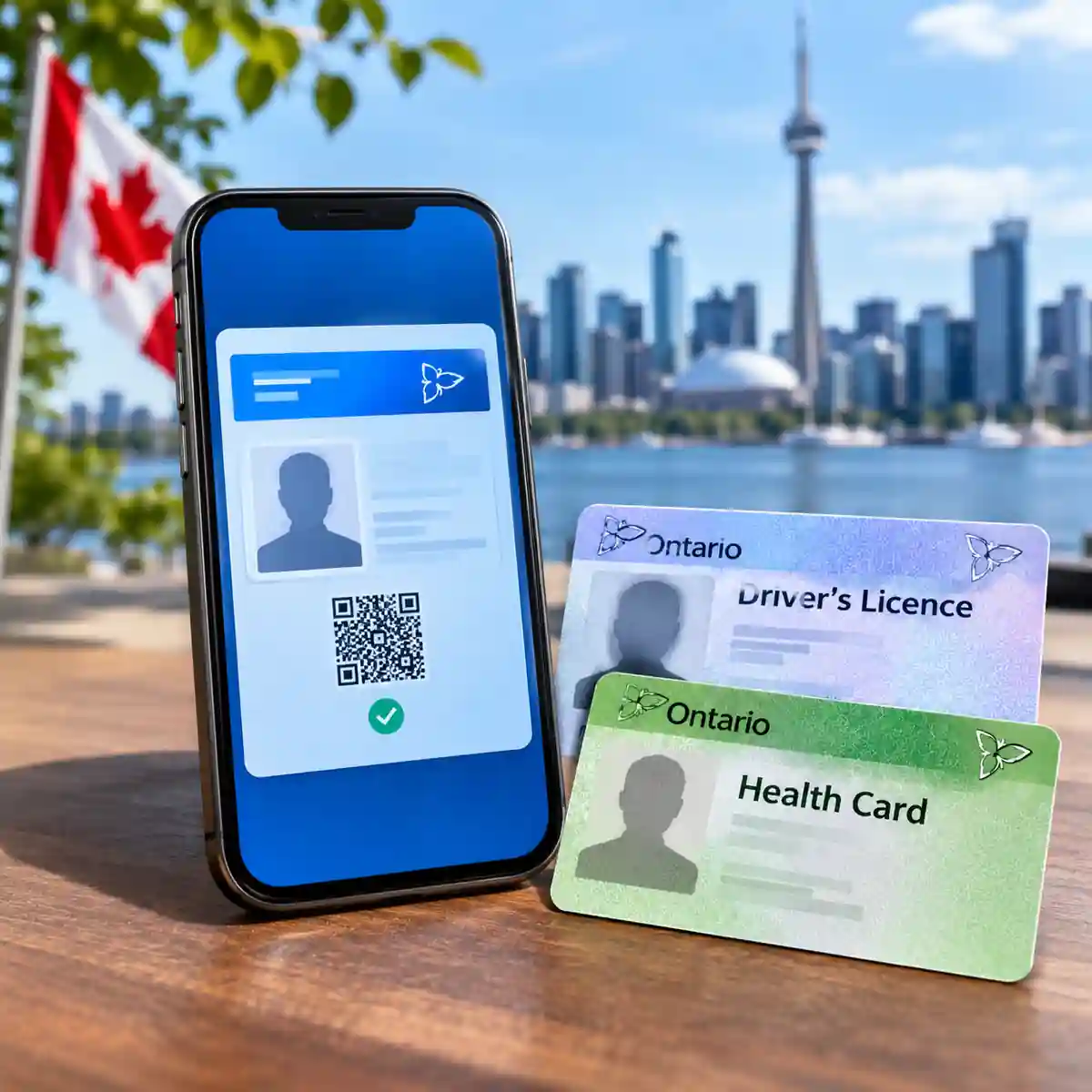

TORONTO, October 24, 2026 — Ontario is moving forward with plans to introduce digital government identification, allowing residents to carry official credentials on their smartphones. Premier Doug Ford’s government announced the initiative on Friday, October 23, starting with the Ontario Photo Card before expanding to driver’s licences and health cards.
The proposed system could change how residents verify their identities, access government services and complete everyday transactions. However, there is an important distinction: Ontario has not announced a digital ID launch date, and physical identification cards will remain available.
Ontario Digital ID Launch Date and Rollout Timeline
The province will begin consultations in late 2026 to determine how digital credentials should be developed, secured and introduced.
Following consultations, Ontario intends to test and introduce a digital version of the Ontario Photo Card. Digital driver’s licences and health cards would follow later, depending on development and testing.
According to the Ontario government’s official October 23 announcement, legislation protecting access to physical identification is planned for late 2027.
Ontario’s Fall Economic Statement is scheduled for October 29, 2026, although officials have not promised a digital ID launch date in that update.
Ontario Photo Card Will Be the First Digital ID
The first credential will be the Ontario Photo Card, government-issued identification for residents who do not have a driver’s licence.
Under existing rules, eligible applicants must be Ontario residents aged 16 or older without a driver’s licence. The physical card costs $35, remains valid for five years and generally arrives within four to six weeks.
These existing fees and eligibility rules do not establish the price or enrollment requirements for the future digital credential.
The digital version is intended to support identity verification through smartphones, including participating online and in-person services.
Digital Driver’s Licences and Health Cards Coming Later
Ontario plans to expand the program to driver’s licences and health cards after evaluating its initial Photo Card rollout.
Digital licences could eventually offer another way to present driving credentials, while smartphone-based health cards could simplify identification at participating healthcare facilities.
Health Minister Sylvia Jones said the initiative supports Ontario’s efforts to develop a more connected healthcare system.
However, acceptance during traffic stops, hospital visits and other situations has not been finalized. Residents should continue using their existing physical cards until official rules are announced.
Will Ontario Digital ID Be Mandatory?
No. Digital identification will be optional. Residents who prefer physical cards or do not own smartphones will not be required to adopt digital credentials.
The Ford government intends to introduce legislation in late 2027 protecting the right to obtain and use physical identification.
That protection is particularly relevant to seniors, people without smartphones and residents concerned about accessibility or personal data.
Privacy and Security Questions Remain
Ontario says digital credentials could reduce problems associated with lost or stolen identification and identity theft.
However, privacy safeguards remain a significant issue. Ontario’s Information and Privacy Commissioner has previously recommended stronger legal oversight, transparency and accountability for digital identity systems.
The government has not confirmed where personal information will be stored, which technology providers will participate or how residents will recover credentials after losing their phones.
Public consultations will involve government ministries, stakeholders and residents, with privacy protection and public trust identified as priorities.
Ontario Digital ID App, Fees and Eligibility
Several practical questions remain unanswered. Ontario has not announced whether digital identification will work through Apple Wallet, Google Wallet or a dedicated government application.
Officials have also not confirmed whether digital credentials will function without internet access, whether enrollment will be free or which businesses will accept them.
Residents should avoid unofficial websites claiming to offer digital ID registration before the province announces an authorized application process.
Read More
Ontario WSIB Restructuring: 466 Jobs at Risk as Services Change
Canada Express Entry 2026: New LMIA Rules and Job-Offer Points Explained
Ontario Previously Delayed Digital ID Plans in 2021
Ontario previously announced a smartphone-based digital identification initiative in 2021, but the rollout was delayed.
The renewed proposal follows digital identity developments in British Columbia, Alberta and Quebec, although their systems differ in scope and functionality.
Other Canadian provincial policy developments include the Alberta separation petition and referendum debate, a separate issue involving provincial decision-making.
At the federal level, Canada’s 2026 budget schedule and policy updates provide broader context on government priorities, although Ontario’s digital ID rollout is a provincial initiative.
What Ontario Residents Should Know Now
No immediate action is required. Existing Ontario Photo Cards, driver’s licences and health cards remain usable under their current rules.
The next developments will be public consultations, technical testing, privacy safeguards and confirmation of the first digital credential launch date.
For residents, the key question is whether Ontario can introduce a secure, convenient digital alternative while ensuring that people who prefer traditional identification retain equal access to essential services.

Make Swikblog your go-to source on Google for reliable updates, smart insights, and daily trends.