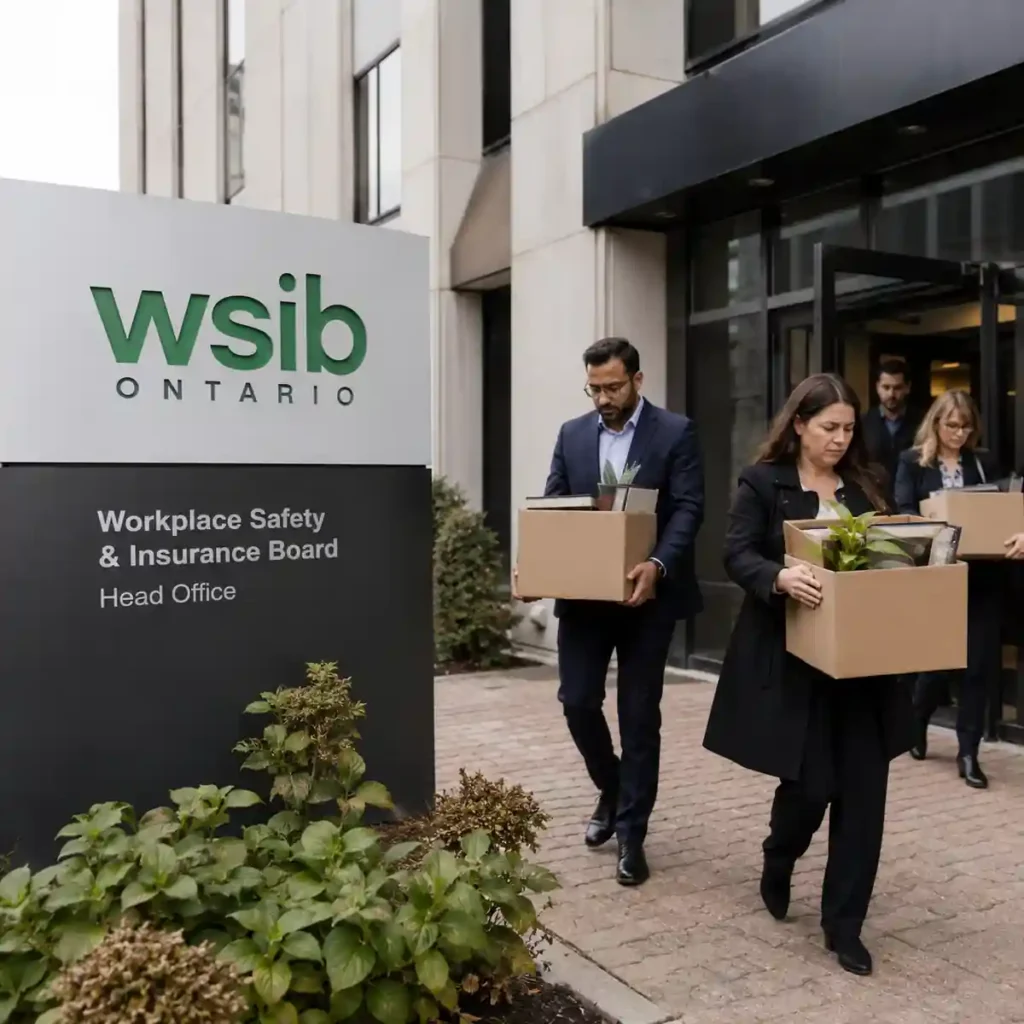

Ontario’s Workplace Safety and Insurance Board (WSIB) is restructuring operations across the province, placing 466 unionized positions into the redundancy process. Sudbury and Windsor face the largest impacts, while employees in Thunder Bay, Guelph and several other communities are also affected.
The Ontario Compensation Employees Union (OCEU), representing WSIB workers through CUPE Local 1750, says employees received redundancy notices on August 19, 2026. The figure does not mean 466 people have already been permanently laid off, because some workers may relocate or secure another role within WSIB.
The union has separately warned that another 155 positions in Waterloo could be affected in about a year. Those jobs are not included in the current total.
Which Ontario communities are hardest hit?
Northern Ontario accounts for a large share of the changes. Union figures identify 136 affected positions in Sudbury, 55 in Thunder Bay, 20 in Sault Ste. Marie, 15 in North Bay and 12 in Timmins.
Windsor has 131 positions affected, while 36 employees are affected in Guelph. Kingston and St. Catharines are among the other communities identified in the consolidation.
The restructuring comes during a wider period of public-sector workforce change in Ontario. Separate reductions involving more than 800 TDSB school jobs have raised similar questions about workloads and maintaining services during major staffing changes.
What does redundancy mean for WSIB employees?
A redundancy notice does not automatically mean immediate dismissal. According to the union, affected employees have a three-week period to decide whether relocating to another WSIB location is possible.
Workers then have up to six months to try to obtain another position within the organization before potentially facing layoff. Seniority and collective-agreement provisions can influence how available jobs are filled.
WSIB says affected employees will receive transition support, including resume-writing and job-search assistance.
The restructuring follows WSIB workers’ first strike, which lasted more than six weeks in 2025. Staffing and workload concerns were among the issues raised during the labour dispute.
Will WSIB claims and services continue?
WSIB says services will continue while operations are reorganized. Local teams are expected to provide in-person return-to-work assistance, while many routine claim services are already available online or by phone.
People with existing workplace injury or illness claims should not assume their benefits are ending because of the staffing changes. Claim reporting, document submission, payment information and other services remain available through the official WSIB website.
The union has warned that fewer regional employees could increase pressure on remaining staff and affect response times. Whether service delays develop will depend on how work is redistributed.
Why is WSIB restructuring its operations?
WSIB describes the changes as a business decision to consolidate claim and account-management functions as it modernizes service delivery.
The timing has drawn attention because Ontario announced a review of WSIB and seven other provincial agencies in August, including Metrolinx, Legal Aid Ontario and the LCBO.
However, the timing alone does not establish that the provincial review caused the redundancies. WSIB has characterized the consolidation as its own operational decision.
The changes also come against a shifting Canadian labour market. Recent Canadian employment and unemployment data provides broader context for workers who may eventually need to seek employment elsewhere.
HSBC Shares Jump 11.86% as AI Plan Could Cut 20,000 Jobs
SunRice Cuts 78 Jobs in Riverina Amid Water Buyback Pressure
Sudbury faces cuts alongside major WSIB investment
Sudbury stands out because it has the largest number of affected positions while WSIB is also supporting a major workplace-safety investment in the city.
In April 2026, WSIB announced $125 million in funding for the Ontario Mine Rescue Training Academy in Sudbury. The facility is expected to open in 2029 and is intended to expand specialized mine-rescue and emergency-response training.
The academy and the staffing restructuring serve different purposes, but the timing creates a notable local contrast: 136 unionized positions are affected in Sudbury while a major long-term safety project moves ahead in the same community.

Make Swikblog your go-to source on Google for reliable updates, smart insights, and daily trends.