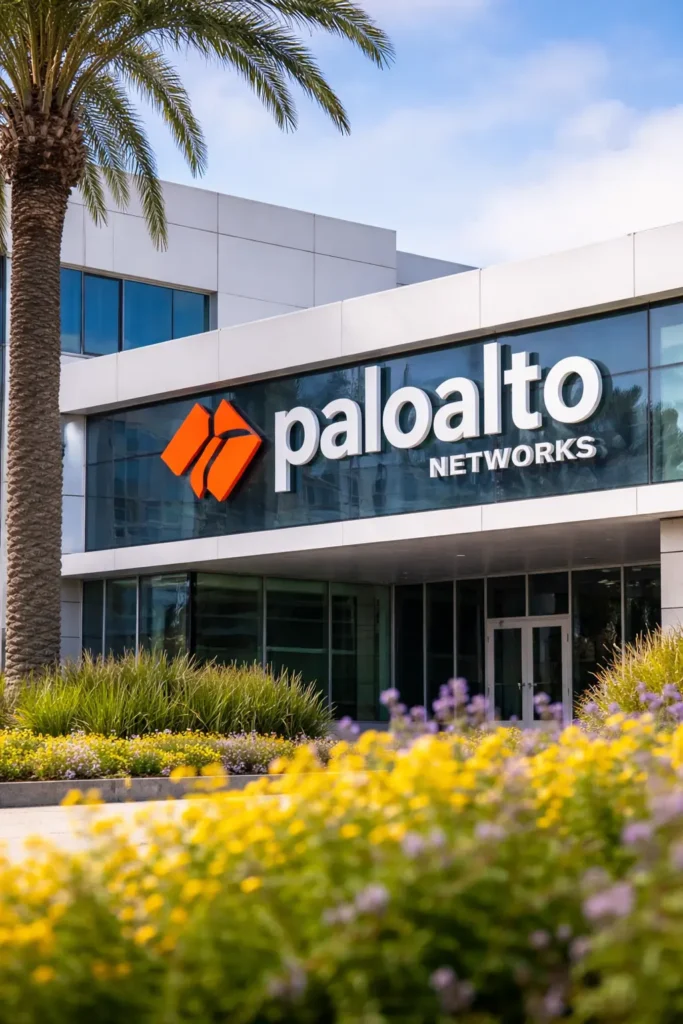

Palo Alto Networks shares dropped 7% to $151 on Wednesday, erasing early optimism after the cybersecurity giant posted better-than-expected fiscal second-quarter earnings. While headline numbers topped estimates, investors focused instead on margin pressure and the pace of organic growth following a wave of multibillion-dollar acquisitions.
The reaction highlights a broader 2026 market shift: quality of growth now matters more than revenue beats.
Earnings Beat, But Questions Linger
The company reported adjusted earnings of $1.03 per share, up 27% year over year and ahead of consensus expectations of $0.94. Revenue rose 15% to $2.6 billion, slightly above analyst forecasts of $2.58 billion.
Remaining performance obligations — a key forward-looking indicator of contracted revenue — climbed 23% to $16 billion, surpassing Wall Street projections of $15.78 billion. Annual recurring revenue reached $6.3 billion, topping estimates of $6.13 billion.
Yet despite the beat across most headline metrics, shares moved sharply lower.
Organic ARR Growth in Focus
Investors zeroed in on organic net-new ARR growth, which expanded 11% year over year. While management reiterated that ARR trends are typically back-end loaded, some analysts view the pace as modest compared with historical growth rates.
Palo Alto has aggressively pursued a “platformization” strategy, closing its $25 billion acquisition of CyberArk earlier this month and finalizing the $3.35 billion Chronosphere deal in January. The company has deployed nearly $30 billion in capital across acquisitions as it builds out a broad cloud-based security platform.
However, some analysts note that acquired businesses have added roughly $1.5 billion in incremental ARR, raising questions about near-term return on invested capital.
Free Cash Flow Margins Under Pressure
Free cash flow also disappointed relative to expectations. The company generated $502 million in fiscal Q2, about 6% below consensus. Adjusted free cash flow margin came in at 19%, down three percentage points from a year earlier.
You may also like
Apple Stock Today Rises to $265 as AI Volatility Keeps Nasdaq in Focus
Management maintained its target of 37% adjusted free cash flow margin in fiscal 2026 for the combined business. Achieving that level will likely require operational improvements at recently acquired assets, including CyberArk, which historically posted free cash flow margins in the high teens.
That integration risk appears to be weighing on investor sentiment.
Forward Guidance Signals Back-Half Acceleration
For the quarter ending in April, Palo Alto forecast revenue of approximately $2.94 billion and RPO of $17.9 billion, both above current consensus estimates.
Still, analysts noted that the full-year ARR outlook implies a meaningful acceleration in organic growth during the second half of the fiscal year — a dynamic that investors appear hesitant to price in without clearer evidence of margin stability.
AI and Platform Strategy Remain Central
Strategically, Palo Alto continues expanding its artificial intelligence-driven XSIAM platform, aimed at consolidating security operations, automating threat detection and accelerating response times. The company has positioned itself as a broad cybersecurity platform spanning firewalls, cloud security, endpoint protection and Secure Access Service Edge capabilities.
Enterprise demand for AI-enabled security tools remains strong amid rising cyber threats and growing cloud complexity. However, the market is differentiating between acquisition-fueled expansion and organic subscription momentum.
Market Reaction Reflects Higher Bar
Shares had already declined roughly 11% year to date heading into the report. The post-earnings drop pushes the stock closer to technical support in the $148–$150 range, with resistance near $160.
Investors appear to be recalibrating expectations as cybersecurity valuations compress across the sector. In a higher-rate environment, durable free cash flow and consistent organic growth are commanding premium multiples.
Palo Alto remains one of the industry’s largest and most diversified players, with a strong recurring revenue base and expanding contracted backlog. But the company must now demonstrate that its acquisition strategy can deliver sustainable margin expansion alongside accelerating organic demand.
The next two quarters are likely to determine whether this selloff represents a temporary reset — or a broader reassessment of growth durability in the cybersecurity space.
Investors also weighed Palo Alto’s margin outlook against broader cybersecurity peers, with sector benchmarks tracked closely across Bloomberg Markets.
For more market-moving technology coverage, follow our latest analysis at Swikblog.

Make Swikblog your go-to source on Google for reliable updates, smart insights, and daily trends.