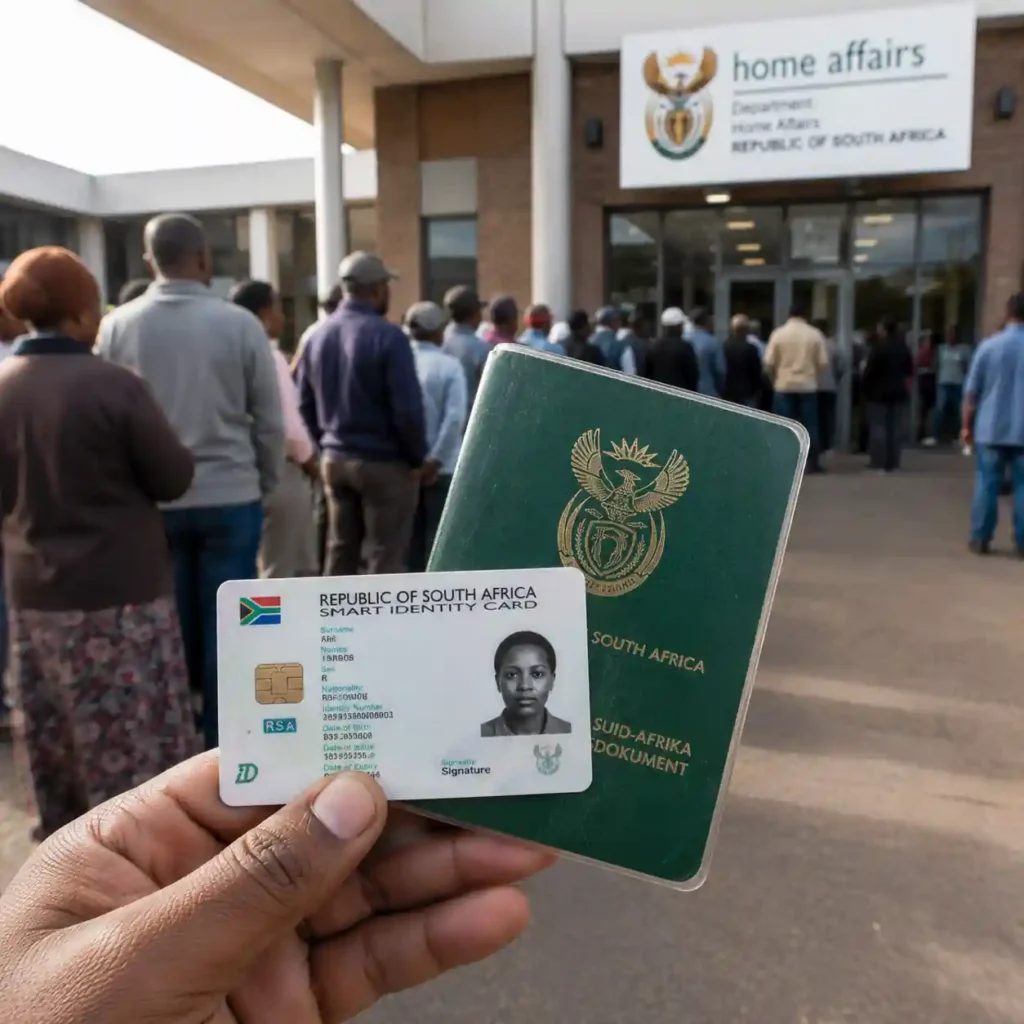

Thousands of permanent residents in South Africa are facing an uncertain future as the country continues its transition from the green barcoded ID book to the Smart ID card. While the Department of Home Affairs has promoted the Smart ID as the future of identity verification, many lawful residents say they are still waiting for clarity on how and when they will be able to fully participate in the system.
The Smart ID card was introduced to strengthen security, reduce fraud and modernise South Africa’s identity infrastructure. Unlike the green ID book, the card includes biometric information and advanced security features that make identity verification faster and more reliable. As banks, government departments and digital platforms increasingly integrate Smart ID-based checks, concerns are growing among those who still depend on older documents.
For permanent residents, the issue goes beyond convenience. Identity documents are required for banking, employment, property transactions, tax administration, mobile contracts and access to public services. As more institutions adopt digital verification systems designed around Smart IDs, many green ID holders worry they could face additional scrutiny, delays or administrative obstacles despite holding legally valid documents.
The challenge stems partly from historical system limitations. For years, Home Affairs was unable to process Smart ID applications for many naturalised citizens and lawful permanent residents. Although the department announced a major expansion of Smart ID access in 2025, allowing naturalised citizens and certain permanent residents to apply, the rollout has not resolved every concern.
Questions remain about residents from non-visa-exempt countries, application timelines and the long-term status of green ID books. Many affected residents continue asking when all permanent residents will be eligible, whether green ID books will remain valid until every eligible holder has transitioned, and how banks and private institutions will handle verification during the transition period.
Growing concerns as digital systems evolve
The uncertainty is becoming more noticeable because South Africa’s identity ecosystem is changing rapidly. Financial institutions, online verification services and government platforms increasingly rely on digital identity checks. While green ID books remain legally valid, some residents fear that practical challenges could emerge if systems become heavily dependent on Smart ID functionality.
These concerns are not limited to permanent residents. Elderly South Africans remain among the largest groups still using green ID books. Many pensioners face significant barriers, including transport costs, long queues, limited mobility and difficulties using online appointment systems. For elderly citizens living in rural areas, simply reaching a Home Affairs office can be a major challenge.
South Africans living abroad face a different problem. Although Smart ID services have been introduced at selected foreign missions, coverage remains limited. Many expatriates continue relying on green ID books because Smart ID application services are not yet available at every embassy or consulate.
Access challenges also affect residents in remote communities. In some areas, applicants must travel considerable distances to reach Smart ID-enabled offices. Mobile Home Affairs units are not always available, and repeated visits caused by appointment delays, network outages or power interruptions can significantly increase costs for households already under financial pressure.
Administrative issues remain another obstacle. Duplicate identity numbers, fingerprint mismatches, missing records and National Population Register verification errors can prevent otherwise eligible applicants from successfully completing their Smart ID applications.
The transition challenge is bigger than technology
Home Affairs has consistently argued that Smart IDs are central to combating identity fraud and building a more secure national identification system. The department’s broader goal is to create a modern digital identity framework that improves service delivery while reducing opportunities for document abuse. More information on eligibility for naturalised citizens and lawful permanent residents is available through this official Smart ID eligibility update.
However, the continued use of green ID books should not automatically be viewed as resistance to change. In many cases, it reflects ongoing challenges related to infrastructure, accessibility, administrative readiness and communication. Until every eligible resident has a realistic path to obtaining a Smart ID, concerns about exclusion are likely to continue.
Read More
The discussion also comes at a time when South Africa is refining several immigration and residency policies that affect foreign nationals and long-term residents. Documentation requirements are becoming increasingly important for individuals seeking to live and work in the country, including professionals exploring opportunities through the South Africa Digital Nomad Visa.
For now, green ID books remain valid. But for thousands of permanent residents, the debate is no longer simply about replacing an old document with a new one. It is about ensuring that a modern identity system remains accessible, inclusive and fair to everyone who has built their lives in South Africa.

Make Swikblog your go-to source on Google for reliable updates, smart insights, and daily trends.