
By Elena Morales – Royal Affairs Analyst, Swikblog
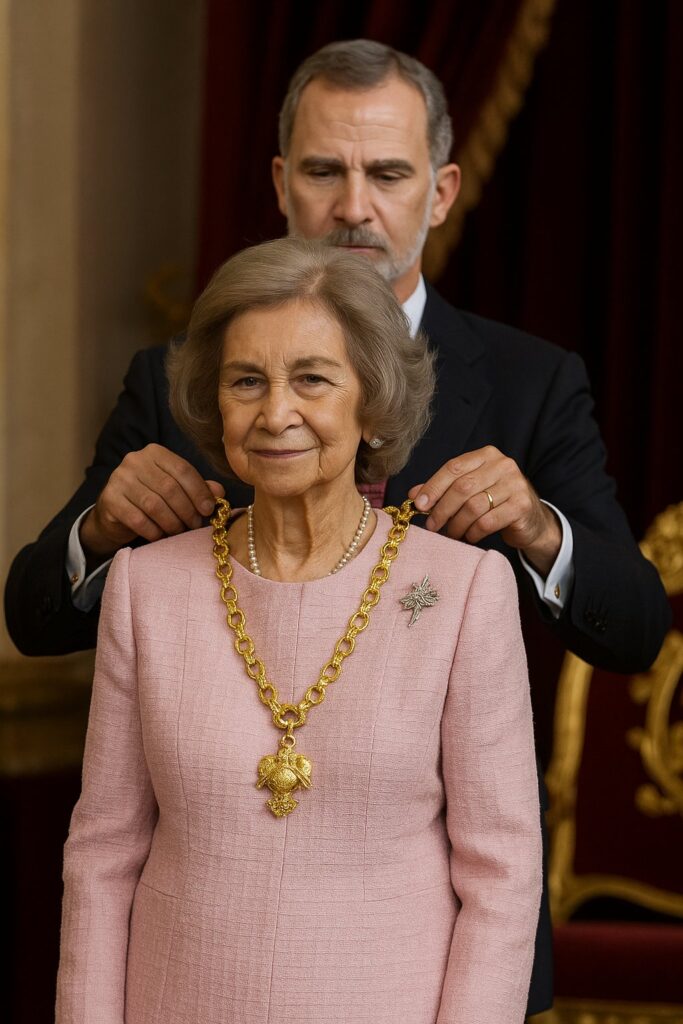
Spain’s royal family is in the global spotlight today as King Felipe VI formally bestows the Order of the Golden Fleece on his mother, Queen Sofía, during a solemn ceremony at the Royal Palace in Madrid. The event is not just a family moment; it is part of the commemorations marking the 50th anniversary of Spain’s modern parliamentary monarchy, which is why searches for Queen Sofía, Felipe González and the “Toisón de Oro” have surged across the internet.
Embed from Getty ImagesWhat Is the Order of the Golden Fleece?
The Order of the Golden Fleece is one of the most prestigious chivalric orders in Europe. Founded in 1430 by Philip the Good, Duke of Burgundy, it is today awarded by the King of Spain as the country’s highest dynastic distinction. Membership is extremely limited and has historically included monarchs, heads of state and a few exceptional public figures. You can think of it as a rare “lifetime thank you” from the Crown for extraordinary service to Spain and its people. For readers who want to go deeper into the order’s long history, the background is well documented in international reference sources such as the Order of the Golden Fleece entry.
Until recently, only a handful of members of Spain’s royal family held the Golden Fleece: the former king Juan Carlos I, King Felipe VI himself and Princess Leonor. Queen Sofía’s inclusion completes a symbolic circle within the royal household.
Why Queen Sofía Is Being Honoured Now
According to Spanish media reports, King Felipe VI is awarding the Golden Fleece to Queen Sofía in recognition of her decades of quiet, consistent service to the Crown and to Spanish society. From the transition to democracy in the late 1970s to the present day, she has represented Spain at state visits, cultural events and charitable causes, often far from the cameras.
The decision was formally announced earlier this year, but today’s ceremony finally turns that announcement into a visual, emotional reality. Coverage from outlets such as Telemadrid highlights how visibly moved both mother and son were as the king placed the heavy collar of the order around her shoulders in the Throne Room of the Royal Palace.
Felipe González and the “Fathers of the Constitution” Also Recognised
The ceremony is not only about Queen Sofía. King Felipe VI is also awarding the Golden Fleece to former prime minister Felipe González and two key jurists from Spain’s democratic transition: Miquel Roca and Miguel Herrero y Rodríguez de Miñón. Together, they are often described as some of the “fathers of the 1978 Constitution”.
Honouring these figures in the same act underlines a clear message: the monarchy wants to highlight the value of dialogue, consensus and democratic institutions at a time when politics can feel more polarised. For international readers trying to understand why this is trending, it is this blend of royal symbolism and democratic history that makes the story stand out.
A Ceremony Framed by a Major Anniversary
The Golden Fleece presentation coincides with events marking 50 years since the restoration of the Spanish monarchy in 1975, after the end of the Franco dictatorship. Official acts at the Royal Palace and the Spanish parliament are revisiting how the Crown, elected politicians and civil society helped build today’s democratic system.
That historical backdrop is part of what drives global interest. Many people outside Spain are discovering—or rediscovering—how central the royal family has been in moments of institutional change. For royal watchers in the UK, Canada or Australia, it also invites comparisons with how other constitutional monarchies adapt to new political eras.
Why This Story Is Trending Beyond Spain
Several factors are pushing this ceremony into international Google Trends and social feeds:
- Rare honour: the Golden Fleece is awarded very infrequently, so any new member generates headlines.
- Emotional imagery: the visual of a son, now king, placing the country’s highest honour on his mother is powerful and highly shareable.
- Democracy message: linking the awards to the 50th anniversary of democratic institutions gives the story political and historical weight.
- Ongoing fascination with royals: global audiences remain curious about royal families beyond their own, especially when ceremonies mix tradition, fashion and emotion.
At the same time, Spain is having a broader “visibility moment” in international sports and culture. For example, basketball fans are closely following Xavi Pascual’s high-profile return to FC Barcelona in the 2025–26 EuroLeague season, another storyline connecting Spain’s institutions with long-term loyalty, comebacks and legacy.
What to Watch Next
In the coming days, expect more analysis on what this honour says about Queen Sofía’s role in the royal family going forward, and how the monarchy is presenting itself to younger generations of Spaniards. Commentators will also be watching whether this ceremony leads to more discussion about who could receive the Golden Fleece next and how the order should evolve in the 21st century.
For now, the image that will likely stay in the public memory is a simple one: an elderly queen, visibly emotional, receiving one of Europe’s great honours from her son in a glittering palace room—an intensely personal moment that doubles as a page in Spain’s modern history.

Make Swikblog your go-to source on Google for reliable updates, smart insights, and daily trends.