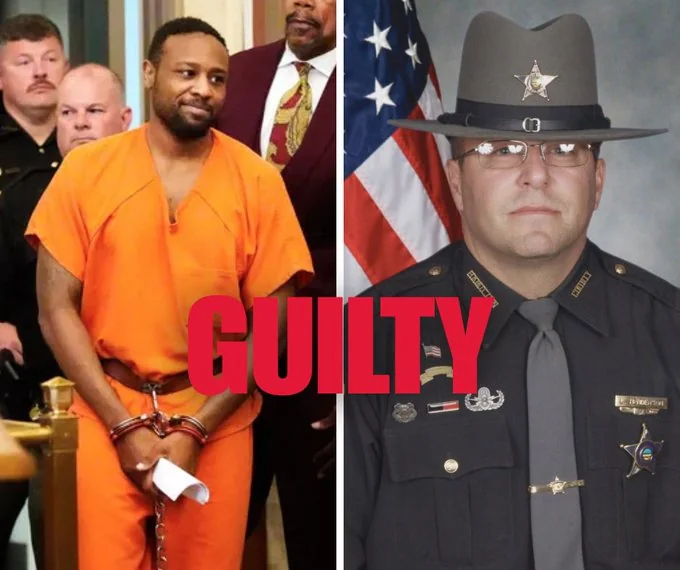

CINCINNATI, Ohio, October 23, 2026 — Rodney Hinton Jr. was found guilty of murder Friday in the death of Hamilton County Sheriff’s Deputy Larry Henderson, who was struck by a vehicle near the University of Cincinnati just one day after police fatally shot Hinton’s teenage son.
A Hamilton County jury convicted Hinton of murder, two counts of reckless homicide and two counts of felonious assault following nearly three days of deliberations. Jurors rejected aggravated murder convictions, while also declining to accept the defense’s argument that Hinton was legally insane when the deadly collision occurred.
The verdict ends a closely watched trial involving two deaths, disputed evidence about Hinton’s intentions and testimony about his psychiatric condition. Sentencing is scheduled for November 16, 2026.
Rodney Hinton Jr. Guilty Verdict: Jury Rejects Aggravated Murder
Hinton faced two aggravated murder charges, one murder charge and two felonious assault charges in connection with Henderson’s death on May 2, 2025.
Jurors found him guilty of the separate murder charge and both felonious assault counts. They returned reckless homicide verdicts as lesser offenses on the aggravated murder charges.
The distinction matters: although jurors did not convict Hinton of aggravated murder, the separate murder conviction remains a serious felony carrying a potential lengthy prison sentence.
Deputy Larry Henderson Killed Near University of Cincinnati
Henderson was directing traffic near Burnet Woods during University of Cincinnati graduation activities when Hinton’s vehicle struck him.
Prosecutors alleged that Hinton deliberately accelerated toward the uniformed deputy after waiting for traffic to clear.
Crash reconstruction testimony indicated that the vehicle reached nearly 50 mph within approximately five seconds. Investigators also described steering movements toward Henderson as the deputy attempted to avoid the approaching vehicle.
Defense attorneys challenged that interpretation, arguing that Hinton may have been aiming for a utility pole in a suicide attempt rather than intentionally targeting Henderson.
Hinton’s Son Was Fatally Shot by Police a Day Earlier
The events unfolded shortly after another tragedy involving Hinton’s family.
On May 1, 2025, Cincinnati police fatally shot Hinton’s teenage son, Ryan Hinton, during an investigation involving a stolen vehicle. Authorities said Ryan was armed during the encounter.
Hamilton County Prosecutor Connie Pillich later determined that the officer’s use of deadly force was legally justified.
The following day, Rodney Hinton Jr. watched police body-camera footage showing his son’s death. Family members testified that they became concerned about his emotional condition afterward.
Hours later, Henderson was killed.
Insanity Defense and Mental Health Testimony
Defense attorney Clyde Bennett II argued that Hinton was experiencing a severe psychiatric crisis following his son’s death.
Forensic psychologist Dr. Maria Espinola testified that Hinton had schizoaffective disorder, bipolar type, and post-traumatic stress disorder. She described symptoms of psychosis and dissociation that she believed affected his mental state during the collision.
Prosecution experts disputed whether those conditions prevented Hinton from understanding that his actions were wrong.
The legal question was not simply whether Hinton had a psychiatric illness, but whether he met Ohio’s specific requirements for an insanity defense.
The jury ultimately rejected that defense.
For additional trial details, Cincinnati Public Radio’s courtroom coverage examines the competing arguments about mental illness and intent.
Family Testimony and Hinton’s Actions Before the Crash
Relatives described concerns about Hinton’s behavior after he viewed the police footage.
His sister testified that she had warned authorities about his mental health, while another relative described following him because family members feared he might harm himself.
Prosecutors maintained that the driving evidence and Hinton’s subsequent statements demonstrated intentional conduct. Defense attorneys argued that his actions reflected an escalating psychiatric emergency.
Sentencing Set for November 16 as Defense Plans Appeal
Hinton’s sentencing is scheduled for November 16, 2026, with the defense indicating plans to appeal the verdict.
The death penalty had already been excluded before the jury’s decision. The court must now determine the applicable prison sentence.
The case adds to scrutiny surrounding fatal encounters involving law enforcement, including the deadly Dallas police standoff and the separate George Washington Bridge shooting investigation.
For Henderson’s family, the conviction marks a significant legal development more than 17 months after his death. For Hinton, the next proceedings will determine his punishment and whether his attorneys pursue a formal appeal.

Make Swikblog your go-to source on Google for reliable updates, smart insights, and daily trends.