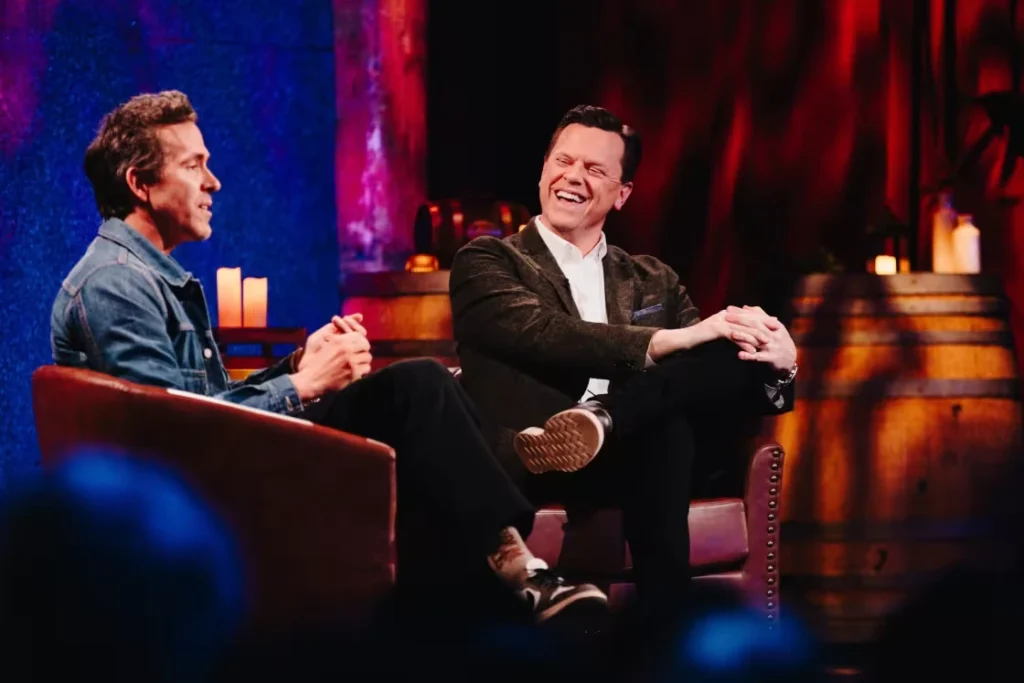

Ryan Reynolds is still one of Hollywood’s most bankable stars, but his latest public appearance showed why his appeal now stretches far beyond the movies. During a live conversation with Willie Geist for NBC’s Sunday Sitdown Live, Reynolds spoke about the future of Deadpool, his business instincts, the remarkable rise of Wrexham A.F.C., his support for Blake Lively and the family perspective that seems to shape almost every major decision he makes.
The discussion, taped in New York in front of a live audience, offered something more revealing than the usual celebrity promo stop. Reynolds was funny, as expected, but he was also thoughtful about aging, candid about fatherhood and unusually direct about the way fame can distort reality. That combination made the interview feel less like a glossy tour through career highlights and more like a snapshot of where he stands now as an actor, businessman, husband and father of four.
Why Ryan Reynolds may be rethinking Deadpool’s next chapter
For Marvel fans, the clearest headline was Reynolds’ suggestion that another Deadpool project is possible, but perhaps not in the form audiences automatically expect. He said he has material written, which is enough to keep speculation alive, yet his bigger point was that Deadpool may work best when he is part of a larger dynamic rather than carrying everything alone.
That matters because it hints at a more strategic future for the character. After Deadpool & Wolverine brought Reynolds and Hugh Jackman together again in 2024, the actor appears to be thinking beyond the simple formula of making another sequel that tries to repeat old magic. He seems more interested in finding the right context for the character, even if that means Deadpool becomes a disruptive supporting force inside a broader ensemble story.
It is a telling creative position. Long-running franchises often lose energy when they become predictable, and Reynolds has spent years carefully protecting Deadpool’s identity. By suggesting the character is “great in a group,” he is effectively saying the next step should be about freshness, chemistry and scale rather than just another solo outing built around familiar jokes. For audiences, that may be the most promising update he could have given, because it suggests he is trying to preserve what makes the character work instead of overextending it.
Reynolds’ comments also reflected how he sees storytelling more broadly. Whether he is acting, producing or marketing, he tends to think in terms of audience reaction and emotional rhythm. That same instinct has powered much of his off-screen success.
His company Maximum Effort, launched in 2018, has become a major part of his identity, blending film production with sharp advertising and brand storytelling. It is that ability to turn personality into narrative without losing credibility that helped make his investments in Aviation Gin and Mint Mobile stand out from the usual celebrity endorsement model. Reynolds has not simply lent his name to products. He has sold people a tone, a voice and a point of view.
That instinct for narrative also explains why Wrexham continues to matter so much to him. What could have been dismissed as an unusual side investment has instead turned into one of the most compelling sports stories in recent years. Reynolds described the Welsh club as one of the great loves of his life, and it is easy to see why. The team’s rise has come to symbolize more than football. It has become a story about local identity, belief and the power of being seen again after years of feeling ignored.
The club, bought by Reynolds and Rob McElhenney in 2021, has been chronicled through the award-winning Welcome to Wrexham series. Reynolds used the interview to underline something that often gets lost beneath the fairy-tale headlines: Wrexham represents the kind of community found all over the world, a place where people want pride, connection and a reason to believe that things can improve. That message has clearly become as meaningful to him as the team’s results on the pitch.
Family, illness and the perspective behind the public image
For all the attention around film and business, the most powerful parts of the conversation were personal. Reynolds spoke warmly about his home life with Blake Lively and their four children, making it clear that fame sits well below family on his list of priorities. He described his wife and children as the people who matter most when everything else is stripped away, a line that felt sincere precisely because it did not sound dressed up for effect.
Even lighter moments pointed back to that family-centered worldview. Reynolds joked that his son Olin is already enthusiastic about Deadpool & Wolverine, though not, of course, the most adult parts of it. The joke landed because it captured the strange overlap Reynolds now lives with every day: global franchise star on one side, dad negotiating movie choices at home on the other.
The interview grew more emotional when the subject turned to Parkinson’s disease. Reynolds’ father, James Reynolds, lived with the illness for many years before his death in 2015, and the actor spoke movingly about how devastating it can be to lose confidence in your own sense of self. His comments carried real weight because they were not abstract. They came from lived experience, from watching a parent’s world narrow in painful ways over time. Readers looking for medically reviewed information on Parkinson’s disease can find it through the National Institute of Neurological Disorders and Stroke.
Reynolds also addressed the intense public attention surrounding Blake Lively’s legal dispute connected to It Ends With Us and Justin Baldoni. He did not dive into legal detail. Instead, he focused on character, saying he had never been more proud of his wife. It was a measured response, but a revealing one. Rather than feeding the noise around the case, he pushed back on the gap between online narratives and real life, suggesting that much of what the public consumes about celebrity conflict rarely captures the full truth.
That may be the strongest thread connecting everything Reynolds discussed. Whether the topic was Deadpool, football, marketing, illness or marriage, he kept returning to the same idea: what matters most is not the headline but the substance behind it. As he heads toward 50, even joking about throwing himself a “check-your-prostate” birthday party, Reynolds sounds like someone less interested in performance for its own sake and more interested in perspective.
For a star who built an empire on wit, that grounded self-awareness may be his most valuable asset now. It helps explain why people continue to follow him across films, businesses, sports and interviews alike. For more celebrity and entertainment coverage, visit our entertainment section.
You may like: Bianca Belair Pregnancy Rumors, WrestleMania 42 Buzz and What Could Happen Next

Make Swikblog your go-to source on Google for reliable updates, smart insights, and daily trends.