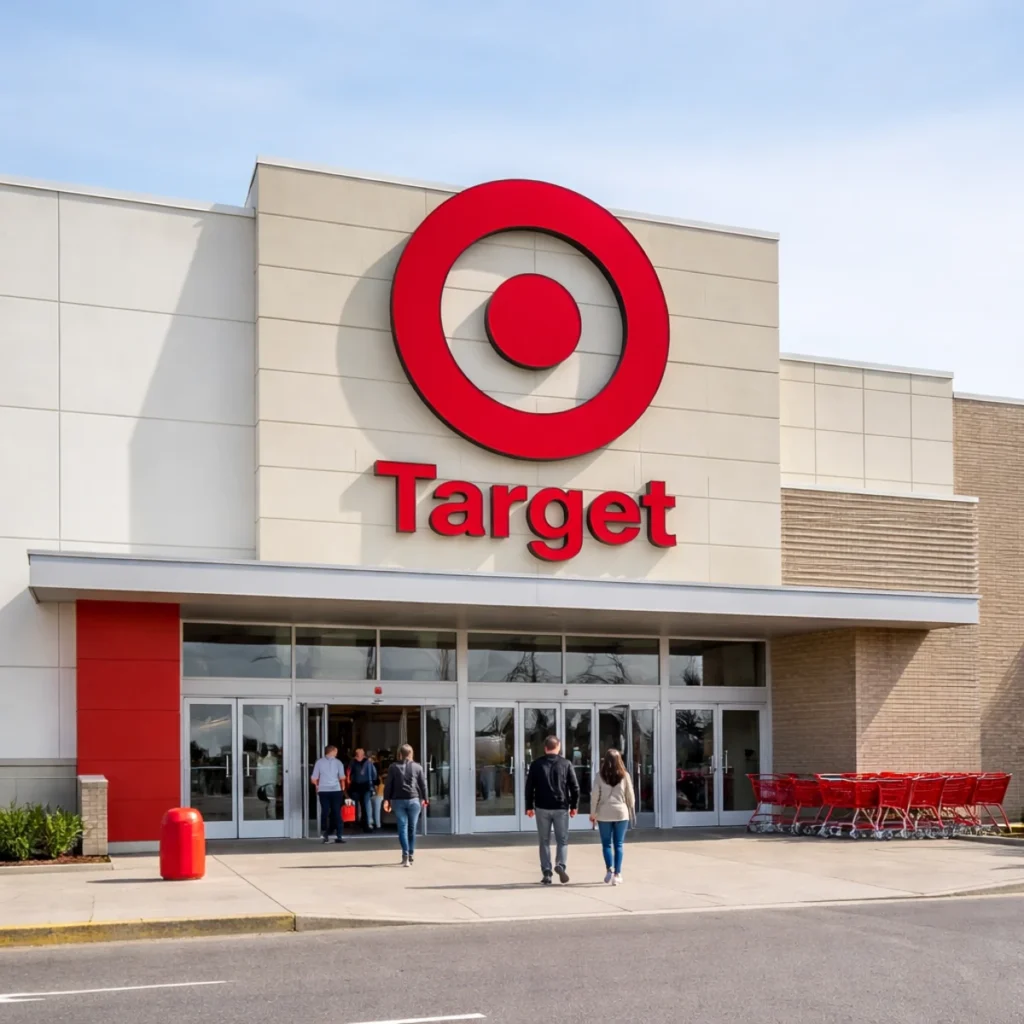

Target is still trading near $120, but the bigger story now sits far beyond the daily share-price move. The retailer’s latest challenge is not just political controversy, shifting consumer tastes, or a noisy debate around branding. It is a more basic and more damaging issue for any big-box chain: shoppers walking into stores that feel understocked, uneven, and less compelling than they once did. That is why the pressure on Target and its new leadership team has become more serious, even with the stock still hovering near a level that suggests investors have not fully priced in either a sharp breakdown or a quick recovery.
Michael Fiddelke stepped into the chief executive role in early February with a message built around fixing the business from the inside out. His priorities were broad and polished, focused on stronger merchandising, a better guest experience, more technology, and investment in team members and communities. On paper, that sounds like the right reset for a retailer that once defined affordable style for millions of shoppers. In practice, however, analysts and long-time retail observers are warning that Target’s problems may run deeper than a fresh strategic memo can solve.
The concern is not abstract. Target has been dealing with slowing sales momentum, store-level execution issues, and a shopping experience that no longer feels as sharp as the brand promised during its strongest years. Reports from retail analysts and former executives have pointed to long checkout lines, picked-over shelves, lackluster assortments, and weaker value perception. For a chain that built its modern reputation on combining design, convenience, and low-price credibility, those are not small cracks. They strike directly at the center of the Target identity.
You May Also Like
For more market and retail coverage, visit Swikblog’s latest business and stock updates.
That helps explain why some analysts believe the current debate around DEI backlash or culture-war pressure, while real, may not be the main driver of the retailer’s softer performance. Those issues may have added noise and hurt sentiment on both sides of the political spectrum, but customers ultimately return to stores that feel easy to shop and worth the trip. When shelves look thin, sizes are missing, top items are out of stock, or promotions feel aggressive without delivering real value, shoppers quickly drift toward rivals with better execution.
And the rivals are not standing still. Walmart has become more aggressive in fashion and general merchandise, while Costco continues to win with consistency, price trust, and traffic loyalty. Amazon, meanwhile, remains the fallback option whenever a shopper leaves a store empty-handed. That combination makes Target’s recovery path harder than a simple brand refresh. The company is now trying to defend market share in a retail environment where convenience, inventory precision, and value discipline matter more than ever.
Fiddelke has at least acknowledged that operational repair is necessary. Target has said its on-shelf availability for the company’s 5,000 most important items improved by more than 150 basis points from a year earlier. That is meaningful progress, especially because those products account for a large share of unit sales. But the company has also made clear that it still has more work to do, which is why management is lifting capital spending to roughly $5 billion in 2026. That money is expected to go toward store upgrades, merchandising resets, staffing support, technology, and efforts to make the in-store experience more reliable.
Investors should pay close attention to that number. A retailer does not commit billions more to stores and operations unless management sees a meaningful gap that needs closing. The spending plan can be read two ways. Bulls will say it shows urgency, realism, and a willingness to invest for a turnaround before problems get worse. Bears will say it is proof that Target’s issues are larger, more expensive, and more deeply embedded than headline commentary around branding or politics suggests.
There is also a people challenge behind the numbers. Some retail commentators argue that store associates and frontline morale should be the first issue, not the fourth. That criticism matters because a clean store, a stocked shelf, and a smoother checkout line are not abstract strategy points. They depend on enough trained workers having the time and support to do the job well. If labor allocation remains tilted too heavily toward digital fulfillment while store conditions slip, customers will keep noticing the difference.
For now, the stock near $120 reflects a market still waiting for hard proof. Shares are no longer pricing in pure optimism, but they also are not trading like investors have fully lost faith. That leaves Target in a narrow middle ground. The company still has national scale, a recognizable brand, loyal shoppers, and categories where it can regain momentum. But it also has to prove that store standards, inventory flow, merchandise authority, and value perception can improve fast enough to stop customers from building new habits elsewhere.
The next phase of this story will likely be decided inside the stores, not in press releases. If shoppers start seeing fuller shelves, better presentation, quicker trips, and more convincing product assortments, the turnaround argument gets stronger and the stock could find firmer footing. If not, Target may discover that its deeper problem was never just the public debate around the brand. It was the slow erosion of the experience that once made the chain feel distinct in American retail.
External reading: A recent Reuters report on investor pressure and Target’s execution concerns offers added context on the retailer’s turnaround challenge.

Make Swikblog your go-to source on Google for reliable updates, smart insights, and daily trends.