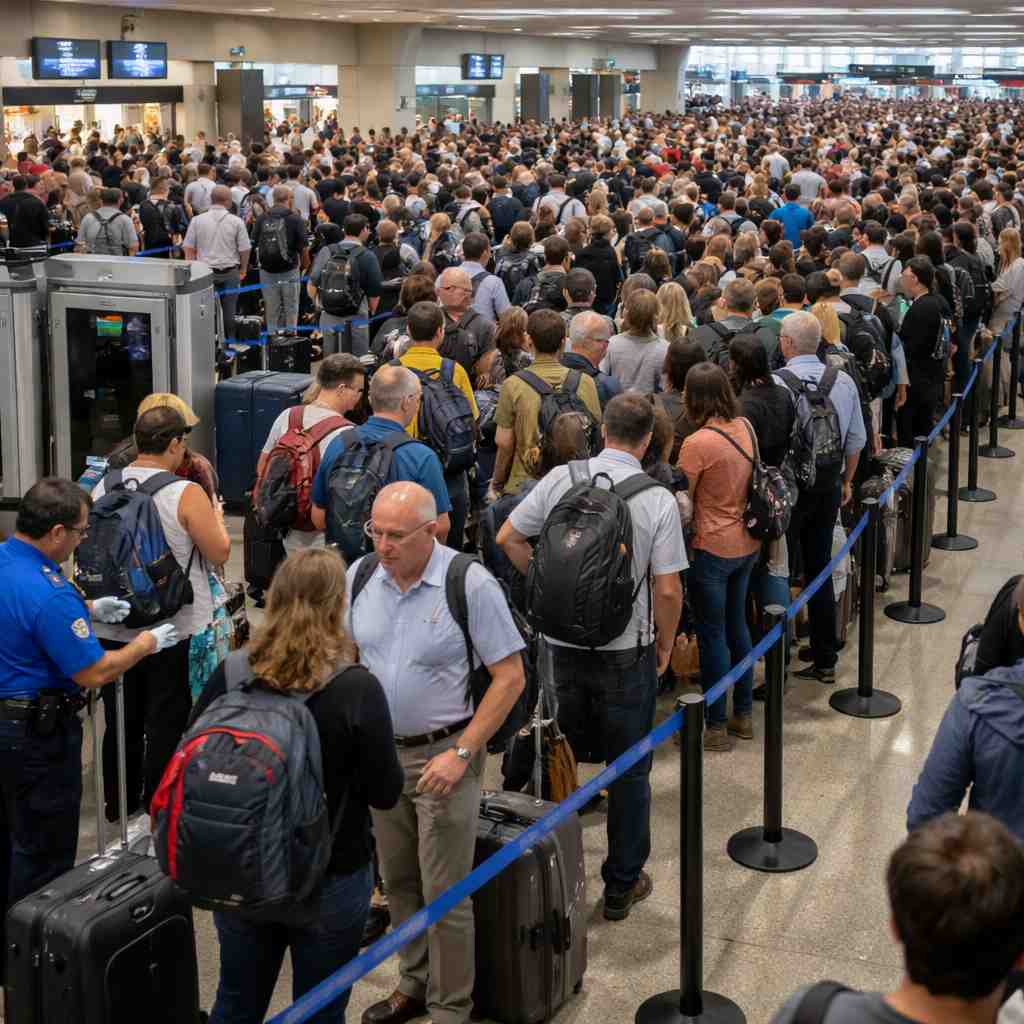

America’s airport security system is facing one of its biggest operational crises in recent years. The Transportation Security Administration (TSA) is dealing with a massive staffing shortfall after more than 1,500 officers quit during recent government shutdowns, including nearly 480 officers during the current 40-day funding standoff. The immediate result is already visible across the country — airport security lines stretching beyond 4.5 hours, creating chaos for millions of travelers.
This is not just a temporary disruption. Officials have warned that the impact could last for months, even if the shutdown ends soon. With rising travel demand and fewer officers on duty, the U.S. aviation system is now under intense pressure at a time when passenger volumes are increasing.
Mass Exodus of TSA Officers Triggers Travel Chaos
The scale of the staffing crisis is alarming. Over 1,500 TSA officers have left their jobs due to repeated shutdown-related disruptions, with around 480 quitting during the current standoff alone. These are not just numbers — they represent trained personnel responsible for keeping airport security lines moving efficiently.
At the same time, approximately 50,000 TSA officers are currently working without pay. This has created extreme financial stress across the workforce. Officials revealed that many officers are now taking drastic steps to survive, including sleeping in their cars, working second jobs, and even selling blood or plasma to cover daily expenses.
This situation has severely impacted morale, increasing the likelihood that more experienced staff may leave in the coming weeks.
Airport Wait Times Cross 4.5 Hours as Staffing Collapses
Travelers are already facing the consequences. Security wait times have surged dramatically, crossing 4.5 hours at some major airports. These delays are being driven by a simple but critical imbalance — fewer TSA officers and more passengers.
On peak travel days, TSA screens nearly 3 million passengers. Adding to the pressure, travel demand is already up by about 5% compared to last year. This surge, combined with staffing shortages, is pushing the system to its limits.
Absenteeism is making matters worse. Call-out rates have exceeded 40% and even 50% at certain airports, meaning nearly half the workforce may be unavailable during critical periods. This creates severe bottlenecks at checkpoints, leading to missed flights and widespread passenger frustration.
Why the Crisis Won’t End Even After Shutdown
One of the biggest concerns is that the situation cannot be fixed quickly. Even if the government restores funding immediately, the TSA cannot instantly replace lost staff.
New hires require 4 to 6 months of training before they can work at airport checkpoints. This delay means that staffing shortages will continue well into the future, potentially affecting peak travel seasons.
Officials have warned of a “perfect storm” scenario, especially with the 2026 FIFA World Cup approaching. The event is expected to bring massive international travel across the United States, Canada, and Mexico. However, newly hired TSA officers after the shutdown may not be fully trained in time to handle this surge.
Rising Travel Demand Adds More Pressure
The timing of this crisis could not be worse. Spring break travel has already pushed airports into high-traffic mode, and overall passenger volume continues to grow.
With millions of travelers passing through airports daily, even a small staffing gap can lead to exponential delays. The current shortage is far from small — it is one of the most severe workforce disruptions the TSA has faced in years.
To manage the situation, officials are considering temporary solutions like deploying mobile screening units to high-traffic airports. However, these measures may only provide limited relief if staffing levels remain critically low.
Political Standoff Behind the Crisis
The TSA crisis is rooted in a broader political conflict over funding for the Department of Homeland Security. Lawmakers and the White House remain divided, particularly over issues related to immigration enforcement and ICE funding.
The ongoing deadlock has delayed critical funding, leaving essential workers like TSA officers without pay. As negotiations continue, both sides are under pressure to reach an agreement before upcoming legislative breaks.
Meanwhile, political leaders have begun assigning blame. Some have suggested deploying the National Guard or using additional federal resources to manage airport operations. However, security experts warn that such measures cannot fully replace trained TSA personnel.
Impact on Travelers and Airlines
For travelers, the immediate takeaway is clear — airport delays are likely to continue. Arriving early is no longer optional but necessary, especially at major airports experiencing severe staffing shortages.
Programs like TSA PreCheck can help reduce wait times, but even expedited lanes may be affected when overall staffing is low.
Airlines are also feeling the impact. Longer security lines increase the risk of missed flights, disrupt boarding schedules, and create additional pressure on airport operations. This ripple effect can lead to delays across entire airline networks.
Long-Term Outlook: A System Under Strain
The biggest concern is that the damage may already be done. Even if funding is restored soon, rebuilding the TSA workforce will take time. Experienced officers who have left may not return, and training new staff is a slow process.
Travelers should monitor updates and plan accordingly using official resources like the TSA travel advisory page. Flexibility, early arrival, and preparation will be key to avoiding disruptions.
The TSA crisis highlights a deeper issue — the vulnerability of critical infrastructure during political and financial uncertainty. As travel demand continues to rise, ensuring a stable and well-supported workforce will be essential to prevent similar disruptions in the future.
For now, one thing is certain: airport travel in the United States is entering a challenging phase, and passengers should be prepared for longer lines, delays, and ongoing uncertainty in the months ahead.

Make Swikblog your go-to source on Google for reliable updates, smart insights, and daily trends.