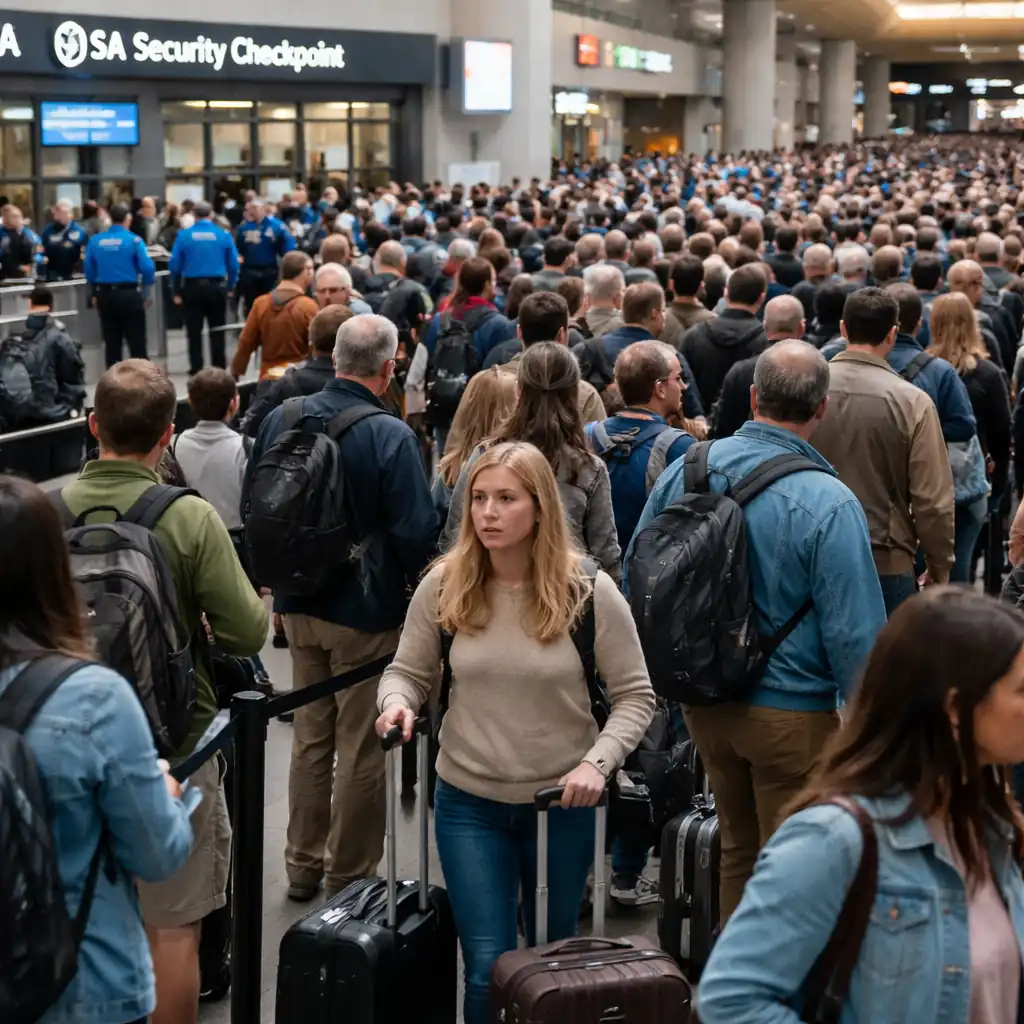

Air travelers across the United States are experiencing unusually long security lines after a prolonged Department of Homeland Security (DHS) funding lapse disrupted Transportation Security Administration (TSA) staffing during one of the busiest travel periods of the year.
Several airports have advised passengers to arrive much earlier than usual after reduced staffing slowed security screening. At some checkpoints, travelers reported waiting three hours or longer to clear security.
On March 27, President Donald Trump signed an emergency memorandum directing the Department of Homeland Security to release available funds so TSA employees could receive pay before the funding dispute is resolved. Officials said payments could begin as early as March 30.
While the move may improve attendance, airport officials cautioned that screening delays are unlikely to disappear immediately because staffing levels cannot recover overnight.
Read More
Why are TSA security lines taking longer?
TSA officers are considered essential federal employees, meaning they continue working during a funding lapse even if regular paychecks are delayed.
According to official TSA testimony, about 460 officers had left the agency by March 24. The nationwide daily callout rate also increased from roughly 4% before the shutdown to 11%, reducing the number of available screening teams.
Every checkpoint depends on trained officers to verify identification, operate scanners, inspect baggage and guide passengers through security. When fewer officers are available, screening lanes may close and queues grow much faster than normal.
Regional airports can be affected even more because they have fewer backup personnel available to cover unexpected absences.
Long waits reported at major airports
The disruption has been most noticeable at busy travel hubs, where heavy passenger volumes have combined with reduced screening capacity. Travelers have reported lengthy queues, crowded terminals and missed departures as security lines continued to grow.
At Hartsfield-Jackson Atlanta International Airport, officials advised passengers to allow extra time after TSA security waits reached up to four hours during the staffing shortage.
Conditions can change quickly throughout the day as passenger numbers rise, making it important to check airport updates before leaving for the terminal.
ICE officers are supporting airport operations
The administration assigned Immigration and Customs Enforcement (ICE) personnel to selected airports to assist with support duties, including crowd management and terminal security.
These officers are not replacing trained TSA screeners responsible for passenger and baggage inspections. Officials have also discussed using National Guard personnel if conditions worsen, although no nationwide deployment had been confirmed by March 28.
Support staff can help airports manage crowds, but rebuilding an experienced TSA workforce will take longer than restoring payroll.
Funding dispute continues in Washington
The disruption stems from a funding lapse affecting the Department of Homeland Security, which oversees TSA, ICE, FEMA and several other federal agencies.
On March 27, the House of Representatives approved an eight-week stopgap funding bill by a 213–203 vote. Senate Democratic leaders said the proposal lacked enough support to advance, leaving negotiations over immigration enforcement funding unresolved.
As long as Congress remains divided, airport screening is expected to remain under pressure despite the administration’s temporary payroll action.
What travelers should do before flying
Anyone flying over the coming days should check updates from both their airline and departure airport before leaving home. Security wait times may vary significantly throughout the day.
Travelers should consider arriving at least three hours before departure at airports experiencing heavy congestion, while international passengers may wish to allow even more time.
Completing online check-in, keeping identification ready and ensuring carry-on bags comply with TSA rules can help reduce delays at the checkpoint.
The broader travel network is also feeling the impact, with long TSA lines contributing to wider airline delays across the United States during the shutdown.
Families, older passengers and travelers who require special assistance should contact their airline or TSA Cares before arriving at the airport, as longer queues may make last-minute support more difficult.
Although early pay could improve staff attendance in the coming days, a lasting recovery will depend on resolving the federal funding dispute and restoring normal staffing levels. Until then, travelers should expect longer-than-usual security waits and plan their journeys accordingly.