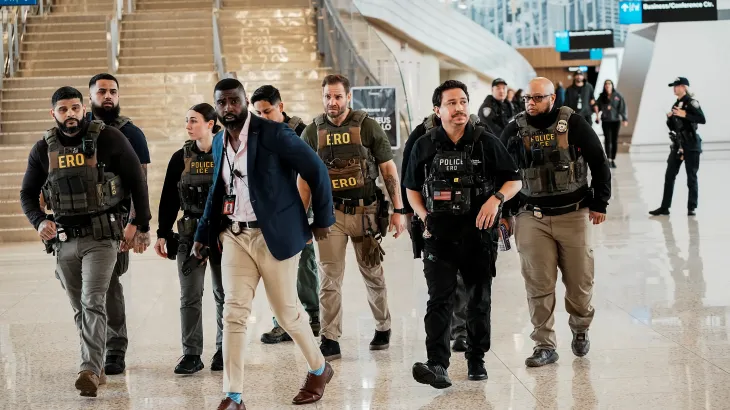

Atlanta’s Hartsfield-Jackson International Airport is facing one of its most disruptive travel periods in recent memory, as TSA wait times surge to as much as four hours and federal immigration agents appear inside terminals to help manage the growing crisis.
The situation is unfolding against the backdrop of a partial US government shutdown that has left thousands of Transportation Security Administration (TSA) workers unpaid. The result: rising absenteeism, long security lines, and an unusual federal response that has placed Immigration and Customs Enforcement (ICE) officers in some of the country’s busiest airports, including Atlanta.
Atlanta Airport TSA Wait Times Hit Crisis Levels
At Hartsfield-Jackson, the impact has been immediate and visible. Travelers have been advised to arrive at least four hours before departure as security lines stretch through terminals and even outside airport buildings. Delays are not limited to peak hours — they have become a persistent issue throughout the day.
The airport, one of the busiest in the world, relies heavily on consistent TSA staffing to process massive passenger volumes. Even a small disruption can create cascading delays. Now, with staffing shortages intensifying, the system is under significant strain.
According to federal data, nearly 12 percent of TSA officers — more than 3,400 workers — failed to report for duty at one point during the shutdown, marking the highest absentee rate since the funding lapse began.
Why TSA Staffing Has Collapsed
The root cause lies in a political standoff in Washington over funding for the Department of Homeland Security (DHS), which oversees TSA. While Congress passed a broader government funding package earlier this year, DHS was excluded and left to be negotiated separately.
That negotiation has stalled due to disagreements over immigration enforcement policies. Democrats have pushed for stricter oversight of federal immigration agents, including requirements for identification and limits on profiling. Republicans have rejected those proposals, creating a deadlock that has halted DHS funding.
As a result, approximately 50,000 TSA workers are either working without pay or choosing not to report to work due to financial pressure. Many have reportedly taken second jobs to support their families, further reducing available staffing at airport checkpoints.
Why ICE Agents Are Now at Atlanta Airport
In response to the staffing crisis, the Trump administration authorized the deployment of ICE agents to assist airport operations. Atlanta is among at least 14 major airports where these agents have been spotted, alongside locations such as New York’s JFK, Chicago O’Hare, and Phoenix Sky Harbor.
Officials say ICE officers are not replacing TSA personnel and are not performing specialized screening duties. They are not operating X-ray machines, checking passenger IDs, or conducting security screenings.
Instead, their role is limited to support functions such as managing lines, monitoring exits, and assisting with general airport operations. The goal is to free up TSA officers to focus on core screening responsibilities.
However, the presence of immigration agents inside airport terminals has raised immediate questions about optics, authority, and potential scope creep.
Are ICE Agents Checking Immigration Status?
Authorities have stated that ICE agents deployed at airports are not conducting routine immigration checks on passengers. Their assignment is operational support, not enforcement inside security checkpoints.
But mixed messaging has fueled concern. President Donald Trump suggested in public statements that ICE agents could detain undocumented immigrants at airports if necessary. That possibility, even if not currently implemented, has contributed to unease among travelers.
For many passengers, especially immigrants and international travelers, the distinction between “support role” and “enforcement presence” is not always clear in practice.
What Travelers Are Experiencing in Atlanta
On the ground, the experience is a combination of long waits and heightened visibility of federal officers. ICE agents have been seen patrolling terminals and standing near security lines, but not directly interacting with passengers in most cases.
Some travelers report that the agents appear to be helping manage crowds or simply observing operations. Others question whether their presence is necessary at all. For some, the visibility of armed immigration officers in a travel setting is creating additional anxiety on top of already stressful delays.
Despite the added manpower, wait times remain elevated, suggesting that the core issue — TSA staffing shortages — cannot be quickly resolved through temporary support measures alone.
Why ICE Is Still Funded During the Shutdown
One key factor behind the deployment is that ICE is not affected by the shutdown in the same way as TSA. The agency received separate long-term funding through a previous federal spending law, allowing it to continue operating and paying staff even while DHS funding remains unresolved.
This funding difference has made ICE one of the few federal resources available for rapid deployment during the airport crisis.
A Growing National Travel Disruption
While Atlanta is one of the most visible examples, it is not alone. Airports across the United States are experiencing similar issues, with long lines, staffing shortages, and operational disruptions becoming increasingly common.
The situation highlights how quickly critical infrastructure can be affected by political gridlock. Air travel, which depends on tightly coordinated systems and consistent staffing, is particularly vulnerable to these kinds of disruptions.
For ongoing coverage of the situation, readers can follow reporting from CNN and detailed breakdowns from Al Jazeera.
What Comes Next for Atlanta Airport Travelers
Until a funding agreement is reached, conditions at Atlanta airport are likely to remain unpredictable. Travelers should expect continued delays, plan for significantly longer security wait times, and stay updated on real-time airport advisories.
The deployment of ICE agents may provide limited operational relief, but it does not address the underlying staffing issue. As long as TSA shortages persist, long lines and travel disruptions are expected to continue.
For now, Atlanta stands as a clear example of how policy disputes in Washington can quickly translate into real-world consequences for millions of travelers moving through the nation’s busiest airport.
Mel Schilling colon cancer symptoms and warning signs
Make Swikblog your go-to source on Google for reliable updates, smart insights, and daily trends.