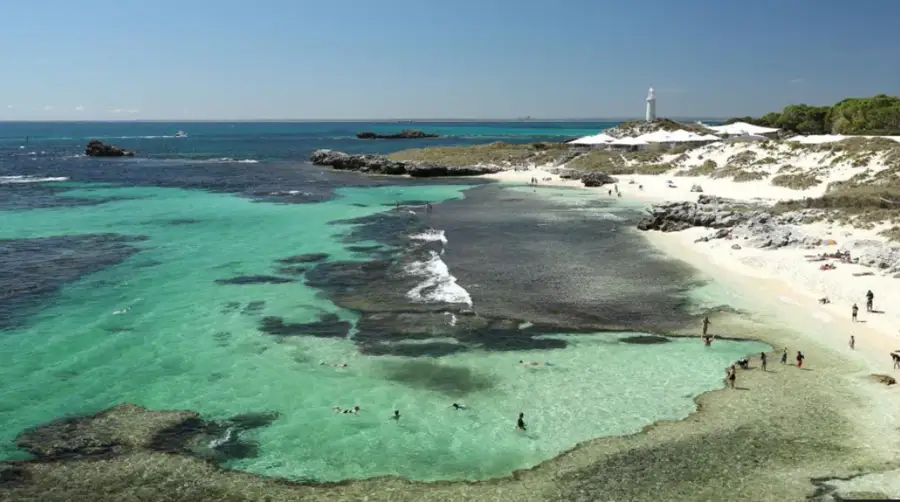

A 38-year-old diver has died after being attacked by a massive great white shark near Rottnest Island, a popular tourist destination off the coast of Perth in Western Australia. Authorities said the attack happened Saturday morning at Horseshoe Reef, a well-known diving and reef area north-west of the island.
The victim had reportedly been spearfishing with a friend when the shark attack occurred shortly before 10 a.m. local time. Officials said the man was in the water near a dive boat when he was bitten on the legs by what witnesses described as a large great white shark measuring around 13 feet to 16 feet in length.
Emergency footage from local media showed police and rescue teams responding near Geordie Bay jetty as the injured diver was rushed back to shore by boat. Paramedics performed CPR after he was brought ashore, but the man could not be revived.
According to Western Australia Police, the diver was attacked at Horseshoe Reef near Rottnest Island, located about 19 miles west of Perth. The area is known for crystal-clear water, coral reefs, boating and diving activity, attracting thousands of tourists every year.
Western Australia’s Department of Primary Industries and Regional Development later urged the public to exercise “additional caution” in nearby waters following reports of shark activity. The state’s official SharkSmart warning service also updated alerts for the area after the incident.
Witnesses and authorities describe chaotic rescue efforts
Authorities said the man was quickly pulled from the water after the attack and transported by vessel roughly one kilometer back to shore. Local broadcaster ABC reported that police officers, emergency responders and paramedics were waiting at the Geordie Bay jetty when the boat arrived.
A spokesperson for St. John WA Ambulance confirmed that the victim never regained consciousness despite emergency treatment efforts.
“Sadly, the man was unable to be revived,” officials said after the rescue attempt.
Footage from the scene showed several emergency boats and police vehicles responding around the reef area as beachgoers and tourists watched from shore.
Officials later confirmed that lifeguards had reported sightings of a large white shark in the vicinity before the attack occurred. Authorities have not released the victim’s identity publicly.
Read More
Rottnest Island shark attack revives safety concerns
The fatal mauling has renewed concern around shark encounters in Australian waters, especially near popular diving and surfing destinations. Rottnest Island is considered one of Western Australia’s biggest tourism hotspots, famous for white-sand beaches, snorkeling reefs and marine wildlife.
While shark attacks remain statistically rare, Australia has recorded nearly 1,300 shark attacks since records began in 1791, with more than 260 proving fatal, according to national data referenced by local reports.
This is the second fatal shark attack reported in Australia this year. In January, 12-year-old Nico Antic died after being attacked by a suspected bull shark in Sydney Harbour. Several other shark incidents were also reported along the New South Wales coastline earlier this year.
The latest incident is also the first fatal shark attack recorded in Western Australia since March last year, when a surfer was killed off a remote beach.
Rottnest Island itself has experienced previous deadly encounters. The island’s last known fatal shark attack happened in 2011 when a 32-year-old diver was killed in nearby waters.
Marine experts say Western Australia’s coastline naturally overlaps with habitats used by large shark species, including great whites. Spearfishing activities can sometimes increase risks because fish blood, struggling catches and underwater movement may attract predators from long distances.
Authorities continue to advise swimmers, divers and surfers to monitor official shark warnings, avoid entering waters where marine predators have recently been sighted and leave the area immediately if unusual marine activity is observed.
The tragedy has once again sparked discussion in Australia over marine safety measures, shark monitoring systems and long-running debates surrounding shark nets and beach protections near heavily visited coastal areas.
For readers following recent ocean safety developments, Swikblog previously reported on Sydney beach closures linked to shark activity after a whale carcass washed offshore, another incident that raised public concern about increased shark presence near popular swimming areas.
Police are expected to continue investigating the circumstances surrounding the attack while officials monitor shark activity around Rottnest Island in the coming days.

Make Swikblog your go-to source on Google for reliable updates, smart insights, and daily trends.