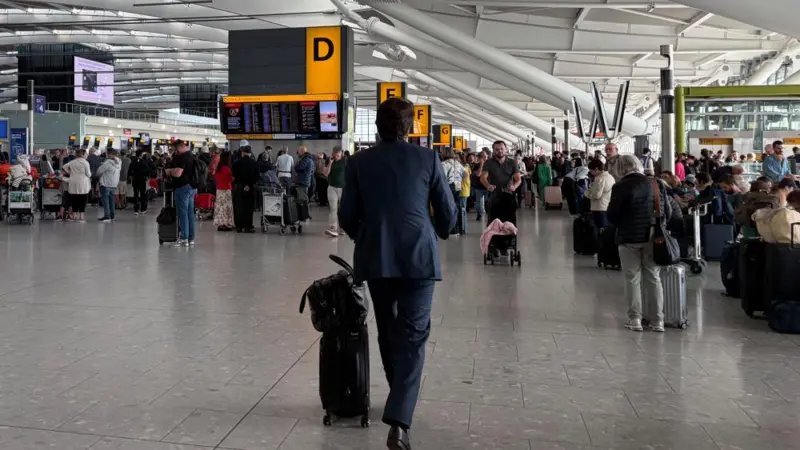

LONDON — UK air travellers are facing a second day of disruption on Wednesday, September 9, after a major air traffic control failure triggered widespread cancellations, diversions and delays, with 177 flights already cancelled as airlines struggle to restore normal schedules.
All told, 1300 flights were canceled to/from airports in the UK on Tuesday.
— Flightradar24 (@flightradar24) September 9, 2026
177 flights have been canceled so far on Wednesday, nearly all at London-Heathrow. pic.twitter.com/LWdZcDp36i
The latest cancellations follow around 1,300 flights axed to and from UK airports on Tuesday. NATS says the technical problem has been fixed, but aircraft and crews remain out of position across Britain and Europe. Heathrow is carrying most of Wednesday’s reported cancellations.
• 177 Wednesday flights had already been cancelled
• Nearly all were reported at Heathrow
• Around 1,300 UK flights were cancelled Tuesday
• NATS says its technical fault has been resolved
• Ryanair says more than 65,000 passengers were disrupted
• Passengers should check with their airline before travelling
Heathrow bears the brunt of fresh cancellations
Heathrow remains the main pressure point. The airport suspended arrivals for the remainder of Tuesday after congestion built across the network, although departures later resumed.
At least 22 Heathrow-bound flights were diverted, including aircraft arriving from Los Angeles, Tokyo, Singapore, Dubai, Delhi, Mumbai, Boston and Nairobi. Diversions included Manchester, Gatwick, Stansted, Birmingham and Glasgow, as well as Paris, Amsterdam, Brussels and Frankfurt.
Those diversions matter on Wednesday because aircraft scheduled to start the day at Heathrow may instead be hundreds of miles away. Pilots and cabin crews can also be displaced or reach their permitted working-hour limits.
Passengers should monitor Heathrow’s official travel updates and confirm their individual flight directly with their airline before heading to the airport.
British Airways and Ryanair passengers hit
British Airways cancelled or diverted more than 100 flights during Tuesday’s disruption, affecting tens of thousands of customers. Heathrow is BA’s main hub, making its network particularly vulnerable to continuing disruption there.
Ryanair said more than 65,000 passengers were disrupted, with some facing delays of up to eight hours. The airline cancelled more than 50 flights and renewed its criticism of NATS management.
EasyJet and Wizz Air were among other airlines caught in the disruption as carriers worked to rebook passengers and restore aircraft rotations.
Gatwick, Manchester and other airports affected
The failure was not confined to Heathrow. Gatwick, Manchester, Birmingham, Bristol, Liverpool, Edinburgh, Glasgow, Leeds Bradford and East Midlands were among airports reporting disruption. Airports in Ireland were also affected, with dozens of cancellations reported at Dublin.
Manchester and East Midlands expected full schedules on Wednesday but warned airports could be busier because passengers and flights cancelled Tuesday were being rescheduled.
The scale of the disruption developed quickly. Our earlier report on the Heathrow and Gatwick disruption after the NATS technical fault details how the initial failure affected flights before the recovery operation began.
TSA Allows Non-Ticketed Visitors at 13 U.S. Airports: What Travelers Need to Know
Gatwick Airport Delays Today After Aircraft Gets Stuck on Runway
NATS says the technical problem is fixed
NATS said the failure involved its flight processing system, which handles flight-plan and operational information used in managing air traffic.
NATS chief executive Martin Rolfe apologised and indicated the systems were not functioning properly for roughly six hours. He said the organisation was now focused on recovery and that a full investigation would examine the failure.
Wizz Air questioned whether NATS was fit for purpose, while Ryanair renewed calls for Rolfe to leave his position. UK Transport Secretary Heidi Alexander said she was seeking assurances that lessons would be learned.
Flight cancellations continue despite the NATS fix
The most important point for travellers is that the technical failure has ended, but the aviation network has not fully recovered.
Airlines must reposition diverted aircraft and crews, accommodate stranded passengers and rebuild flight schedules. Airport capacity also means hundreds of delayed services cannot simply depart simultaneously once air traffic control returns to normal.
The disruption again demonstrates how an operational problem can spread far beyond its starting point. A similar network effect can occur during aviation emergencies such as the DHL cargo plane emergency landing and airport disruption, when aircraft movements can be altered beyond the flight directly involved.
Travel advice for passengers flying today
Passengers travelling Wednesday should check their exact flight number with their airline before leaving home, particularly at Heathrow. Travellers with connections should verify every sector of their itinerary.
If a flight is cancelled, passengers should check the airline’s rebooking and refund options before purchasing replacement travel. Depending on the circumstances, affected travellers may also be entitled to assistance such as meals or accommodation.
Many flights are still operating, so passengers should not assume their service is cancelled simply because an airport is experiencing disruption. Wednesday’s challenge is primarily clearing Tuesday’s backlog and returning aircraft and crews to their normal schedules.

Make Swikblog your go-to source on Google for reliable updates, smart insights, and daily trends.