
UK asylum claims, small boat arrivals and major visa grants all fell in the year to June 2026, new Home Office figures show, marking a broad decline across several parts of Britain’s immigration system.
Almost 86,000 people claimed asylum, down 21% year on year, while 33,374 people arrived across the English Channel in small boats, a 23% fall. Around 16,000 asylum seekers were living in hotels in June, roughly half the number a year earlier.
The figures cover July 1, 2025 to June 30, 2026. They matter because the decline extends beyond Channel crossings to work, study and family visas, while the initial asylum backlog has also fallen sharply.
UK asylum claims fall 21%
About 86,000 people claimed asylum during the year, 21% fewer than in the previous 12 months. Despite the decline, claims remain above levels typically recorded before 2021.
Just over half of asylum claimants had arrived through illegal entry routes, including small boats, while 41% had previously held a visa or another form of permission to be in the UK.
About 40,000 people were still waiting for an initial asylum decision in June, a 56% year-on-year reduction. Faster initial processing can reduce pressure on accommodation, although appeals can keep cases within the system for longer.
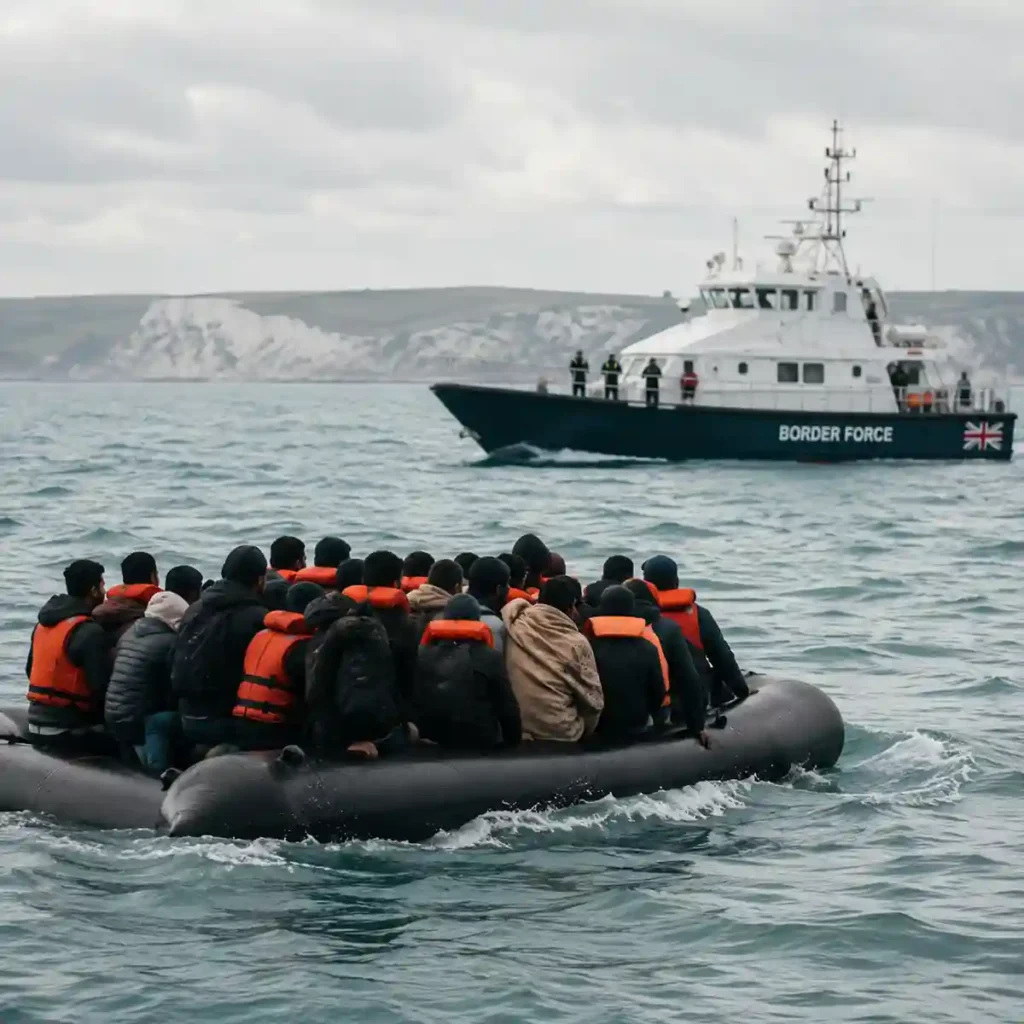
Small boat arrivals drop to 33,374
The latest Home Office immigration statistics recorded 33,374 small boat arrivals, down from 43,309 a year earlier.
The 23% decline is substantial, but crossings have not returned to historically low levels. The latest total is broadly comparable with 31,493 arrivals in the year to June 2024 and 35,356 in the year to June 2022.
Across all detected illegal entry routes, 38,086 people arrived, down 22%. Small boats accounted for 88% of that total.
Fewer boats, but more people on each
The number of small boats fell 33% to 511, but average occupancy increased from 56 to 65 people per boat. This means the decline in vessels was considerably larger than the decline in passengers.
The five most common nationalities among small boat arrivals were Eritrean, Sudanese, Afghan, Somali and Iranian. Together they represented about two-thirds of arrivals.
Asylum hotel use halves
Around 16,000 asylum seekers were housed in hotels in June, approximately 50% fewer than a year earlier. The reduction comes as the government closes hotels and shifts people towards other accommodation.
Hotel numbers do not represent everyone receiving assistance. Around 93,000 people were receiving asylum support, including accommodation or financial help.
The accommodation debate is also linked to wider policy changes affecting refugees. Our report on proposed UK asylum support repayment rules explains how those measures could affect people granted protection.
Work, study and family visas fall
The main legal migration routes also recorded declines:
- Work visas: 235,000, down 18%.
- Sponsored study visas: 383,000, down 11%.
- Family visas: 58,000, down 19%.
Work visa numbers have fallen following tighter salary, eligibility and dependant rules, while health and care worker visas have experienced an especially steep reduction.
Sponsored study visas also declined, with China and India together accounting for 46% of visas issued to main applicants.
The wider reduction in migration pressure comes as the government continues changing asylum accommodation, including the closure of asylum hotels across England and greater use of alternative housing.
UK Plug-In Solar Panels: Price, Potential Savings and Where to Buy
Family reunion and humanitarian routes
The Home Office said the fall in family visas was largely driven by restrictions affecting refugee family reunion. About 12,888 Refugee Family Reunion visas were granted during the period.
There were also 124,930 grants of leave through safe and legal humanitarian routes, down 12%. These included Ukraine schemes, BN(O) visas, refugee resettlement and family reunion.
Returns increase as crossings decline
Some 3,310 people who had previously arrived by small boat were returned from the UK during the year, up 35%. Asylum-related returns reached 12,568, up 14%.
Most small boat arrivals claim asylum, so cases generally need to be considered before a person can be removed. Arrival and return figures therefore should not be treated as directly corresponding groups from the same year.
Citizenship applications hit a record
One major indicator moved in the opposite direction. Around 315,000 people applied for British citizenship, up 17% and a record level, while approximately 246,000 citizenship grants were issued, down about 4%.
Citizenship applications largely involve people already established in Britain, so the record does not represent an equivalent increase in new immigration.
What the latest figures show
The data shows a broad decline from recent highs across asylum claims, Channel crossings, hotel use and several legal visa routes. But small boat arrivals remain comparable with some recent years, boats are carrying more people on average, and asylum claims remain higher than typical pre-2021 levels.
The next quarterly figures will be important in showing whether these declines are becoming a sustained shift in UK migration patterns.

Make Swikblog your go-to source on Google for reliable updates, smart insights, and daily trends.