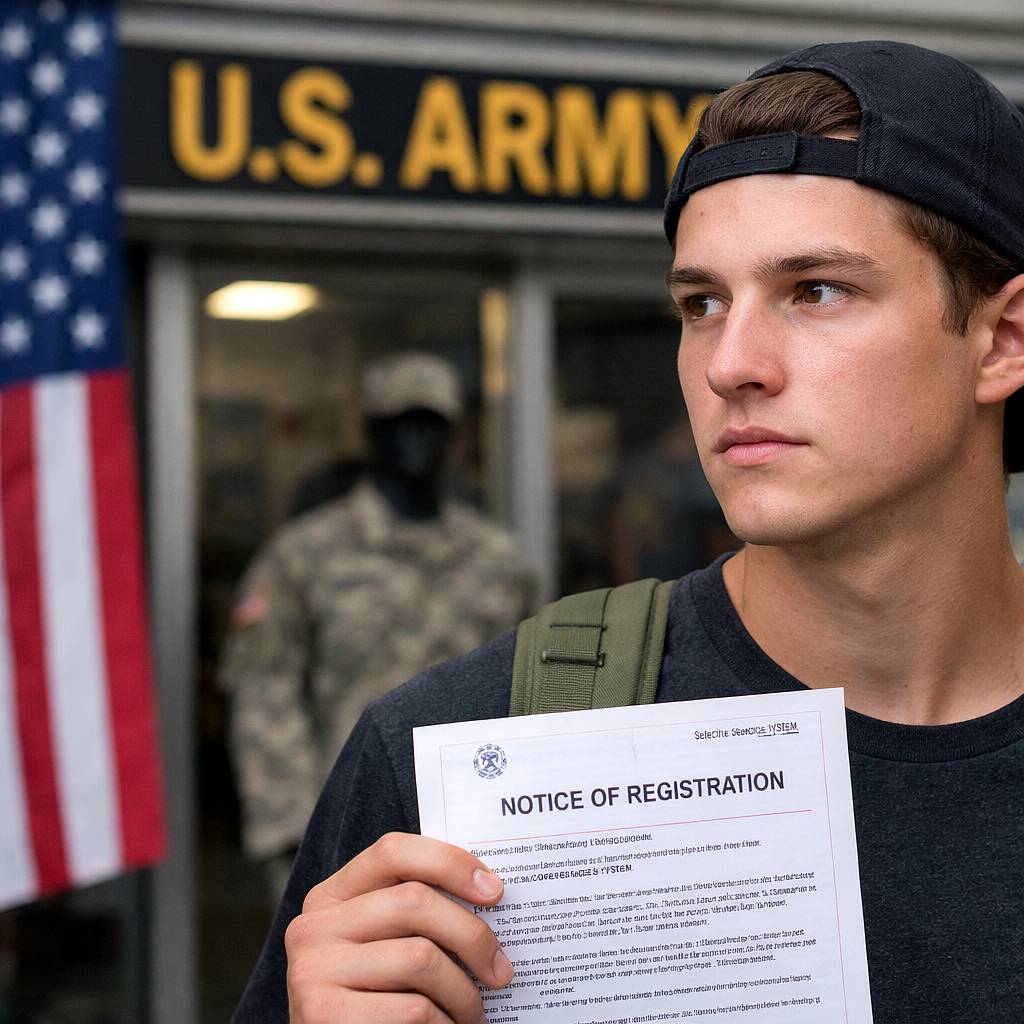

The United States is preparing to automatically register eligible men for the military draft once they turn 18, a shift set to take effect by December 2026 that changes how millions enter the Selective Service system and has quickly drawn attention amid global tensions and renewed debate over conscription.
The move stems from the fiscal 2026 National Defense Authorization Act, passed in December 2025, which mandates automatic enrollment for most men aged 18 to 25. Instead of requiring individuals to sign up themselves, the Selective Service System will integrate federal data to register them within 30 days of their 18th birthday.
Officials say the change is designed to streamline a system that has long relied on self-registration, reduce administrative costs, and close gaps caused by missed or delayed sign-ups. The proposed rule is currently under review by federal regulators and awaits final approval before implementation.
The development is trending now not because a draft has been announced, but because it reshapes how the United States maintains readiness for a potential national emergency. The country has not conducted a military draft since the Vietnam War, with service remaining voluntary since 1973.
However, the Selective Service system has remained in place as a contingency. It was reinstated in 1980 under President Jimmy Carter to ensure that, if required, the government could rapidly mobilize personnel during a crisis with authorization from both Congress and the president.
Recent geopolitical tensions, including concerns around conflict in Iran and a fragile ceasefire, have fueled online speculation about whether a draft could return. The White House has stated that a draft is not part of current plans, though officials have emphasized that future options are not ruled out.
Automatic system replaces self-registration
Under the existing framework, men are legally required to register with the Selective Service within 30 days of turning 18. Failure to do so can carry serious consequences, including loss of eligibility for federal financial aid, restrictions on government employment, and potential fines of up to $250,000 or prison sentences of up to five years.
In practice, enforcement has been limited, but the requirement has remained a formal legal obligation affecting education, employment and immigration status. Immigrants who fail to register may also face complications in obtaining U.S. citizenship.
The new system effectively removes the burden from individuals by shifting responsibility to the government. By linking federal databases, authorities aim to ensure near-universal registration without requiring action from those affected.
The Selective Service System outlines its role and ongoing updates on its official website, where it describes the change as a modernization effort aligned with current data capabilities.
Debate continues over fairness and scope
Despite the administrative nature of the reform, the policy has revived broader questions about fairness and inclusion. Women remain excluded from the draft system, even though lawmakers have repeatedly proposed expanding registration requirements to include them in recent defense bills. Those proposals have consistently been removed before final passage.
The change also highlights a long-standing tension in U.S. defense policy: maintaining a system designed for emergency mobilization while relying on an all-volunteer military force. While automatic registration does not signal an imminent draft, it reinforces the infrastructure that would support one if authorized.
Any move to reinstate compulsory military service would require Congress to amend the Military Selective Service Act, meaning the president cannot unilaterally activate a draft. For now, the policy shift remains focused on preparedness rather than action, even as public concern continues to rise in response to global uncertainty.
You may also like: Darwin Port fish deaths spark concern over iron ore runoff
Make Swikblog your go-to source on Google for reliable updates, smart insights, and daily trends.