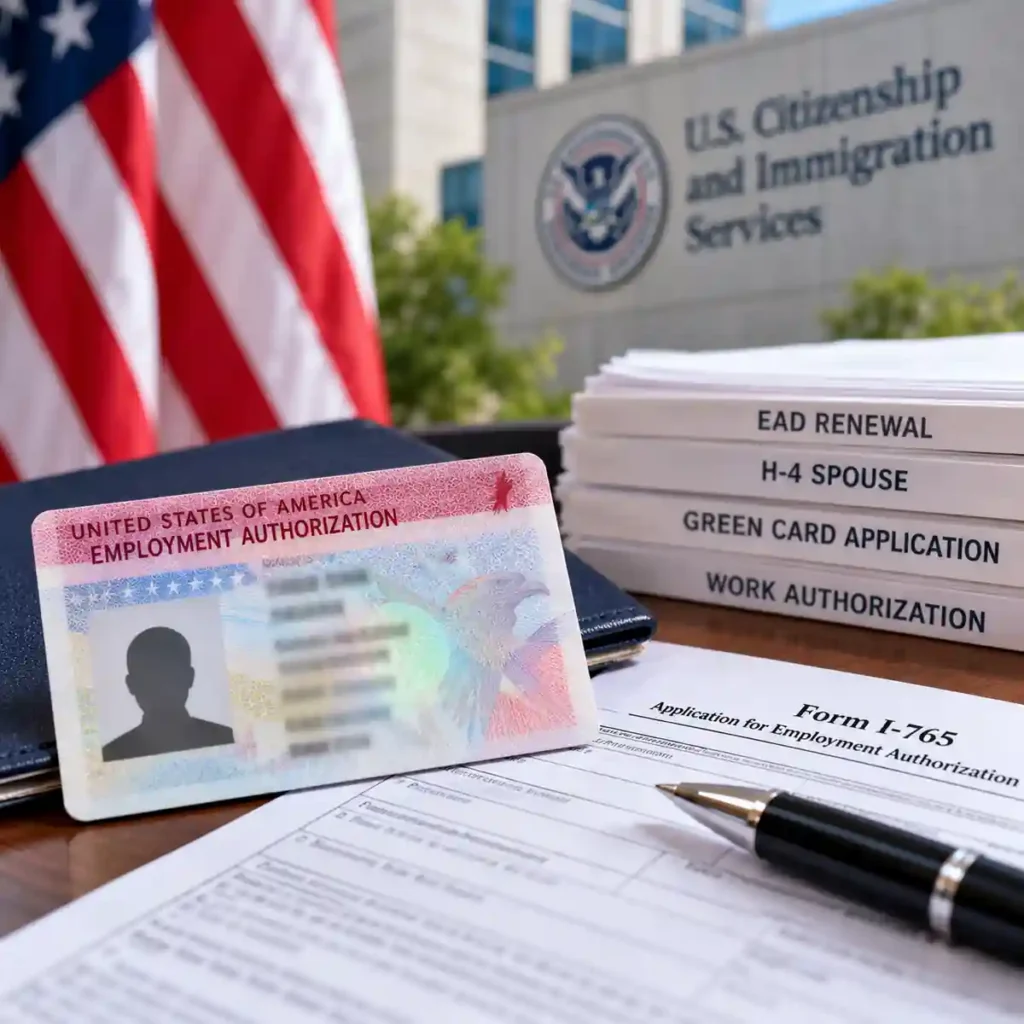

WASHINGTON, October 14, 2026 — U.S. Citizenship and Immigration Services (USCIS) has finalized a rule eliminating automatic work permit extensions of up to 540 days for certain foreign nationals, including H-4 spouses and green card applicants. Affected workers could face employment interruptions if their Employment Authorization Document (EAD) expires before renewal approval.
The Department of Homeland Security (DHS) released the final rule on October 13, with publication scheduled for October 14. It confirms restrictions already effective for covered EAD renewals filed on or after October 30, 2025. No new October 2026 cutoff has been introduced.
USCIS Finalizes 540-Day EAD Extension Ban
Previously, eligible applicants who filed timely EAD renewals could receive automatic extensions of up to 540 days while USCIS processed their applications.
The October 2025 interim regulation removed that protection for covered new filings. After reviewing public comments, DHS adopted the restriction without changes.
The official Federal Register rule confirms the decision. DHS says the policy strengthens immigration screening before renewed employment authorization is granted.
H-4 Spouses and Green Card Applicants Affected
The restriction covers several previously eligible EAD renewal categories:
- C26: Eligible H-4 spouses of H-1B workers.
- C09: Pending adjustment-of-status applicants.
- C08: Certain pending asylum applicants.
- A03 and A05: Refugees and individuals granted asylum.
- A12/C19: Certain TPS beneficiaries, subject to separate protections.
Indian H-1B households may be particularly affected when spouses depend on H-4 EADs for employment. The development comes amid separate immigration concerns, including PERM suspension issues affecting H-1B workers at major technology companies.
October 30, 2025 Filing Date Determines Eligibility
Qualifying renewals filed before October 30, 2025, retain applicable automatic-extension protections. Applications filed on or after that date generally cannot receive the former 540-day extension.
For example, an eligible October 20, 2025 filing may retain protection, while a comparable November 10 filing generally does not. Individual eligibility and immigration category remain important.
Expired EAD and Pending Renewal: Can Workers Continue?
Affected applicants generally must stop working when their existing authorization expires unless another valid employment authorization applies.
For example, an H-4 spouse whose EAD expires December 15, 2026, cannot rely solely on a pending renewal to continue working after that date.
Form I-797C renewal receipts generally no longer establish automatic work authorization for covered new filings. However, losing employment authorization does not automatically mean losing lawful immigration status.
Some Automatic Extensions Still Apply
The regulation preserves extensions independently authorized by law or Federal Register notices.
Eligible F-1 students applying for STEM OPT extensions may receive up to 180 additional days of employment authorization. Certain TPS beneficiaries retain separate protections, while qualifying L-2 and E dependent spouses may be authorized to work through their immigration status.
Applicants must verify their specific eligibility rather than assuming all EAD categories follow identical rules.
Read More
USCIS Processing Delays Raise Employment Concerns
Renewal delays could interrupt income and employment because affected workers cannot rely on the former extension period.
Employers must monitor expiration dates, review acceptable documents and complete Form I-9 reverification when required. A pending renewal receipt alone generally cannot establish continued authorization under the new restriction.
The rule is separate from other immigration measures, including the H-1B visa fee policy extending into 2027, which concerns visa petitions rather than EAD automatic extensions.
EAD Renewal Applicants Should Check Deadlines
Many categories permit renewal applications up to 180 days before expiration, although filing windows vary.
Workers should confirm their EAD category, filing date, current expiration date and eligibility for separate protections. They should also review USCIS processing times and available expedited-processing criteria.
Filing early may reduce employment-gap risks but does not guarantee approval. Applicants facing imminent expiration should consult official USCIS guidance or qualified immigration counsel before continuing employment without confirmed authorization.

Make Swikblog your go-to source on Google for reliable updates, smart insights, and daily trends.