
Written by Michael Anderson — a U.S.-based writer covering global energy markets and cost-of-living issues, with a focus on how oil price movements affect everyday households.
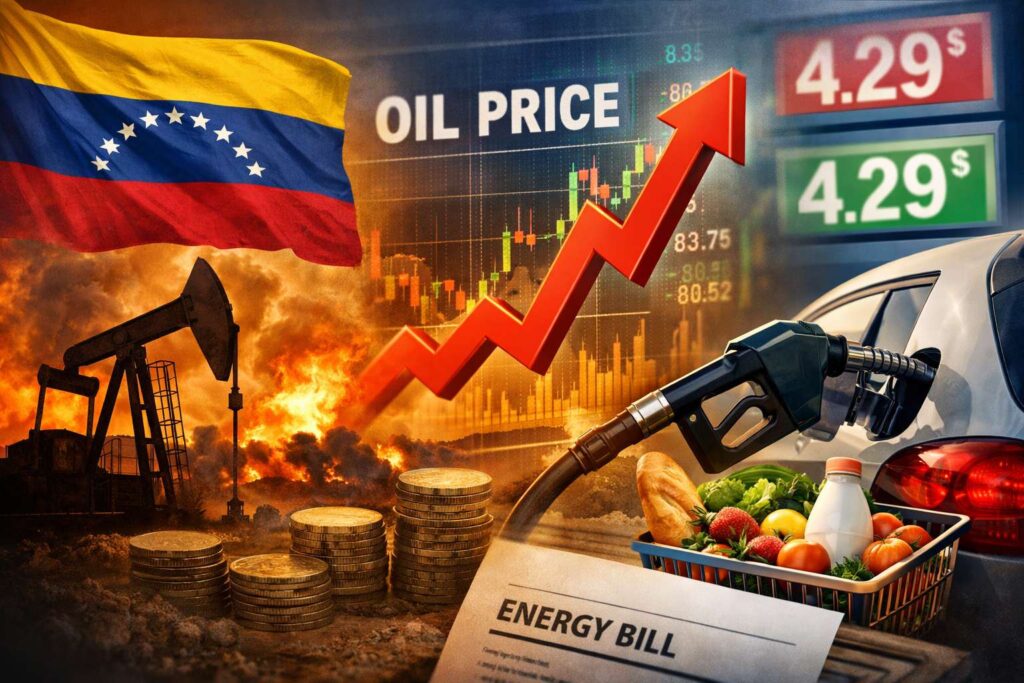
Oil prices moved higher after fresh reports of air strikes and escalating tensions involving Venezuela, as traders priced in a new “risk premium” across global energy markets. The immediate question for households isn’t just what happens next overseas — it’s what higher crude prices can mean for everyday costs at home: fuel at the pump, grocery bills, and utility expenses.
Market updates from Reuters described the latest developments in Venezuela, while ongoing supply pressure tied to sanctions and shipping restrictions has kept traders on alert. Venezuela’s current oil exports are already constrained, but uncertainty alone can still lift prices — especially when headline risk rises quickly.
Why oil prices rise on geopolitical shocks (even without an immediate shortage)
Crude oil is traded globally, and prices often react to potential disruption — not just confirmed barrels taken offline. When a major oil-producing country faces sudden instability, traders typically add a risk premium to cover the chance of future shipping problems, port damage, or policy moves that tighten exports.
Venezuela matters to markets because it holds some of the world’s largest oil reserves, and its production is heavily weighted toward heavy crude grades that require specialized refining. For a quick explainer on why Venezuela’s oil profile is unique, see this short BBC News video on Venezuela’s oil reserves.
So why aren’t analysts expecting a massive oil shock right away?
Even when tensions flare, the size of the price move often depends on whether global supply is actually threatened. Venezuela’s export flows have already been under pressure from sanctions and shipping constraints, and many analysts argue the near-term global supply impact is likely to be limited unless disruption widens or lasts longer than markets expect.
In recent weeks, Reuters analysis has pointed to reduced Venezuelan flows under tighter U.S. pressure, while also noting the global market has ways to offset some shortfalls in the near term. (Related background: Reuters on why the squeeze may not create a global crunch.)
What higher oil prices mean for households
1) Petrol/gasoline and diesel: the fastest “real world” impact
Fuel prices are usually the first place consumers notice oil moving. Crude is the main input cost for gasoline and diesel, and pump prices can respond within days, especially if prices rise sharply or remain elevated for more than a week. Even modest increases in crude can raise wholesale fuel costs, which filters through to filling stations as inventories turn over.
The biggest household pressure points tend to be commuting costs, ride-share and delivery expenses, and small businesses that rely on vans or fleets. Diesel is particularly important because it also powers much of the logistics chain.
2) Grocery bills: oil’s “quiet” effect through transport and packaging
Oil doesn’t just move cars — it moves food. Higher fuel and freight costs can nudge up the cost of transporting groceries from farms, ports, and warehouses to stores. Some packaging and agricultural inputs are also energy-linked, so prolonged oil strength can gradually add to shelf prices.
Households may not see an immediate jump at checkout the next day, but if oil stays higher, retailers and suppliers often pass on increased logistics costs over the following weeks.
3) Utility bills and home energy: slower-moving, but still connected
The link between crude oil and home energy depends on where you live and how your region generates power. Heating oil markets are directly tied to crude, and in some places electricity pricing can be indirectly influenced by broader energy costs and fuel competition. If oil remains elevated during colder months or peak demand periods, it can add upward pressure on household energy budgets.
In practical terms: fuel costs tend to react first, groceries follow more gradually, and utility impacts show up later — especially for households on variable plans.
What to watch next (without getting lost in headlines)
- Export flow signals: Any confirmed slowdown in Venezuelan loadings or shipping tends to move prices more than rumors do.
- Refining and diesel spreads: If diesel prices rise faster than gasoline, freight costs can climb sooner.
- Duration: One-day spikes often fade. Sustained moves over multiple sessions are what typically reach households.
For broader policy and sanctions context around Venezuela’s oil trade, the Financial Times has ongoing coverage.
Bottom line
Venezuela-related tensions can push oil prices higher even if global supply isn’t immediately disrupted, because markets price in risk fast. For households, the most noticeable impact is usually at the pump first, then through delivery-heavy groceries and broader living costs if higher crude prices persist.

Make Swikblog your go-to source on Google for reliable updates, smart insights, and daily trends.