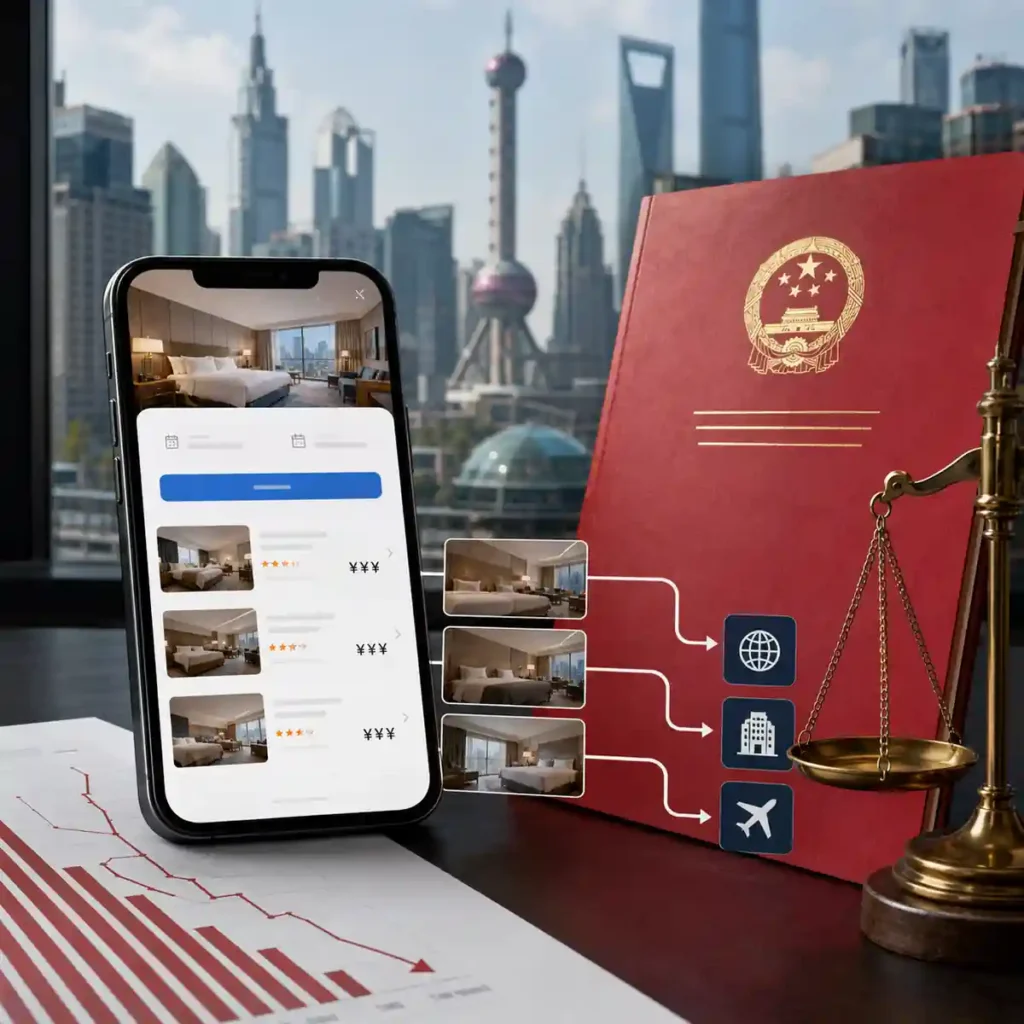

China has fined and confiscated a combined 5.179 billion yuan—approximately US$765 million to US$770 million—from Trip.com Group after finding that the travel platform restricted hotels from working with competitors and interfered with room pricing.
The ruling affects hotels using Trip.com’s Chinese booking platform and could change how room prices, search visibility and platform agreements work. It does not cancel existing reservations or create a customer refund programme.
How much was Trip.com fined?
China’s State Administration for Market Regulation, known as SAMR, imposed the following measures:
- 3.521 billion yuan fine: Equal to 7.5% of Trip.com’s 2025 sales in China.
- 1.658 billion yuan confiscation: Earnings classified as illegally obtained.
- 122 million yuan repayment: Deposits that must be returned to affected hotels.
Trip.com’s 2025 Chinese sales were calculated at 46.958 billion yuan. The fine and confiscated earnings total 5.179 billion yuan, while the hotel repayment is separate.
Dollar estimates vary because the official decision is denominated in yuan. Reports using $700 million, $765 million or $770 million are applying different exchange rates or rounding methods.
Why did China fine Trip.com?
The official SAMR announcement says Trip.com abused its dominant position in China’s online hotel-reservation platform market through conduct operating since 2020.
Selected “special-tier” hotels were allegedly offered greater search traffic, promotional support and platform benefits in exchange for exclusive cooperation. These hotels were required not to work with competing booking platforms.
Trip.com also allegedly required “gold-tier” and other hotels to provide the lowest price available anywhere online. Properties selling through several platforms had to ensure Trip.com’s price was no higher than competing offers.
How were hotels pressured?
SAMR said Trip.com monitored exclusivity and room prices using technology and manual intervention. Tools translated as “Price Adjustment Assistant” and “Listing Connect” could lower a Trip.com price when a cheaper offer appeared elsewhere.
Hotels that failed to follow the conditions could face reduced search traffic, removal from preferred status or deductions from their order-security deposits. Lower visibility could significantly reduce reservations even when a property remained listed.
Regulators concluded that these practices restricted cross-platform business, weakened hotels’ pricing independence, damaged competition and harmed consumer interests. They were found to violate China’s Anti-Monopoly Law by restricting transactions and imposing unreasonable conditions without justification.
Investigation and Trip.com’s response
SAMR formally opened its investigation in January 2026 after complaints about conditions imposed on hotels and interference with pricing.
Officials conducted on-site inquiries, collected business records and obtained evidence from hotels and competing platforms. The investigation also included data analysis, examination of algorithms and opportunities for Trip.com to present its position.
Trip.com accepted the decision and said it would implement the required corrective measures. The company must stop the prohibited conduct, return the 122 million yuan deducted from hotels, publish its compliance measures and accept continuing supervision.
Are existing bookings affected?
The ruling does not invalidate existing Trip.com reservations, and authorities have not ordered the platform to suspend booking services.
Travellers should retain their confirmation, payment record and cancellation terms. Anyone unable to locate a reservation should contact both Trip.com and the hotel directly.
No general customer compensation was announced. The 122 million yuan repayment is for hotel operators whose deposits were withheld—not travellers. Normal customer refunds remain subject to each reservation’s cancellation terms.
Will hotel prices change?
The decision does not guarantee lower room rates. It is intended to give hotels greater freedom to choose where they list rooms and how much they charge on each platform.
Some properties may offer cheaper direct-booking prices or promotions through competing services. Others may charge different rates based on platform commissions, included benefits and cancellation conditions. Travellers should compare the total cost rather than only the headline room price.
Are Ctrip, Qunar and Skyscanner affected?
Trip.com Group operates Ctrip, Qunar and Skyscanner, alongside hotel, flight, package-holiday and corporate-travel services.
The penalty concerns the group’s conduct in China’s domestic online hotel-booking market. SAMR did not say that every brand, overseas transaction or non-hotel service committed the same violations. International customers should not assume their bookings are automatically included.
What does it mean for investors?
Trip.com trades in Hong Kong under stock code 9961 and in the United States as TCOM. Investors will be watching how the penalty appears in its financial results and whether contract and pricing changes affect future revenue.
Read More:
Why the ruling matters
The case shows that regulators are examining not only written contracts but also search rankings, algorithms, automatic price changes and penalties that can shape competition.
China is addressing similar concerns about excessive discounting in other industries, including the price war in China’s electric-vehicle market.
Other countries are also challenging companies with significant platform control. The Live Nation and Ticketmaster monopoly verdict offers a separate example of authorities examining exclusivity, market power and consumer choice.
For hotels, the key test is whether the required changes deliver genuine control over pricing and distribution. Travellers may see greater variation between platforms, making comparison shopping more important.

Make Swikblog your go-to source on Google for reliable updates, smart insights, and daily trends.