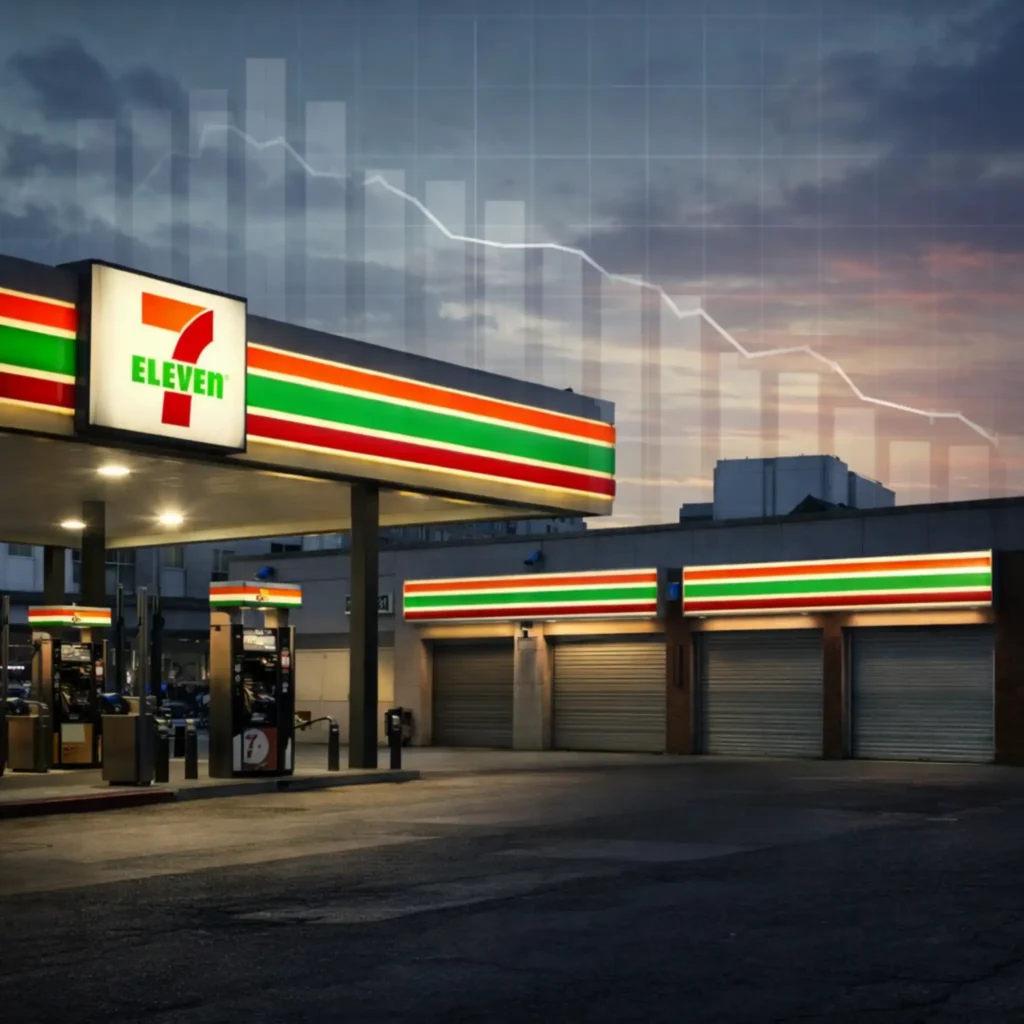

7-Eleven is preparing for one of its biggest structural shake-ups in decades, with plans to close 645 convenience stores in fiscal 2026. The move follows a wave of closures already seen across the past two years and signals a deeper transformation inside the convenience retail giant.
For millions of customers across North America, 7-Eleven has long been part of everyday life. But behind the familiar storefronts, the business is undergoing a major shift — one that is quietly redefining what a convenience store is supposed to be.
The upcoming closures are not happening in isolation. The company has already shut down more than 600 locations across 2024 and 2025 combined, continuing a pattern of trimming underperforming stores while investing in new formats. In 2024 alone, around 444 stores were closed across the US and Canada, representing roughly 3% of its North American network of over 13,000 locations.
A transformation, not just closures
While the headline number — 645 stores — may suggest contraction, the reality is more complex. 7-Eleven is actively reshaping its business model, shifting away from smaller, traditional convenience outlets toward larger, food-focused destinations.
Some locations will be permanently shut, while others may be converted into “wholesale fuel stores”, which are not counted as standard retail outlets. This allows the company to maintain fuel presence in key areas while reducing costs tied to full-store operations.
The broader strategy is rooted in a simple reality: the traditional convenience store model is no longer enough. Fuel and tobacco — once core drivers of traffic — are losing their dominance as consumer habits evolve.
Instead, growth is coming from food. Industry data shows that prepared food sales jumped by 12% year over year, reflecting a clear shift in how customers use convenience stores. Rather than quick stops for snacks or fuel, many now visit multiple times a week for meals, drinks, and coffee.
As highlighted in industry retail analysis, this transition is pushing major chains to redesign their stores around food service, not just convenience.
Why so many stores are closing
The closures are largely focused on underperforming locations — stores that struggle with declining traffic, rising costs, or outdated layouts that cannot support modern offerings.
Inflation has played a major role in reshaping customer behavior. Shoppers are more selective, visiting fewer locations and spending more intentionally. At the same time, competition has intensified, with chains like Wawa and Sheetz raising expectations through high-quality food, made-to-order meals, and premium beverages.
7-Eleven’s response has been to double down on locations that can compete in this new environment. That often means larger stores with expanded kitchens, upgraded interiors, and a broader product mix.
In contrast, older, smaller stores — especially those built around the traditional fuel-and-snack model — are increasingly being phased out.
The industry shift behind the decision
The convenience store industry itself is undergoing a fundamental change. Historically, fuel was the main driver of visits, with customers stopping in briefly while filling up their cars.
Today, that dynamic is reversing. The average driver fills up only a couple of times per month, but convenience store visits for food and beverages can happen several times a week. This has turned the store itself into the destination.
Modern locations now feature made-to-order sandwiches, hot meals, premium coffee, and even restaurant-style menus. Some stores offer items that rival quick-service restaurants, blurring the line between convenience retail and food service.
This shift explains why 7-Eleven is not simply closing stores, but actively replacing them with new concepts designed to drive higher engagement and repeat visits.
What it means for customers
For customers, the impact will be uneven. In some areas, familiar locations will disappear, especially those that no longer meet the company’s evolving standards. In others, new or upgraded stores may offer a significantly different experience — one centered around food, quality, and convenience combined.
The strategy also reflects a broader retail reality: success is no longer about having the most locations, but about having the right ones.
7-Eleven’s ongoing closures show that even the largest chains are being forced to adapt quickly to changing expectations. The stores that remain — and the new ones being built — are likely to look very different from the traditional convenience outlets many customers grew up with.
As the company continues to reshape its footprint, the message is becoming clear. The future of convenience retail is not just about speed — it is about experience, quality, and giving customers a reason to come back far more often than a fuel stop ever could.
You May Also LikePopeyes One Piece Menu Prices, Locations, and Release Date

Make Swikblog your go-to source on Google for reliable updates, smart insights, and daily trends.